
Blooming
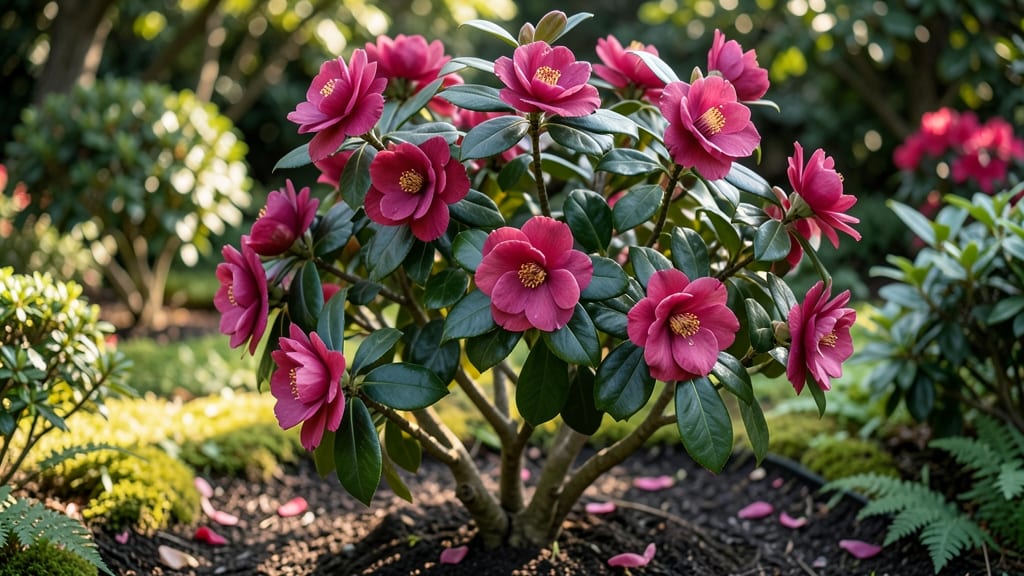
The camellia bloom time varies dramatically from winter to early spring 🌸, with some varieties bursting into color as early as November and others holding out until March. Picture this: you’ve waited all year for your camellia’s stunning display, only to watch buds drop without blooming.
That’s not just bad luck—it’s often a mismatch between your plant’s needs and your local conditions.
In this guide, I’ll break down the precise bloom windows for popular camellia types, how USDA zones 7–10 shift those timelines, and the simple adjustments you can make to coax your shrubs into their best performance.
You’ll learn how to read your plant’s cues, when to prune for more flowers, and why last year’s care (or lack of it) might still be affecting this season’s show.
Camellia bloom time by variety: month-by-month guide
Camellias are winter garden stars, but their bloom time varies dramatically by variety. Camellia sasanqua often blooms first in late fall to early winter, while Camellia japonica waits for late winter to early spring. Understanding these differences helps you select varieties that align with your desired seasonal display.
For example, ‘Yuletide’ sasanqua bursts into red blooms just before Christmas, while ‘Desire’ japonica delivers deep pink blooms in February. Let’s break down the exact months for each type, including visual cues to identify them in your garden.
Most camellias thrive in USDA Zones 7–10, but their bloom timing shifts slightly based on your location. In Zone 7, blooms may start 4–6 weeks later than in Zone 9 due to cooler temperatures.
For instance, a ‘Kiri Shibori’ sasanqua in Georgia might bloom in October, while the same variety in Southern California could flower as early as September. Always check your local frost dates—camellias need chilling hours (typically 300–500 hours below 45°F) to set buds properly.
🌸
If you’re planning a year-round camellia display, mix sasanqua (fall bloomers) with japonica (winter/spring bloomers). For example, plant ‘Yuletide’ (red, Nov–Jan) alongside ‘Des
How climate zones shift camellia bloom times (and what to do)
Your camellia's bloom time isn't set in stone—it shifts dramatically based on your USDA climate zone. In Zone 7, for example, most varieties bloom in late winter to early spring (February-March), while Zone 9 and 10 camellias often flower in fall or early winter (October-November).
This shift happens because colder zones need longer dormancy periods before blooming, while warmer climates trigger flowers with shorter cool spells.
Even within the same zone, microclimates (like a sunny patio vs. shaded garden corner) can delay or advance blooms by 2-4 weeks. Understanding these patterns lets you adjust care to sync blooms with your desired season—whether you want winter color or spring surprises.
Let's break down how to work with your zone's natural timing.
| USDA Zone | Typical Bloom Window | Key Adjustment Needed | Pruning Time |
|---|---|---|---|
| Zone 7 | Late February - Early April | Winter mulch (December-February) | Immediately after blooming |
| Zone 8 | January - March | Light pruning in early spring | Late March - April |
| Zone 9 | October - December | Summer shade cloth (June-August) | January - February |
| Zone 10 | September - November | Year-round moisture (drip irrigation) | March - April |
If you're in Zone 7 or 8 and want fall blooms, try planting Camellia sasanqua varieties like 'Yuletide'—they naturally bloom earlier than Camellia japonica. For Zone 9-10 gardeners craving spring blooms, consider late-blooming japonicas or create a microclimate with afternoon shade to delay flowering.
One of my favorite tricks for Zone 8-9 gardeners is using reflective mulch (like white gravel) around the base. This mimics cooler temperatures and can push blooms 2-3 weeks later into December—perfect for holiday color.
Just remember to remove it in spring to avoid overheating roots. For Zone 7, focus on winter protection like burlap wraps to prevent frost damage to buds.
Your pruning schedule also plays a huge role. In warmer zones (9-10), prune immediately after blooming to encourage next year's flowers. But in cooler zones (7-8), wait until late spring to avoid cutting off next year's buds.
Always use sterilized shears and remove no more than 25% of the plant at once to maintain healthy growth.
For delayed blooming, check your fertilizer—too much nitrogen in late summer can push leaf growth instead of flowers. Switch to a low-nitrogen, high-phosphorus formula (like 5-10-10) in September-October to encourage bud formation.
And if your camellia skips blooming entirely, it might be too young (wait 3-5 years) or stressed from improper soil pH (aim for 5.0-6.0).