
Blooming
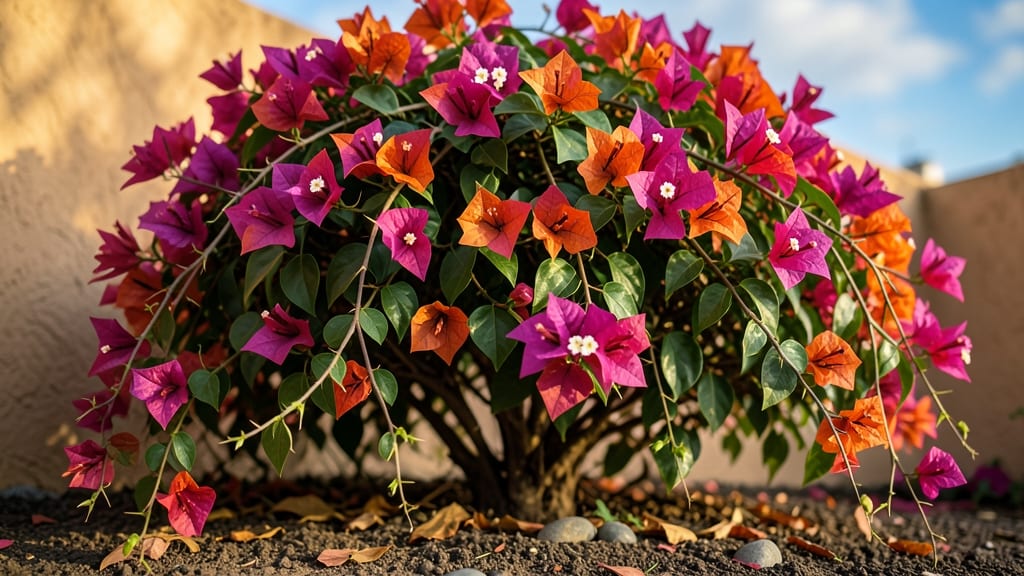
Bougainvillea blooms year-round in tropical climates like USDA Zones 10-12, where temperatures stay above 60°F (15°C). In cooler regions, blooming slows or stops during winter dormancy, typically restarting in spring with proper care and pruning.
Bougainvillea thrives in warm climates where frost never touches the soil, allowing its vibrant blooms to appear continuously. 🌸 This tropical plant responds to consistent sunlight and minimal temperature fluctuations, which is why you'll see it covered in color in places like Florida or Hawaii.
In cooler areas, the plant conserves energy during winter months, focusing on root growth instead of flowers—though with the right winter care, you can still coax it back into bloom come spring.
What sets bougainvillea apart is its adaptability—while it may not flower nonstop everywhere, many gardeners in USDA Zones 9 and below still enjoy months of blooms by using containers that can be moved indoors or protected from frost. The key is understanding your local climate and adjusting care routines accordingly.
💡 In This Article
- Climate Zones That Sustain Year-Round Bougainvillea Blooms
- Tips to Extend Bougainvillea Blooming in Cooler Climates
Climate zones that sustain year-round bougainvillea blooms
Bougainvillea's ability to bloom continuously depends on stable temperatures above 60°F (15°C), which is why it thrives in USDA Zones 10-12. These tropical regions provide the perfect conditions: year-round warmth, high humidity (typically 60-80%), and intense sunlight (6-8 hours daily).
The plant's metabolic processes, particularly photosynthesis and flower production, operate optimally in these conditions. In contrast, cooler zones like Zone 9 experience seasonal dormancy because temperatures drop below 50°F (10°C) during winter, triggering the plant to conserve energy.
The difference between tropical and temperate climates comes down to photoperiod and temperature consistency. Bougainvillea in Zones 10-12 receives 12+ hours of daylight year-round, which stimulates continuous flowering.
Meanwhile, in cooler zones, shorter winter days combined with cold snaps force the plant into dormancy. 🌡️ What's fascinating is how bougainvillea responds to temperature shifts: when nights drop below 55°F (13°C) for extended periods, the plant redirects energy from blooms to root and stem growth, halting flower production until spring warmth returns.
Humidity also plays a crucial role. In tropical zones, the air's moisture content stays high, reducing water stress on the plant. Bougainvillea's papery bracts (the colorful parts we call "flowers") are particularly sensitive to dryness—they can crisp and fall off if humidity drops below 50%.
This is why coastal areas in Zones 10-12, like Southern California or Puerto Rico, see bougainvillea in peak bloom year-round, while inland areas in the same zones may experience slightly reduced flowering during dry seasons.
Sunlight intensity matters too. Bougainvillea requires full sun exposure (6+ hours daily) to produce its vibrant bracts. In tropical zones, the sun's angle remains consistent year-round, providing steady light.
In contrast, cooler zones experience weaker winter sunlight, which further reduces the plant's ability to photosynthesize and produce flowers. 🌞 The plant's natural response is to prioritize survival over aesthetics during these periods, which is why gardeners in Zones 9 and below often see blooms disappear entirely from December through February.
What most people don't realize is how bougainvillea's root system adapts to climate. In tropical zones, roots stay active year-round, continuously absorbing nutrients and water to support flowering. In cooler zones, roots may go dormant, storing energy in stems and leaves until temperatures rise.
This adaptation explains why bougainvillea in containers can sometimes bloom year-round even in cooler climates—when protected from frost, the roots remain active and continue supporting flower production.
Consider these key climate factors when growing bougainvillea:
- Temperature: 60°F+ (15°C+) for continuous blooming; below 50°F (10°C) triggers dormancy
- Humidity: 60-80% ideal; below 50% causes bract damage
- Sunlight: 6-8 hours daily of direct sun required for optimal flowering
- Daylength: 12+ hours of daylight supports year-round blooms
The science behind bougainvillea's flowering cycle reveals how tightly it's linked to environmental cues. When all these factors align—warmth, moisture, and sunlight—you'll see that signature burst of color we all love. 🌸