
Blooming
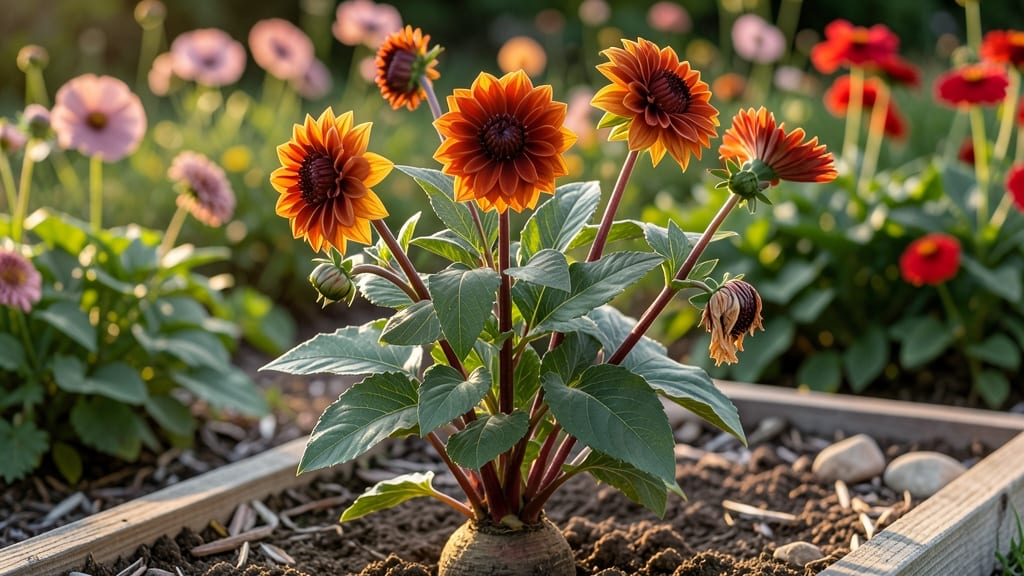
Dahlias bloom all summer and into fall with proper care, producing vibrant flowers from early July through frost, often peaking in August and September depending on variety and growing conditions. Deadheading spent blooms encourages continuous flowering.
This long bloom cycle happens because dahlias are daylength-neutral or short-day plants, meaning they respond to temperature and daylight rather than strict seasonal cues. 🌸 Most varieties thrive in summer's warmth and long days, producing flowers continuously as long as you maintain consistent care.
The key is balancing water, nutrients, and deadheading—removing faded blooms prevents energy waste and signals the plant to produce more flowers. I've seen dahlias in my garden keep blooming until the first hard frost, sometimes even later with proper protection.
Different varieties play a role too—some like 'Café au Lait' or 'Galaxy' bloom earlier in summer, while others peak in late August. The secret to extending their season is mulching to keep roots cool and fertilizing every 2-3 weeks with a balanced formula.
Even in 90°F+ heat, dahlias can keep flowering if you water deeply in the morning and avoid overhead sprinkling.
💡 In This Article
- Why Dahlias Flower Nonstop in Summer Heat
- Summer Care Tips to Extend Dahlia Blooms
Why dahlias flower nonstop in summer heat
Dahlias thrive in summer's warmth because they're daylength-neutral or short-day plants, unlike strict seasonal bloomers. Their flowering triggers rely more on temperature than daylight hours—most varieties respond to consistent warmth above 60°F and begin blooming when soil temperatures reach 55-60°F.
This adaptability lets them capitalize on summer's long daylight and heat, producing flowers continuously when given proper care. The botanical magic happens in their tubers, which store energy and release it gradually throughout the season.
Different varieties exhibit unique timing patterns. Daylength-neutral types like 'Café au Lait' bloom early and often, while short-day varieties such as 'Galaxy' typically wait until late summer when daylight shortens.
The key difference lies in their photoperiod sensitivity—some varieties need 12-14 hours of daylight to trigger blooming, while others respond to temperature cues alone. This explains why you might see dahlias in your garden starting in July but peaking in September when cooler nights arrive.
Their heat tolerance comes from thick, waxy leaves that reduce water loss, allowing them to thrive in 90°F+ conditions. However, this tolerance has limits—prolonged exposure above 95°F can cause buds to drop.
The plant's natural response is to conserve energy during extreme heat by slowing growth, which is why consistent watering becomes critical. Dahlias can actually increase their bloom production when daytime temperatures are 75-85°F with cooler nights, creating ideal conditions for continuous flowering.
What most gardeners don't realize is how their root systems work. Dahlias develop extensive fibrous roots that spread 12-18 inches wide, allowing them to access moisture and nutrients efficiently.
This root structure combined with their tuber storage system creates a self-sustaining bloom cycle—when you remove spent blooms (deadheading), the plant redirects energy from seed production back to flower development, creating a feedback loop that can keep them blooming until frost.
Consider these key botanical factors that enable their summer-long display:
- Temperature triggers: Blooming accelerates when soil temps reach 60°F+ and air temps stay above 70°F
- Daylight adaptation: Most varieties bloom regardless of daylight length, unlike strict short-day plants
- Root efficiency: Fibrous roots spread widely to access water/nutrients during dry spells
- Energy redirection: Deadheading removes seed heads, prompting 80-90% more flower production
The science behind their continuous blooming involves a hormone called ethylene, which the plant produces when buds form. By removing spent blooms, you prevent ethylene buildup that would signal the plant to stop flowering.
This hormonal mechanism is why dahlias can keep producing new buds for 3-5 months straight under ideal conditions. 🌿