
Blooming
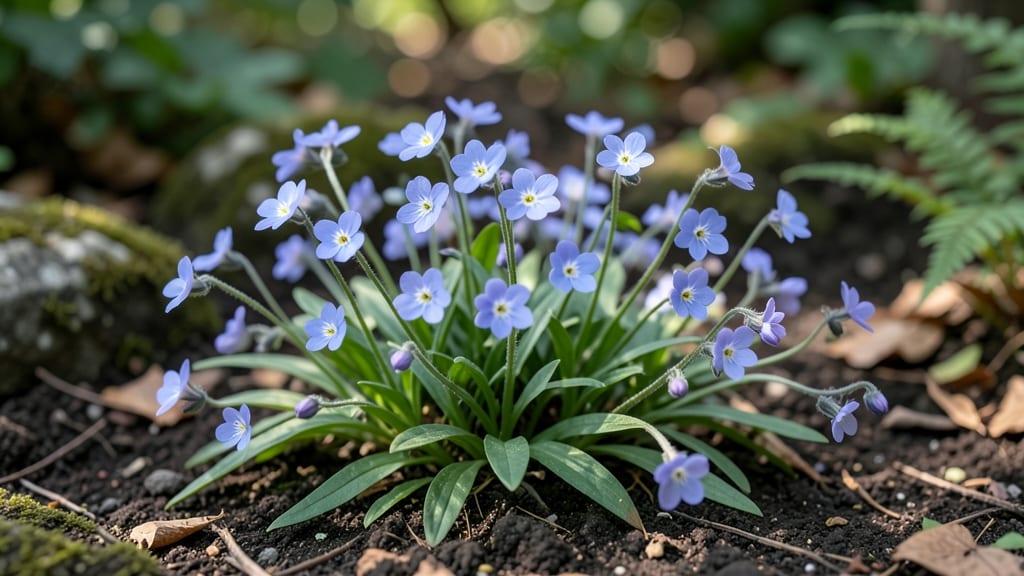
Forget-me-nots typically bloom all summer only in perfect conditions, but most varieties are cool-season annuals that flower primarily in spring through early summer. Hardy types like Myosotis sylvatica may show sporadic summer reblooms in mild climates with consistent moisture and partial shade.
Forget-me-nots are more reliable in cooler weather, which is why you'll see their peak blooms from late spring to early summer. 🌸 The key to encouraging any summer flowering lies in their care—consistent moisture and partial shade help preserve energy for sporadic reblooms, especially in varieties like Myosotis sylvatica that naturally extend their season.
Without these conditions, most forget-me-nots focus their energy on spring growth rather than prolonged summer displays.
What many gardeners don't realize is that forget-me-nots are actually biennials or short-lived perennials, meaning their flowering patterns depend heavily on seasonal cues.
In warmer climates, you might see a second flush of blooms in late summer or fall, but this requires careful management of water and shade to prevent stress. The trade-off? Their delicate blue flowers often make a stronger visual impact in spring when they're at their freshest.
💡 In This Article
- Forget-Me-Not Flowering Seasons by Species
- Extending Forget-Me-Not Blooms: Care Tips for Longer Seasonal Color
Forget-me-not flowering seasons by species
The flowering cycles of forget-me-nots (Myosotis spp.) are deeply tied to their native climates and botanical classifications. Most common garden varieties, like Myosotis sylvatica (wood forget-me-not), are cool-season plants that naturally follow a spring-to-early-summer bloom pattern.
Their growth is triggered by cooler temperatures (ideal range: 50-70°F) and shorter daylight hours, which is why they peak in late spring when days begin lengthening but haven't reached summer's intensity. 🌿 This biological rhythm explains why you'll rarely see them flourish in peak summer heat—their energy shifts to seed production rather than prolonged flowering.
Hardier varieties like Myosotis discolor (true forget-me-not) or Myosotis scorpioides (water forget-me-not) may exhibit sporadic summer blooms in zones 3-8, but these are exceptions rather than the rule.
The key difference lies in their root systems: perennial types develop deeper roots that store moisture, allowing them to rebound with secondary blooms when temperatures dip below 80°F in late summer. Annual varieties, however, typically complete their life cycle by early summer, withering as temperatures rise above 75°F.
This explains why most garden centers sell forget-me-nots as spring-planted annuals—they're designed to perform a single, dramatic bloom cycle.
Climate plays a surprising role in summer reblooming potential. In regions with mild summers (like the Pacific Northwest or UK), forget-me-nots may produce a second flush of blooms in late August or September when temperatures stabilize around 65-70°F and humidity remains moderate.
The trade-off? These late-season blooms are often less vibrant due to reduced sunlight intensity. In contrast, hotter climates (zones 9-11) rarely see summer flowering unless you create microclimates with afternoon shade and consistent irrigation—conditions that mimic their natural woodland habitats. 🌧️
What most gardeners overlook is the species' native habitat preferences. Forget-me-nots evolved in temperate woodlands and meadows where they experienced distinct seasonal shifts. Myosotis sylvatica, for example, thrives in partial shade with 40-60% sunlight exposure, while Myosotis scorpioides prefers moist, boggy conditions.
These ecological niches explain why full-sun exposures accelerate their spring blooming but often trigger dormancy by early summer. The lesson? Recreating their native conditions—cool roots, partial shade, and consistent moisture—is the secret to coaxing any summer reblooms from these delicate perennials.
Consider these species-specific blooming patterns when planning your garden:
- Spring-only bloomers: Myosotis alpestris (alpine forget-me-not) and Myosotis laxa (creeping forget-me-not) produce their sole bloom cycle between April and June in most climates.
- Potential summer rebloomers: Myosotis sylvatica and Myosotis discolor may show secondary blooms in July-August when given proper care.
- Year-round possibilities: In zones 5-7, some perennial varieties continue producing sporadic blooms through fall if protected from frost.
The bottom line? While forget-me-nots won't reliably bloom all summer, understanding their species-specific rhythms lets you choose varieties that align with your climate goals. For true summer color, consider pairing them with heat-tolerant annuals like cosmos or zinnias that thrive when forget-me-nots naturally fade. 💫