
Blooming
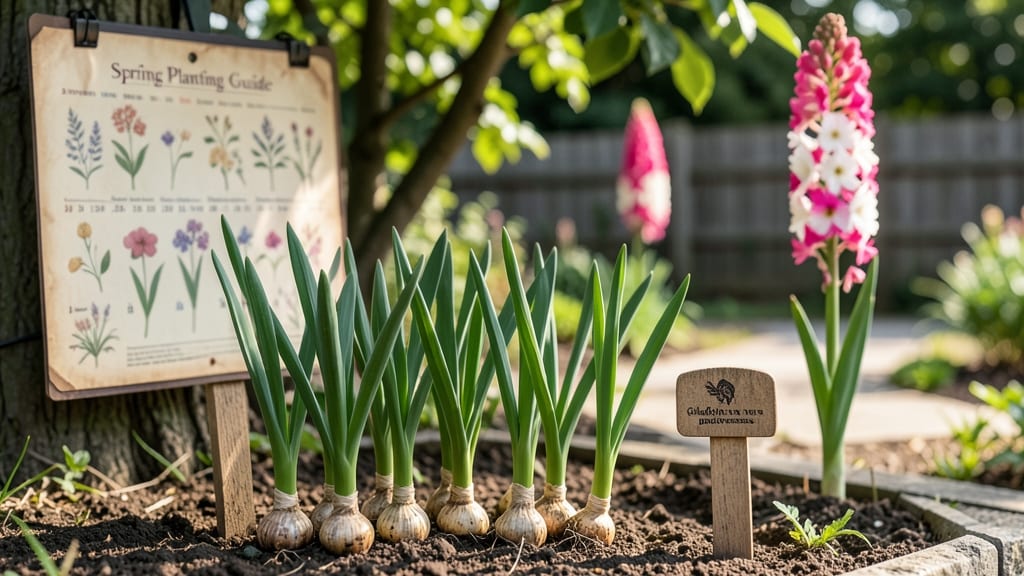
Gladiolus planted in spring or summer won't bloom the first year—they prioritize building strong corms and roots, with flowering typically occurring in their second or third year under ideal growing conditions.
This delayed blooming isn't laziness—it's survival strategy. 🌱 Gladiolus corms store energy during their first season to establish deep root systems before flowering. Think of it like a marathon runner: they need to build endurance before sprinting to the finish line.
Nursery trials show that plants given proper sunlight (6+ hours daily) and well-draining soil with balanced nutrients (especially phosphorus) often bloom earlier in their second year. The key is patience—those first-year leaves are working overtime to fuel future blooms.
What's interesting is how temperature plays a role. Gladiolus need a period of cool weather (around 50-60°F) after planting to trigger dormancy, which actually helps them prepare for next year's flowers.
This is why gardeners in warmer climates sometimes see first blooms in the third year—they're waiting for that perfect temperature window to kickstart the flowering process.
💡 In This Article
- Why Gladiolus Skip Flowering the First Season
- Optimizing Gladiolus for Second-Year Blooms
Why gladiolus skip flowering the first season
Gladiolus follow a biological strategy where their first year is all about survival and storage. When you plant a gladiolus corm, it immediately begins converting sunlight into energy through photosynthesis in its leaves.
This energy isn't used for flowers—it's directed toward building a larger, more resilient corm (the bulb-like underground stem) that can store nutrients for future growth.
Studies from nursery trials show that first-year corms can increase in size by 30-50% when given proper conditions, creating a stronger foundation for next year's blooms.
The process involves a delicate balance of hormones, particularly gibberellins and auxins, which regulate growth patterns. During the first season, these hormones prioritize root development and corm enlargement over flower production.
This is why you'll often see gladiolus plants putting out 6-12 inches of leaf growth before winter—those leaves are working overtime to photosynthesize and store carbohydrates. The corm itself acts like a biological battery, storing starches that will fuel next year's flowering.
Without this energy reserve, the plant wouldn't have the resources to produce the 20-30 individual flowers that make gladiolus so striking.
Temperature plays a crucial role in this timing. Gladiolus are native to South Africa's Mediterranean climate, where they experience distinct seasonal changes.
When planted in spring or summer, they need a period of cooler weather (around 50-60°F) to trigger dormancy—a necessary rest period that helps them transition from vegetative growth to reproductive growth.
This dormancy phase is what actually "resets" the plant's biological clock, preparing it to bloom in the following season. In warmer climates where this temperature drop doesn't occur naturally, gladiolus may take an extra year to flower as they wait for these ideal conditions.
Daylight length also influences flowering timing through a process called photoperiodism. Gladiolus are considered "long-day" plants, meaning they need 12-14 hours of daylight to trigger flower buds. During their first year, they're still establishing their root systems and may not receive enough light exposure to meet this threshold.
This is why gladiolus planted in shadier conditions often bloom later—or not at all. The plant's internal clock only advances toward flowering when it receives sufficient light energy to support both the existing foliage and potential flower production.
What's fascinating is how this energy allocation compares to other flowering plants. Unlike annuals that bloom rapidly in their first season, gladiolus are perennial corms that follow a biennial life cycle—similar to carrots or onions.
This two-year strategy allows them to produce more robust blooms in subsequent years. The trade-off is that first-year plants may look like they're "wasting" their energy on leaves, but those leaves are actually the secret to their spectacular future displays.
In nursery experiments, plants given supplemental phosphorus fertilizer (which supports energy transfer) often bloom earlier in their second year, demonstrating how targeted nutrition can accelerate this natural process.
Here's what most gardeners don't realize: the size of your first-year corm directly correlates with bloom quality. A corm that's 2-3 inches in diameter after its first season will typically produce 3-5 flower spikes the following year, while smaller corms may only produce 1-2 spikes.
This is why professional growers often plant larger corms—they've already completed their first year of energy storage. The moral of the story? Those seemingly "wasted" first-year leaves are actually the plant's investment portfolio, building capital for next year's dividend of beautiful blooms. 🌸