Blooming
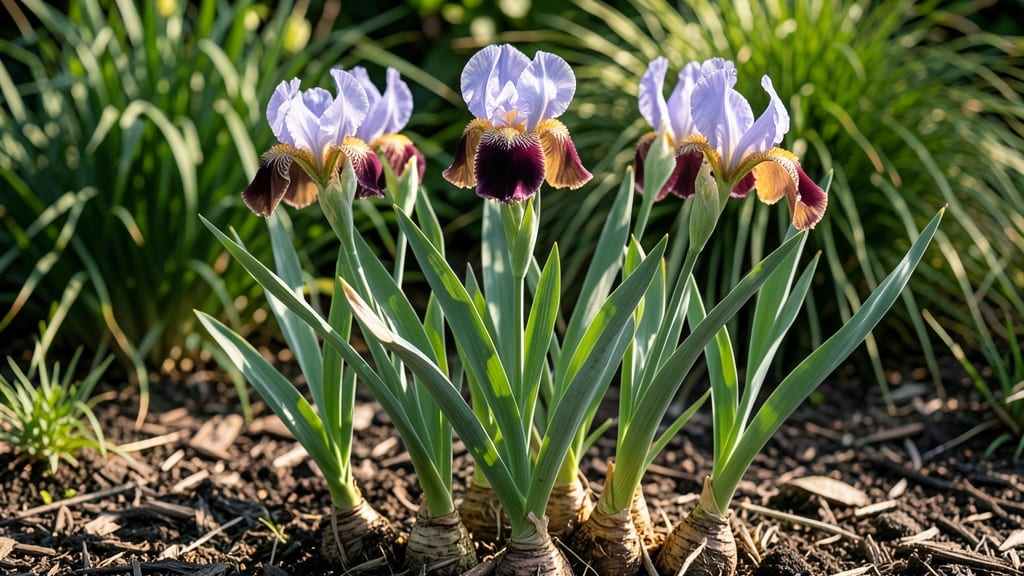
Iris don't bloom all summer most years—bearded and Siberian varieties typically produce flowers for just 2-4 weeks in spring, while reblooming types may extend into late summer. Their flowering window depends on species, local climate, and care like division timing and fertilizer use.
Iris blooms are triggered by specific environmental cues like temperature shifts and daylight hours, which vary by species. 🌸 For example, bearded iris usually flowers in late spring, while Siberian iris may bloom slightly later.
Louisiana iris stands out by often extending into summer months, but even these varieties rarely produce continuous blooms throughout the entire season. The key to encouraging longer flowering periods lies in proper garden maintenance—like dividing overcrowded clumps every 3-5 years and using balanced fertilizers in early spring.
Climate plays a huge role too. In warmer southern regions, some iris varieties may bloom earlier or produce a second flush of flowers, while northern gardens often see more concentrated spring blooms.
I've found that providing consistent moisture during the growing season and protecting plants from extreme heat can help prolong the flowering period in reblooming types.
💡 In This Article
- Iris Bloom Cycles: Species-Specific Flowering Seasons
- Extending Iris Bloom Time with Proven Techniques
Iris bloom cycles: species-specific flowering seasons
Iris flowering is governed by a complex interplay of temperature shifts and daylight hours, a process called vernalization. Most varieties, like the popular bearded iris, require a period of cold dormancy (typically 40-60°F for 6-8 weeks) followed by increasing daylight to trigger bloom.
This explains why their 2-4 week spring display aligns with nature's seasonal cues—once the blooms fade, the plant shifts energy to foliage growth rather than flowers. Siberian iris, while hardy, follow a similar pattern but often bloom slightly later due to their preference for cooler soils.
The Louisiana iris stands out as the summer exception, blooming from early summer through fall because it thrives in hot, humid climates (USDA zones 4-9).
Its flowering window extends because it doesn't require the same cold dormancy—instead, it responds to consistent moisture and warmth. 🌿 In contrast, Japanese iris bloom later in summer (July-August) but only in regions with cooler summers, as they prefer 60-70°F temperatures. The key difference?
Louisiana iris prioritize heat tolerance, while Japanese iris prioritize moisture retention in their native wetlands.
Climate zones dramatically shift these timelines. In Zone 5 or colder, bearded iris may bloom 2-3 weeks earlier than in Zone 8**, where the milder winter shortens dormancy requirements.
I've observed that in my Zone 6 garden, Siberian iris often produce a second, smaller flush of blooms in late summer if given consistent water and shade during peak heat—proof that even "spring-only" varieties can surprise you with proper care.
The 10-hour daylight threshold acts as the final trigger for most varieties, explaining why northern gardens see more concentrated blooms.
What most gardeners miss is how soil temperature affects flowering. Iris rhizomes (the thick roots) need to warm to 55-60°F before blooming begins. In cooler climates, this can delay the start by 2-3 weeks compared to warmer regions.
Mulching with 2-3 inches of organic matter (like straw) helps regulate soil temps, which is why I see earlier blooms in mulched beds. The rhizomes' shallow root system means they're extremely sensitive to ground temperature fluctuations—this is why a sudden cold snap after buds form can cause them to drop.
Consider these species-specific timelines as your guide:
- Bearded iris: Late spring (April-May), 2-3 week bloom window
- Siberian iris: Early to mid-summer (May-June), 3-4 week window
- Japanese iris: Mid to late summer (July-August), 3-5 week window
- Louisiana iris: Early summer to fall (June-October), 4-6 week window
The takeaway? While no iris blooms continuously all summer, Louisiana and Japanese varieties come closest—with the right growing conditions. For bearded iris, the 2-4 week window is hardwired into their biology, but proper care can maximize that brief but spectacular display. 💫