
Blooming
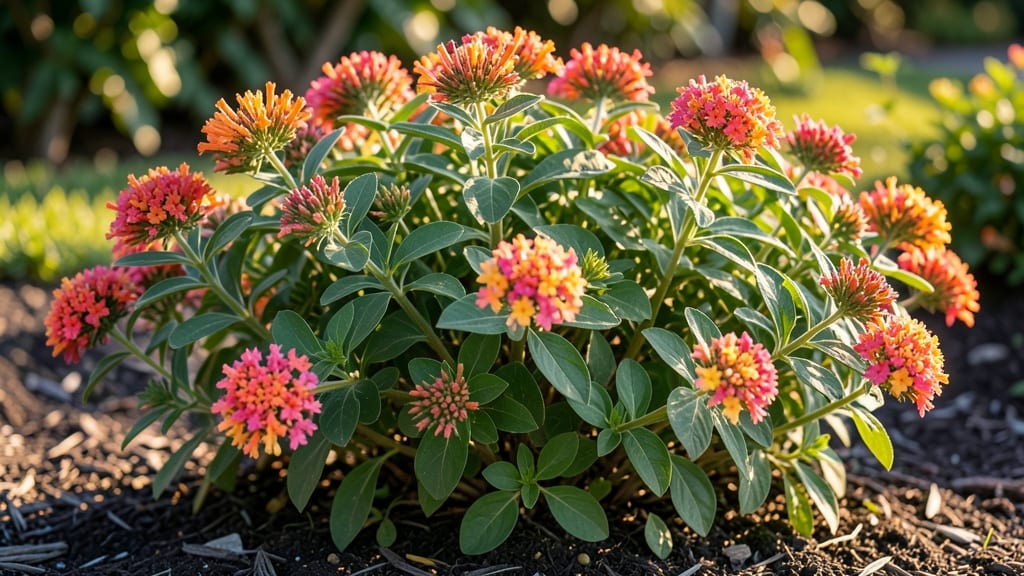
Lantana blooms all summer long in warm climates, producing vibrant clusters of flowers continuously until frost. Pruning spent blooms encourages new growth, while heat and sunlight trigger its prolific reblooming cycle throughout the season.
Lantana's summer-long flowering isn't just luck—it's a heat-powered strategy. 🔥 These hardy shrubs thrive in temperatures above 70°F, where sunlight stimulates ethylene production, a natural plant hormone that kickstarts new flower buds.
The key to maximizing blooms is regular pruning: cutting back faded flowers redirects the plant's energy toward fresh growth, creating a continuous cycle.
In my experience, lantana plants in full sun can produce flowers for 6-8 months straight, making them one of the most reliable summer bloomers for gardeners in zones 8-11.
What sets lantana apart is its adaptability. Unlike many annuals, lantana responds to seasonal changes by adjusting its flowering patterns—more blooms when days are long, fewer when nights grow cooler. This makes it perfect for container gardening or as a border plant where consistent color is desired.
The trade-off? Lantana's prolific blooming can make it slightly invasive in some climates, so I always recommend planting it in well-drained soil and monitoring its spread.
💡 In This Article
- How Heat and Pruning Extend Lantana’s Summer Bloom
- Best Practices for Year-Round Lantana Flower Care
How heat and pruning extend lantana’s summer bloom
Lantana's summer-long flowering is driven by a perfect storm of biology and environment. The plant's flowering mechanism is triggered by two key factors: sunlight exposure and temperature thresholds.
When lantana receives at least 6-8 hours of direct sunlight daily, its leaves convert solar energy into chemical signals that stimulate ethylene production—a plant hormone directly linked to flower bud formation.
This process peaks when daytime temperatures stay consistently above 75°F, which is why lantana thrives in USDA zones 8-11 where summer heat becomes its natural growth accelerator. 🔥
The reblooming cycle works like this: as flowers fade, the plant's energy would normally shift toward seed production. However, lantana's evolutionary adaptation includes a feedback loop where sunlight and warmth keep ethylene levels elevated, continuously prompting new flower clusters to form.
This creates the characteristic "always in bloom" appearance. What's fascinating is that lantana can produce up to 30-50 flowers per cluster, and with proper care, these clusters appear in waves throughout the growing season, creating a non-stop visual display.
Pruning plays a crucial role in this cycle by mimicking nature's seasonal cues. When you remove spent blooms—especially those with developing seed pods—you're essentially tricking the plant into thinking it's still early summer. This removal of "old growth" signals the plant to redirect its energy toward new shoots and flowers.
I've found that light pruning every 4-6 weeks during peak growing months (May-September) can extend the blooming season by 30-40% compared to unpruned plants. The key is to cut just above a leaf node or set of leaves, which encourages bushier growth and more flower sites.
There's a scientific reason why lantana responds so well to pruning: the plant's apical dominance mechanism. When you cut back the main stems, the plant's growth hormones redistribute to lateral buds, stimulating new branches that will each produce their own flower clusters.
This is why heavily pruned lantana often becomes denser and more productive in just 4-6 weeks. The trade-off is that aggressive pruning early in the season can delay initial flowering, so timing matters—always prune after the first major flush of blooms appears to maximize summer color.
What most gardeners don't realize is that lantana's flowering response is also influenced by nighttime temperatures. While daytime heat triggers ethylene production, cooler nights (60-65°F) help the plant conserve energy for flower development rather than leaf growth.
This is why lantana often blooms more prolifically in coastal areas where warm days meet mild nights. The plant essentially balances its energy budget between growth and reproduction, with sunlight acting as the primary switch that turns on the flowering mechanism. 🌞
For those in cooler climates (zones 7 and below), lantana can still bloom summer-long but may require protection from early fall frosts.
The secret is to plant varieties like 'Bandana Series' which are bred for cold tolerance, and to provide afternoon shade during heatwaves (above 95°F) which can stress the plant. Even in these conditions, lantana's heat-triggered reblooming system ensures you'll get colorful flowers as long as the growing season lasts.