
Blooming
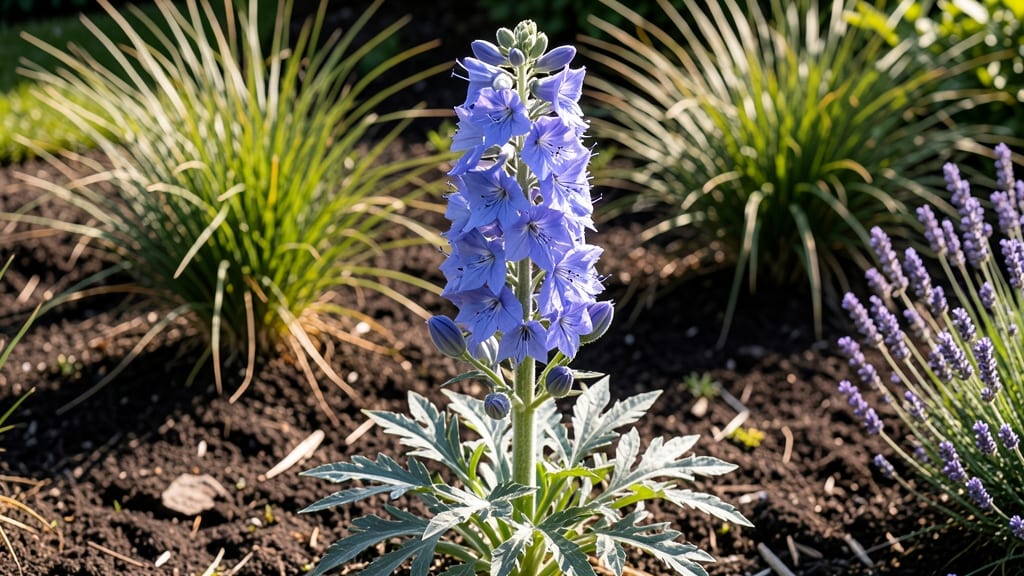
Larkspur blooms do not last all summer—they typically flower in late spring to early summer, with peak blooming between May and July, depending on climate and variety. Cool weather triggers their growth, while heat often causes them to fade or go dormant.
Larkspurs are cool-weather annuals, meaning they thrive when temperatures stay between 50°F and 70°F. Once summer heat sets in—usually above 75°F—their blooms wilt and production slows dramatically. 🌸 The plants often go completely dormant in extreme heat, only to revive if cooler weather returns in fall.
This explains why you might see sporadic blooms in late summer or early fall, especially in regions with cooler nights.
What many gardeners don't realize is that larkspurs actually have two bloom cycles if given the right conditions. The first flush appears in spring, followed by a second wave if temperatures drop again in late summer.
This makes them ideal for staggered planting—sow seeds every 2-3 weeks in spring to create a continuous display through early summer.
💡 In This Article
- Larkspur Blooming Seasons Explained
- Extending Larkspur Blooms in Your Garden
Larkspur blooming seasons explained
The larkspur's seasonal bloom cycle is primarily governed by temperature sensitivity and photoperiodism, which is its biological response to daylight length. These plants originate from mountainous regions where cool nights and mild days are common.
When daytime temperatures exceed 75°F, their metabolic processes slow down, causing buds to abort and existing blooms to wilt within 24-48 hours. This explains why larkspurs typically peak in May-July in most temperate zones, aligning with their natural preference for 50-70°F growing conditions.
Photoperiodism plays a secondary but crucial role—larkspurs require 12-14 hours of daylight to trigger flowering. As summer progresses, longer daylight hours (often exceeding 15 hours in northern latitudes) can actually inhibit new bloom production.
In regions with hot, humid summers, this effect is compounded, causing plants to enter dormancy by early July. The contrast is striking when comparing coastal areas (where cooler ocean breezes extend blooming) versus inland zones (where heat accelerates senescence).
What's fascinating is how larkspurs exhibit thermoperiodism—they need cooler nighttime temperatures (ideally 55-65°F) to properly metabolize sugars and maintain bloom production. When nighttime temps rise above 70°F, the plants essentially "shut down" their flowering mechanism.
This is why you'll often see larkspurs in high-altitude gardens or coastal climates where nighttime cooling occurs naturally, while they struggle in continental climates with 80°F+ nights.
Regional climate variations create dramatic differences in bloom duration. In USDA Zone 5, larkspurs may bloom from late May through June, while in Zone 8, they might only produce flowers for 3-4 weeks in early spring before heat sets in.
The Pacific Northwest's maritime climate often extends blooming until early August, while the Midwest typically sees peak blooms in late May with minimal fall revival. This geographic variability explains why some gardeners report "all summer" blooming—what they're actually seeing is staggered plantings responding to local microclimates.
There's also a genetic component: Delphinium elatum (the most common larkspur) has a shorter bloom cycle than Delphinium grandiflorum, which can produce flowers over 6-8 weeks if conditions are ideal.
The difference lies in their native habitats—D. elatum thrives in alpine meadows with brief growing seasons, while D. grandiflorum comes from higher elevations where cooler summers naturally extend flowering. Choosing the right variety can therefore make a 2-3 week difference in your garden's bloom duration.
One often-overlooked factor is soil temperature. Larkspurs prefer soil temps between 55-65°F—when soil heats above 70°F, root activity slows, reducing the plant's ability to transport water and nutrients to developing buds.
This is why mulching with 2-3 inches of organic matter can help maintain cooler soil conditions, potentially extending blooming by 10-14 days. The combination of air temperature, daylight hours, and soil temperature creates a delicate balance that determines whether your larkspurs will make it through summer or fade prematurely.