
Blooming
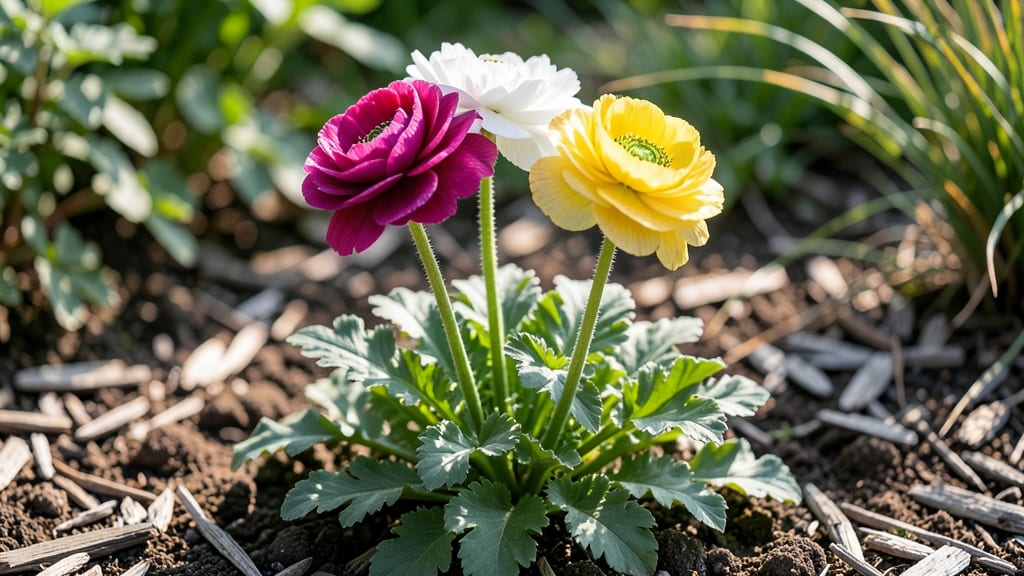
Ranunculus do not bloom all summer: they thrive in cool weather and typically flower from early spring through late spring or early summer, with heat triggering dormancy or decline by mid-summer unless grown in cooler climates or shaded conditions.
These delicate flowers are true cool-season champions, peaking when temperatures stay between 50°F and 70°F. 🌸 Once summer heat hits 80°F or higher, their blooms wilt faster and new buds fail to open.
I’ve seen gardeners in hot climates extend their season by planting ranunculus in partial shade or even under tree canopies—this mimics their natural Mediterranean habitat where they escape peak heat.
The key is moisture too: keeping the soil consistently damp (but not soggy) helps them tolerate brief heat spikes better than dry conditions.
What’s interesting is how ranunculus respond differently than other summer bulbs. Unlike dahlias that thrive in heat, ranunculus go dormant when stressed by warmth. This means their late-season care isn’t about forcing more blooms, but about preserving the bulbs for potential fall regrowth in milder zones.
Many gardeners treat them like annuals, but with proper care, they can surprise you with a second flush of blooms when temperatures dip again in autumn.
💡 In This Article
- Understanding Ranunculus Bloom Cycles and Heat Sensitivity
- Extending Ranunculus Blooms with Late-Season Care
Understanding ranunculus bloom cycles and heat sensitivity
Ranunculus are cool-season plants at their core, with a biological clock wired to bloom when days are shorter and temperatures hover between 50°F and 70°F. Their flowering mechanism is tied to vernalization—a process where exposure to cold temperatures triggers bud formation.
Unlike tropical flowers that rely on consistent warmth, ranunculus enter dormancy when daytime highs exceed 80°F, a survival adaptation from their native Mediterranean regions where summer heat would otherwise dehydrate them. 🌿
Their blooms also follow a photoperiodic response, meaning they detect decreasing daylight hours as summer approaches. Once days lengthen past 14 hours of sunlight, their metabolic processes shift from flowering to bulb storage.
This is why you’ll see ranunculus peak in early summer but fade by July in most climates—it’s not just heat stress, but also the plant’s internal signal to conserve energy.
Compare this to dahlias, which bloom continuously in heat because they’re short-day neutral plants, or gladiolus, which thrive in summer’s warmth.
Heat sensitivity goes beyond just wilting—it’s a physiological shutdown. At temperatures above 85°F, ranunculus bulbs begin producing abscisic acid, a plant hormone that accelerates dormancy. This explains why even well-watered plants may suddenly stop producing buds mid-season.
The bulbs themselves don’t die but enter a quiescent state, similar to how onions or tulips behave in extreme heat. 💧 What’s fascinating is that this dormancy isn’t permanent: in cooler fall climates, ranunculus can sometimes reawaken when temperatures drop below 75°F again.
Soil moisture plays a critical role in this process. Ranunculus bulbs are non-woody corms that store nutrients, and when soil dries out above 40% moisture retention, they trigger drought stress responses that accelerate dormancy.
This is why gardeners in hot zones often see blooms last longer when planted in well-draining, moisture-retentive soils (like those amended with compost) rather than sandy or clay-heavy grounds. The right balance keeps the plant hydrated enough to tolerate brief heat spikes without shutting down prematurely.
Another key factor is humidity levels. Ranunculus native to Mediterranean climates experience dry summers but with moderate humidity—typically 40-60% relative humidity.
In high-humidity zones (like the southeastern U.S.), the combination of heat and moisture can promote fungal diseases that further stress the plants, cutting their bloom cycle short. This is why you’ll often see ranunculus thriving in arid western states where dry heat mimics their natural environment better than muggy summers.
For gardeners in hot climates, understanding this cycle is crucial. Ranunculus aren’t designed to be summer-long bloomers—they’re ephemeral spring flowers that put all their energy into a spectacular but finite display.
Their entire life cycle is a race against the clock, where every day above 75°F chips away at their bloom potential. This is why professional florists and gardeners often treat them as seasonal stars rather than year-round performers. 🌸