
Blooming
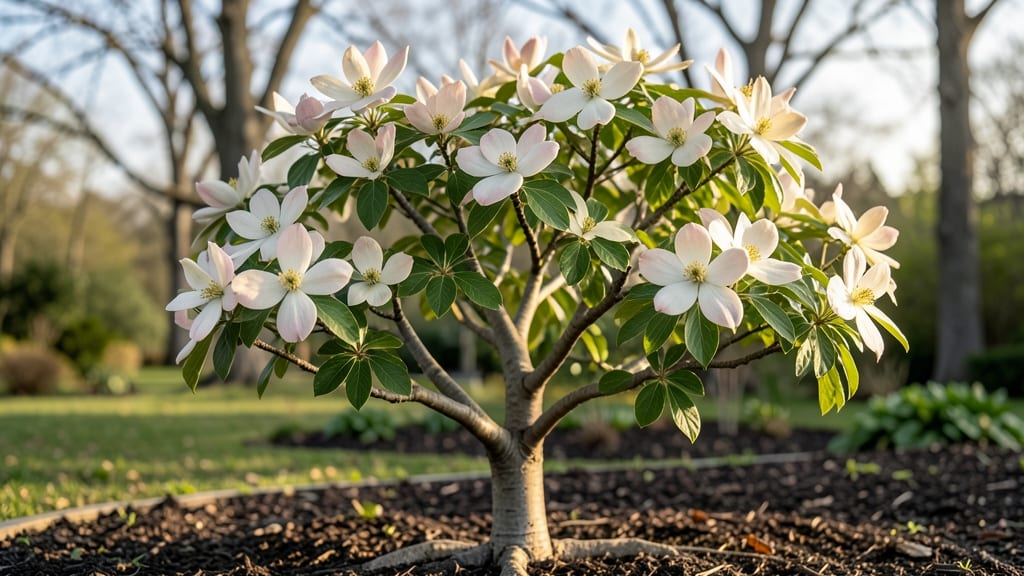
Understanding dogwood bloom meaning reveals layers of spiritual significance, as these flowers represent innocence, purity, and hope through their deep Christian symbolism and Native American traditions.
The dogwood's sacred connection begins with its striking bloom structure, where the four petals are said to symbolize the nails used in the crucifixion, while the white bracts represent the crown of thorns. 🌸 This botanical representation makes it a powerful emblem during Easter services, often incorporated into church decorations.
Beyond religious contexts, many Native American tribes view dogwoods as protectors and welcome signs of spring's renewal, weaving their branches into ceremonial objects.
What makes these blooms particularly meaningful is their resilience—they thrive in challenging conditions yet produce stunning flowers, mirroring themes of perseverance and grace. In modern times, gardeners often plant dogwoods to create sacred spaces or honor loved ones, blending ancient traditions with contemporary landscaping practices.
💡 In This Article
- Christian and Historical Symbolism Behind Dogwood Flowers
- Cultural Uses of Dogwood Blooms in Gardening and Rituals
Christian and historical symbolism behind dogwood flowers
The dogwood's spiritual significance traces back to 18th-century colonial America, where early settlers adopted it as a sacred symbol during Easter celebrations. The flower's distinctive four petals were interpreted as representing the four nails used in the crucifixion, while the surrounding white bracts symbolized the crown of thorns.
This botanical connection became so powerful that dogwoods were often planted near churches, creating living reminders of Christ's sacrifice.
What makes this symbolism so striking is the flower's mechanical structure. Unlike traditional petals, dogwood blooms have modified leaves called bracts that encircle the true flowers, creating a layered effect.
This unique anatomy aligns perfectly with Christian iconography—each element serves a purpose in the story of redemption. 🌸 The 4-inch-wide blossoms also mirror the size of early Christian symbols used in stained glass windows, reinforcing their visual connection to sacred art.
In colonial folklore, dogwoods were believed to have protective properties against evil spirits, particularly during the 40 days of Lent. Settlers would hang dogwood branches over doorways or include them in Easter baskets to ward off misfortune.
This practical application of symbolism shows how deeply the flower was integrated into daily spiritual life, far beyond mere decoration.
The dogwood's association with Easter became so entrenched that it earned the nickname "Easter flower" in many regions. By the 19th century, churches began incorporating dogwood blossoms into communion services, using them as natural altarpieces.
The flower's fleeting beauty—blooming for just 1-2 weeks in spring—also reinforced themes of transience and divine grace.
What most people don't realize is how this symbolism evolved through botanical literature. In 1838, a popular religious text called "The Flowering Shrub" explicitly linked dogwoods to the crucifixion, cementing their place in Christian iconography.
This written connection helped spread the symbolism across denominations, making dogwoods one of the few native North American plants with such deep religious significance.
Today, you'll often find dogwoods planted in churchyards or used in Easter Sunday decorations, carrying forward centuries of tradition.
The flower's ability to thrive in partial shade—common in church grounds—also makes it a practical choice for sacred spaces. 🌿 This combination of spiritual meaning and adaptability explains why dogwoods remain a staple in religious symbolism nearly 300 years after their adoption.