
Blooming
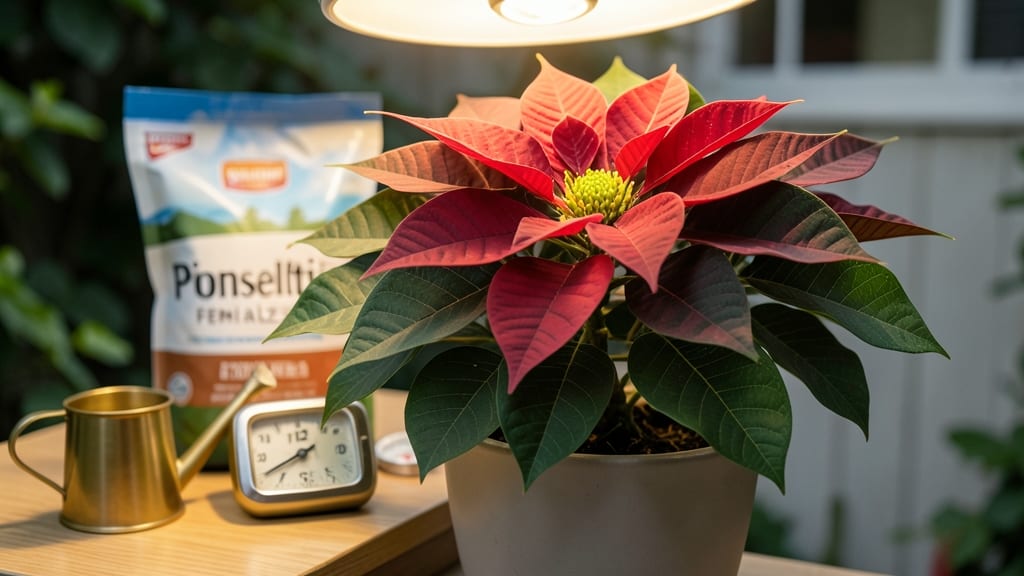
Getting your poinsettia to bloom again is all about tricking it into thinking it's fall. 🌟 The secret lies in controlling light exposure—just 14 hours of darkness each night for 6-8 weeks, starting in late summer.
I’ve revived multiple poinsettias this way, and the key is patience; the plant needs time to adjust before those vibrant bracts appear.
You’ll need a dark closet or a blackout cover for your plant, plus consistent watering—never soggy soil, but never letting it dry out completely. Fertilize lightly every 2 weeks during the growing season, and prune back any leggy stems after blooming to encourage bushier growth next year.
The payoff? A second (or third!) round of those show-stopping red, pink, or white bracts by Christmas.
Troubleshooting is simple: if blooms don’t appear, check your light schedule—even a streetlamp can ruin the effect. Yellow leaves? Too much water. Dropping buds? Too little light. With the right timing, you’ll have a poinsettia that blooms reliably year after year, becoming the star of your holiday decor every season.
This method works for both classic red varieties and newer colors like white or marbled. Start your light treatment in early October for the best results, and enjoy the process—it’s like giving your plant a second chance to shine.
📚 In This Guide
- What you need
- Instructions
- Tips and common mistakes
- Wrapping up and next steps
What you need
- ● Healthy poinsettia plant – Choose one that’s not wilted or overly leggy (look for firm stems and green leaves).
- ● Well-draining potting mix – A blend of peat moss, perlite, and compost (or a pre-mixed african violet soil works too!). Quantity: Enough to repot if needed (~1–2 gallons per 6-inch pot).
- ● 6–8 inch pot with drainage holes – Terracotta or plastic (just ensure it’s clean to avoid fungal issues).
- ● Balanced liquid fertilizer – A 10-10-10 or 20-20-20 NPK ratio (diluted to half-strength). Quantity: ~2 tbsp per gallon of water.
- ● Grow lights or blackout box – A LED grow light (12–15 watts) or a cardboard box with a light timer (for DIY blackout cycles).
- ● Timer or smart plug – To automate 14-hour light / 10-hour darkness cycles (e.g., Kasa Smart Plug or a simple mechanical timer).
- ● Pruning shears – For trimming leggy stems back by ⅓ after blooming (sterilize with rubbing alcohol!).
- ● Humidity tray or pebble tray – Poinsettias love 40–50% humidity; add water and pebbles to create a microclimate.
- ● Thermometer/hygrometer – To monitor 65–75°F temps (avoid drafts or cold windows!).
- ○ Rooting hormone (optional) – If propagating from cuttings, use a gel or powder to boost success.
Step-by-Step instructions for getting your poinsettia to bloom again
Here's the foolproof method I use every year to coax vibrant blooms from last season's poinsettia.
🌱 Step 1: Start with a Healthy Plant After Holiday Display
Let your poinsettia enjoy natural light near a sunny window for 6-8 weeks after the holidays. This recovery period prevents stress and builds plant strength. You'll notice new growth emerge as bright green leaves appear along the stems—this is your plant's way of telling you it's ready for the next phase.
Water only when the top inch of soil feels dry to the touch. Overwatering is the #1 killer of poinsettias—yellowing leaves usually mean you're watering too much. I like to stick my finger in the soil to check; if it's damp below the top inch, wait another day.
☀️ Step 2: Implement the Critical Light Schedule
On September 1st, begin your 14-hour night treatment—this is where the magic happens. From 5pm to 9am daily, cover the plant completely with a dark box, black plastic bag, or even a sheet draped over it. Total darkness is essential; even a tiny light leak will prevent blooming.
During these dark periods, poinsettias produce hormones that trigger flower formation. You'll see the first signs of progress when the plant develops buds along the stems after about 6-8 weeks of consistent treatment. Keep the plant in a spot with bright indirect light during the remaining daylight hours.
⏰ Step 3: Maintain Consistent Care Through Bud Development
Continue your light schedule until you see colorful bracts beginning to form—this typically happens around 8-10 weeks after starting the treatment. During this time, keep your plant in 65-75°F temperatures and maintain even moisture without letting soil dry out completely.
I rotate the plant quarter turn weekly to ensure even growth. Watch for red or pink tinges on the bracts—this is your plant's way of showing excitement about blooming! Once the bracts reach half their mature size, you can stop the night treatment and let the plant enjoy full natural light.
💧 Step 4: Transition to Holiday Display Mode
About 4-6 weeks before Christmas, move your poinsettia to its holiday display location. This gives the plant time to adjust and ensures it's at peak color when guests arrive. Keep the soil lightly moist but never soggy—poinsettias are surprisingly drought-tolerant once established.
You'll know you've succeeded when your plant produces vibrant red, pink, or white bracts that last for weeks. The secret is patience and consistency—skipping even one night of darkness can delay or prevent blooming entirely. I always mark my calendar to remind me when to start and stop the treatment.
✂️ Step 5: Post-Bloom Care for Next Year's Success
After the holidays, let your poinsettia rest by keeping it in bright light and watering only when needed. In late spring, prune back the stems to 6-8 inches above the soil line. This encourages bushier growth for next year's blooms. You'll see new growth emerge from the sides within 2-3 weeks.
Feed your plant with balanced liquid fertilizer every 4-6 weeks during the growing season. This gives your poinsettia the nutrients it needs to store energy for next year's spectacular display. With proper care, your plant can bloom beautifully for 5-10 years or more!
Tips & tricks for perfect poinsettia blooms
Real talk: getting your poinsettia to bloom again isn't just about following steps—it's about understanding the plant's hidden cues. Here's what I've learned after years of trial and error.
Light Leak Prevention: In Step 2, when you're covering your plant for the 14-hour night treatment, make sure your covering material is completely opaque. Even a tiny light leak—like from a nightlight or streetlamp—can prevent blooming. I use a heavy black plastic bag with no holes and double-check that it's fully sealed around the pot. This is non-negotiable for success.
Temperature Matters: The 65-75°F range in Step 3 is crucial, but consistency matters more than the exact number. If your home gets chilly at night, consider moving your poinsettia closer to an interior wall or using a small space heater (set to low) during the dark treatment period. Poinsettias are tropical plants—they need stable warmth to trigger those flower-forming hormones.
Visual Growth Cues: In Step 3, when you're watching for those red or pink tinges on the bracts, pay attention to the leaves too. Healthy new growth should have vibrant green leaves that stand out against the stems. If you notice yellowing or brown spots, it's usually a sign of either overwatering or underwatering—both can derail your blooming plans.
Calendar Reminders: Mark your calendar for September 1st (Step 2) and again for when to stop the night treatment (Step 3). I set phone reminders too—skipping even one night of darkness can delay blooming by weeks. The plant needs complete consistency to produce those beautiful bracts on schedule.
Pro Tips for Get A Poinsettia To Bloom Again
- Real talk: getting your poinsettia to bloom again isn't just about following steps—it's about understanding the plant's hidden cues.
- Light Leak Prevention: In Step 2, when you're covering your plant for the 14-hour night treatment, make sure your covering material is completely opaque.
- Temperature Matters: The 65-75°F range in Step 3 is crucial, but consistency matters more than the exact number.
Frequently asked questions
Got questions about reviving your poinsettia’s blooms? You’re not alone! Here are answers to the most common concerns—from timing tricks to troubleshooting tips—to help you keep those vibrant red bracts coming back year after year.
Why isn’t my poinsettia blooming after last year’s success?
Poinsettias need 12+ hours of darkness consistently for 6–8 weeks to trigger blooming. If your plant gets even a little light (like from a streetlamp or phone screen), the cycle resets. Double-check your timing—especially if you’re using artificial light to extend daylight hours.
How soon can I expect blooms after starting the light schedule?
Patience is key! With perfect light control, you’ll see buds forming in 6–8 weeks, and full blooms typically appear by late November or December. Early signs? Tiny yellow buds (the real flowers) peeking through the bracts—don’t trim them off!
Can I use grow lights instead of keeping the plant in a dark closet?
Yes! Use a red/white LED grow light (avoid blue light) and place it 6–12 inches above the plant. Run it for 16 hours/day (or 8 hours off) to mimic natural daylight. Just ensure the light turns off automatically—no cheating!
What do I do if my poinsettia drops leaves or looks leggy?
Leggy growth or leaf drop usually means too much light during the dark period or inconsistent care. Move the plant to a bright, indirect spot during daylight, and stick to the strict dark schedule at night. Prune leggy stems to encourage bushier growth.
Will my poinsettia bloom again if I keep it indoors year-round?
Many growers successfully rebloom poinsettias indoors for years by following the light schedule religiously. Just be prepared to rotate the plant weekly for even growth and fertilize lightly (every 4–6 weeks) during the growing season.
Pro Tip: Label your calendar! Mark the start of your 6-week dark period so you don’t forget. Missed a night? No stress—just reset the countdown. Poinsettias are forgiving!
Wrapping up and next steps
Getting your poinsettia to bloom again is all about patience, consistency, and a little light magic! 🌟 With the right care—like controlling those long, dark nights and keeping it cozy—you’ll soon be rewarded with vibrant red (or pink, white, or even bicolor!) blooms.
Remember, even the most experienced gardeners face a few hiccups, but every effort counts.
Ready to try? Start now—give your poinsettia the love it deserves, and watch it transform into a stunning holiday star year after year! 🎄✨