
Blooming
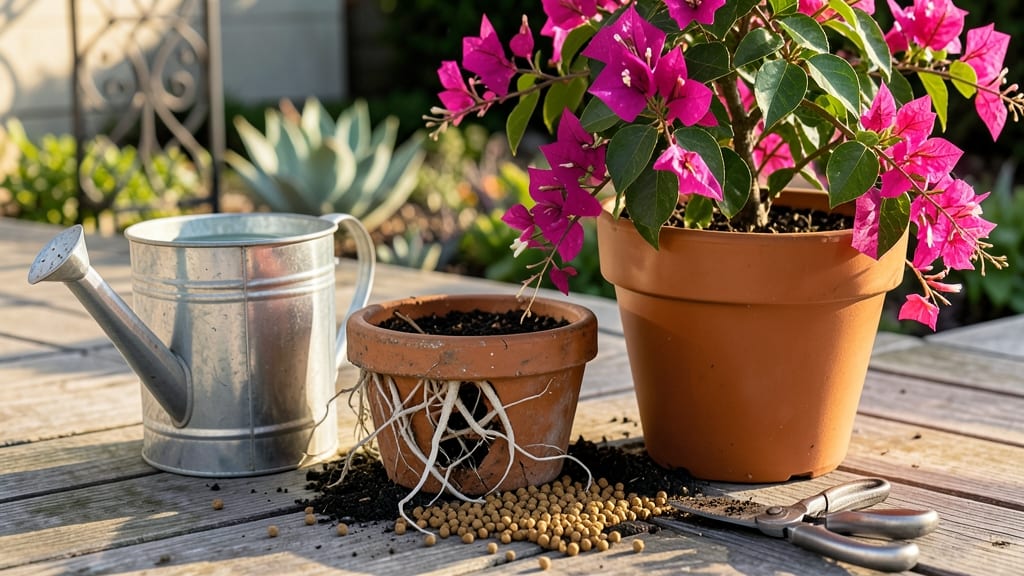
Making bougainvillea bloom in pots isn’t magic—it’s sunlight, sharp pruners, and a little extra food. 🌸 My first potted bougainvillea sat for months with just green leaves until I learned these tricks, and now it’s a purple waterfall from spring to frost.
The key? Pruning at the right time and feeding with the right nutrients to trigger those vibrant bracts.
Start with 6+ hours of direct sun daily—bougainvillea won’t bloom in shade. Use well-draining soil (cactus mix works) and a pot with drainage holes to avoid soggy roots.
Overwatering kills blooms faster than anything else. Feed every 2-3 weeks with a low-nitrogen, high-phosphorus fertilizer (like 5-10-10) to push flowering instead of leafy growth.
Prune back one-third of the plant in early spring and again after blooming to encourage new growth. Cut just above a leaf node where new buds form—this forces the plant to focus energy on producing those showy purple clusters.
With consistent care, your potted bougainvillea can bloom year-round in warm climates or at least 6 months straight in cooler zones.
Common mistakes? Too much water (let soil dry between waterings) or not enough light (move it outdoors if indoors). Bougainvillea thrives on neglect—just give it sun, prune smart, and feed regularly. Once you master this, you’ll have neighbors begging for cuttings from your nonstop blooming pots.
📚 In This Guide
- What you need
- Instructions
- Tips and common mistakes
- Wrapping up and next steps
What you need
- ● Bougainvillea plant: A healthy, potted specimen (ensure it’s Bougainvillea spectabilis or a hybrid variety for best results).
- ● Well-draining pot: Terracotta or ceramic (12–18 inches in diameter) with drainage holes. Avoid plastic—it retains too much moisture!
- ● High-quality potting mix: Cactus/succulent blend (60%) + perlite/pumice (30%) + compost (10%) for aeration and nutrients.
- ● Pruning shears: Sharp, sterilized bypass pruners (size 8–10 inches).
- ● Balanced fertilizer: 10-10-10 or 20-20-20 NPK (water-soluble, 1 tbsp per gallon of water).
- ● Phosphorus-rich fertilizer: Bone meal or 5-10-10 formula (for blooms, 1 tsp per pot).
- ● Watering can: With a narrow spout to avoid over-saturating the soil.
- ○ Mulch (optional): Gravel or pine bark chips (1-inch layer) to retain moisture and regulate temperature.
- ● Sunlight: Full sun (6+ hours daily). South- or west-facing spots are ideal!
- ● Temperature: 65–95°F (18–35°C). Bougainvillea hates frost—bring pots indoors if temps drop below 50°F (10°C).
- ● Humidity: Moderate to low (avoid damp, enclosed spaces like greenhouses).
- ● 🔥 Test your soil: Aim for a pH of 6.0–7.0. Use a soil kit if unsure!
- ● ✨ Repot every 2–3 years: Refresh the mix to prevent nutrient depletion.
- ● 🌡️ Monitor moisture: Stick your finger 1 inch into the soil—water only when dry.
Step-by-Step instructions for encouraging bougainvillea blooms in pots
Here's the proven approach I use to transform stubborn bougainvillea into a flowering powerhouse.
☀️ Step 1: Position for Maximum Sunlight and Heat
Bougainvillea demands full sun exposure—at least 6-8 hours daily—and thrives in heat. Place your pots in the sunniest spot possible, like a south-facing patio or balcony. If shade is unavoidable, choose a location with at least 4 hours of direct sunlight to prevent leggy growth and sparse blooms.
I've found that bougainvillea responds dramatically to warmth. In cooler climates, move pots closer to the house during mornings or evenings when temperatures dip below 55°F. The plant's vibrant purple bracts (the showy "flowers") develop best when exposed to consistent warmth and bright light.
✂️ Step 2: Prune Strategically to Stimulate Blooms
Pruning is where the magic happens. Cut back one-third of the plant's growth in early spring, just as new shoots begin to emerge. Focus on removing long, leggy stems and any dead or weak branches. This encourages the plant to produce shorter, bushier branches that will support more blooms.
Here's the thing—I always prune just above a leaf node or bud, never at a joint. This ensures the plant redirects its energy into new growth rather than wasting it on healing old cuts. After pruning, give your bougainvillea a light feeding with a balanced fertilizer (10-10-10) to support the new growth.
💧 Step 3: Water Deeply but Sparingly
Bougainvillea is drought-tolerant, and overwatering is a surefire way to kill blooms. Water only when the top 2 inches of soil feel dry to the touch. During the growing season, this usually means watering every 5-7 days, but adjust based on your climate and pot size.
I like to water in the morning so the plant has all day to dry out. This prevents root rot and encourages the plant to focus on producing flowers rather than struggling with excess moisture. If you notice the leaves wilting slightly, that's often a sign the plant is thirsty—just give it a thorough watering.
🌿 Step 4: Feed with Phosphorus-Rich Fertilizer
Bougainvillea blooms are fed by phosphorus, so choose a fertilizer with a higher middle number, like 7-9-5 or 10-20-10. Apply this fertilizer every 4-6 weeks during the growing season, starting in early spring and tapering off in late summer. Avoid fertilizing in fall or winter, as the plant enters a dormant phase.
Real talk: I've made the mistake of over-fertilizing, which leads to lush foliage but few blooms. To avoid this, always follow the package instructions and dilute the fertilizer if recommended. You'll see the best results when the plant is well-fed but not overloaded.
⏰ Step 5: Monitor and Adjust for Continuous Blooms
Bougainvillea blooms best when it's slightly stressed, so don't be afraid to let it dry out a bit between waterings. Watch for new growth and adjust your care routine accordingly. If you notice the plant producing fewer blooms, it might need more sunlight or a pruning to encourage new shoots.
Here's what I do: Every few weeks, I give my bougainvillea a quick check. If the leaves are dark green and the plant looks healthy, I know it's happy. If the leaves are pale or the growth is sparse, I adjust the watering or move the pot to a sunnier spot. This proactive approach keeps my bougainvillea blooming nonstop from spring through fall.
Tips & tricks for encouraging bougainvillea blooms in pots
Transforming your bougainvillea into a flowering powerhouse takes more than just following the steps—it's about understanding the subtle cues your plant gives you.
Sunlight Strategy: While the instructions mention 6-8 hours of sunlight, I've found that bougainvillea actually benefits from morning sun and afternoon shade in extremely hot climates. Position your pots to receive the intense morning rays first, then move them to partial shade after 11 AM if temperatures exceed 85°F. This prevents leaf scorch while still providing the essential light for blooming.
Pruning Precision: When you're cutting back one-third of the plant's growth in Step 2, focus on removing stems that are growing away from the center of the plant. These leggy branches often produce fewer blooms. I like to make my cuts at a 45-degree angle just above a leaf node—this creates a larger surface area for faster healing and encourages more vigorous regrowth.
Watering Wisdom: The "top 2 inches dry" rule is perfect, but here's what nobody tells you: bougainvillea roots actually extend far beyond that depth. I recommend using a moisture meter to check soil moisture at 4 inches down—this gives you a more accurate picture of when your plant truly needs water. In containers, the soil dries out faster than in ground plantings, so you might need to water every 4-5 days instead of 5-7.
Fertilizer Timing: The 4-6 week feeding schedule works beautifully, but I've discovered that bougainvillea responds even better to a split application. Instead of one heavy dose, divide your phosphorus-rich fertilizer into two lighter applications—once in early spring and again in early summer. This mimics natural seasonal growth patterns and prevents nutrient burn that can stress the plant.
Pro Tips for Make Bougainvillea Bloom In Pots
- Transforming your bougainvillea into a flowering powerhouse takes more than just following the steps—it's about understanding the subtle cues your plant gives you.
- Sunlight Strategy: While the instructions mention 6-8 hours of sunlight, I've found that bougainvillea actually benefits from morning sun and afternoon shade in extremely hot climates.
- Pruning Precision: When you're cutting back one-third of the plant's growth in Step 2, focus on removing stems that are growing away from the center of the plant.
Frequently asked questions
Got questions about keeping your potted bougainvillea in full, vibrant bloom? We’ve got answers!
Here are some of the most common queries from gardeners eager to maximize those stunning purple, pink, or orange cascades—plus troubleshooting tips to keep your plant thriving.
Why isn’t my potted bougainvillea blooming, even after pruning?
Bougainvillea blooms in response to stress—like pruning—but it also needs consistent care. If flowers are scarce, check for these issues:
- Lack of sunlight: Move pots to a spot with 6+ hours of direct sun daily (south or west-facing is ideal).
- Overwatering: Let the top 2–3 inches of soil dry out between waterings. Soggy roots = fewer blooms.
- Nutrient imbalance: Too much nitrogen (from lawn fertilizer) fuels leaves, not flowers. Use a low-N, high-P (phosphorus) fertilizer instead.
How often should I fertilize bougainvillea in pots for continuous blooms?
Feed your bougainvillea every 4–6 weeks during spring and summer (its blooming season) with a balanced, bloom-boosting fertilizer (e.g., 10-10-10 or 7-9-5). In fall/winter, reduce to once every 8–12 weeks or stop if growth slows. Key: Avoid high-nitrogen fertilizers—they’ll give you lush foliage but fewer flowers.
Can I use regular potting soil, or do I need something special?
Bougainvillea thrives in well-draining, slightly acidic to neutral soil (pH 6.0–7.0). While regular potting mix works, amend it with:
- 20–30% perlite or coarse sand to prevent root rot.
- A handful of orchid bark or coconut coir for aeration.
Is it normal for bougainvillea to drop flowers or leaves suddenly?
Yes! Bougainvillea is sensitive to environmental changes, and sudden drops often signal stress. Common culprits:
- Temperature shock: Protect from cold drafts (<40°F/4°C) or sudden heat spikes.
- Overwatering: Yellow leaves = root rot. Let soil dry out completely between waterings.
- Pests: Check for aphids or spider mites (use neem oil if spotted).
- Transplant shock: If recently repotted, give it 2–3 weeks to adjust.
What’s the best pot size for bougainvillea to encourage blooming?
Bougainvillea hates being root-bound, but too much space = fewer blooms. Use a pot that’s:
- 1–2 inches larger in diameter than the root ball (e.g., 12–16" for mature plants).
- At least 12" deep to support its sprawling roots.
Wrapping up and next steps
With the right care—pruning, feeding, and a little sunshine—your potted bougainvillea can burst into vibrant blooms year after year! 🌸 Remember, patience and consistency are key, so don’t rush the process. Once you’ve mastered these techniques, watch your purple cascades transform any space into a tropical paradise.
Ready to see your efforts pay off? Start by picking a sunny spot, grab your pruners, and give your plant the love it deserves! 🌿