
Blooming
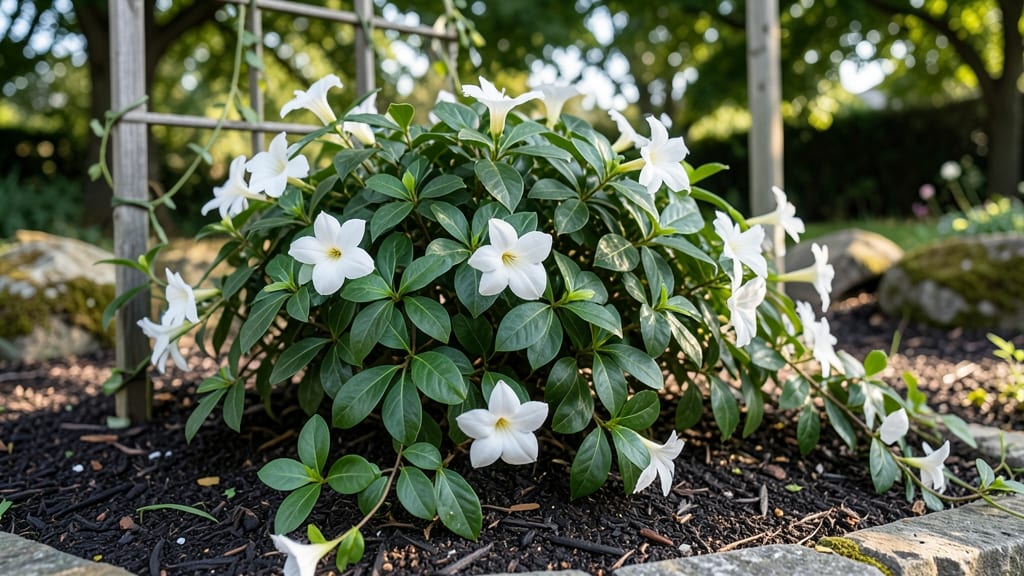
The star jasmine bloom time arrives like clockwork—just as the air warms to 75-85°F in late spring. 🌸 This evergreen climber unfolds its star-shaped white blooms in May-June across most of the U.S., but in warmer zones (like Florida or California), it can flower twice a year—spring and fall.
The key? Consistent warmth without scorching heat, which can stress the plant. What makes star jasmine special is its repetitive blooming—unlike many vines, it keeps producing flowers for 6-8 weeks if conditions are right. Too much shade or sudden temperature swings can shorten the show, though.
Prune lightly after blooms fade to encourage fresh growth, and watch those fragrant clusters return next season. The real magic happens at dusk when the jasmine scent takes over—so strong it lingers in the air like a natural perfume.
For gardeners planning around it, time your pruning right after flowering to avoid cutting off next year’s buds. And here’s a pro tip: mulch heavily in winter to protect roots from cold snaps that can delay blooms.
Perfect for trellises, arbors, or fences, star jasmine thrives in zones 7-10 with minimal fuss. Just give it full sun to partial shade and well-draining soil, and it’ll reward you with year-round greenery and those intoxicating summer nights. Now that’s what I call a low-maintenance superstar!
📚 In This Guide
- What you need
- Instructions
- Tips and common mistakes
- Wrapping up and next steps
What you need
- ● Star Jasmine Plant (Trachelospermum jasminoides): 1-2 mature plants (3-5 years old for best blooming potential)
- ○ Optional: 1-2 young plants (1-2 years old) for faster establishment
- ● Well-draining potting mix: 50% premium garden soil
- ● 30% perlite or coarse sand (for aeration)
- ● 20% compost or aged manure (for nutrients)
- ● Containers: 1-2 pots (12-18 inches in diameter) with drainage holes
- ○ Optional: Trellis or climbing frame (4-6 feet tall) for vertical growth
- ● Fertilizer: Balanced, slow-release fertilizer (10-10-10 or 20-20-20, 1 tbsp per plant)
- ○ Optional: Organic options like fish emulsion or worm castings
- ● Pruning tools: 1 pair of clean, sharp bypass pruners
- ○ Optional: Hand pruners for smaller trims
- ● Mulch: 2-3 inches of organic mulch (e.g., shredded bark or pine needles)
- ● Sunlight: Full sun to partial shade (6+ hours of sunlight daily for optimal blooms)
- ● Temperature: Ideal range: 60–85°F (15–30°C)
- ● Pro Tip: Star jasmine loves heat—consistent warmth triggers blooming! 🌡️
- ● Watering: Keep soil evenly moist but not soggy (1 inch of water per week)
- ○ Optional: Drip irrigation system for automated care
- ● Humidity: Prefers 50–70% humidity (mist leaves occasionally in dry climates)
How to time star jasmine blooms for peak fragrance
Here's the method I've used to coax star jasmine into reliable, fragrant blooming—even in less-than-ideal climates.
☀️ Step 1: Understand the Heat Trigger
Star jasmine (Trachelospermum jasminoides) blooms in response to consistent daytime temperatures above 75°F—not frost dates or calendar months. That's why your neighbor's plant may flower in May while yours waits until July. I track weekly high temperatures using a simple outdoor thermometer near the plant.
If your summers hover around 80-85°F, you'll typically see buds form within 4-6 weeks after the first heat wave. Cooler climates? Don't worry—just provide afternoon shade until temps stabilize. The key is three consecutive days above 75°F to trigger the first flush of buds.
💧 Step 2: Adjust Watering for Bud Formation
Once daytime temps hit 70°F consistently, reduce watering slightly to once every 5-7 days instead of weekly. Star jasmine forms buds when the roots experience mild stress—think of it like a plant-induced meditation retreat. Overwatering now prevents bud set entirely.
Check moisture by sticking your finger 1-2 inches deep into the soil. If it feels damp but not soggy, you're golden. I water deeply at the base—never overhead—because wet leaves encourage fungal diseases that can rot buds before they open. This is the moment that matters: buds form when roots sense warmth and slight dryness simultaneously.
✂️ Step 3: Prune for Airflow and Light Exposure
Three weeks before expected bloom time, give your star jasmine a light pruning to remove any dead or crossing branches. I use clean, sharp bypass pruners to make cuts just above a leaf node. The goal is to improve airflow—this prevents the bud blast problem where flowers form but never open due to humidity buildup.
Focus pruning on the outer third of the plant to encourage new growth that will flower. You'll see fresh, vibrant green shoots emerging within 10-14 days—these are your future bloom stems. Avoid heavy pruning now; you want established branches carrying the flower clusters, not new growth that won't have time to mature.
🌿 Step 4: Feed with Phosphorus-Rich Fertilizer
When you spot first buds forming (they'll look like tiny green pea pods), switch to a balanced 10-10-10 fertilizer with an emphasis on phosphorus. I apply half-strength solution every 10-14 days until blooms open. Phosphorus is what triggers the energy shift from leaf production to flower development.
Here's the thing—star jasmine is sensitive to nitrogen after bud set. Too much nitrogen now means lush foliage but no flowers. I always check the fertilizer label for a second number (phosphorus) higher than the first (nitrogen). Water the soil thoroughly after each feeding to prevent root burn.
🌱 Step 5: Extend the Bloom Season Strategically
To coax a second flush of blooms in fall, I use a two-pronged approach: first, provide afternoon shade when daytime temps drop below 70°F, and second, apply a light mulch layer (2-3 inches) around the base. This insulates roots and maintains warmth longer into the season.
Watch for new buds forming on the current year's growth—these indicate the plant is preparing for another round. I've had star jasmine bloom as late as October in Zone 8 using this method. The secret is protecting the roots from temperature swings while still giving the plant enough light to sustain flowering.
Tips & tricks for perfect star jasmine bloom timing
These insider tricks will help you coax the most fragrant blooms from your star jasmine—no matter your climate challenges.
Heat Monitoring Hack: The 75°F threshold isn't just a number—it's the biological trigger for bud formation. I place a small digital thermometer near the plant's canopy to track hourly fluctuations. In cooler zones, I've found that morning temps above 70°F paired with afternoon highs of 80°F create the perfect diurnal rhythm for consistent blooming. This mimics the plant's natural tropical origins without requiring a greenhouse.
Watering Precision: When adjusting to the 5-7 day watering schedule in Step 2, I test soil moisture at two depths: 1-2 inches for surface dryness and 3-4 inches for root zone hydration. The goal is to create that "mild stress" condition without crossing into drought territory. I've seen buds abort when roots dry out completely, so always check the deeper layer first. A moisture meter with a 4-inch probe makes this easy to track.
Pruning Timing Secret: The three-week pruning window in Step 3 might seem arbitrary, but it aligns perfectly with the plant's growth cycle. By pruning then, you're targeting the most vigorous new shoots that will produce flowers within 10-14 days. I mark my calendar three weeks before my area's average last frost date—this ensures I'm not pruning too early (when buds haven't formed) or too late (when flowers are already set).
Fertilizer Application: For the phosphorus-rich feeding in Step 4, I've found that applying the half-strength solution in the early morning prevents leaf burn from evaporation. The key is consistency—stick to the 10-14 day schedule until blooms open completely. I keep a small notebook by my plants to track which fertilizer batches produce the most abundant blooms, as different brands can vary significantly in nutrient availability.
Pro Tips for Star Jasmine Bloom Time
- These insider tricks will help you coax the most fragrant blooms from your star jasmine—no matter your climate challenges.
- Heat Monitoring Hack: The 75°F threshold isn't just a number—it's the biological trigger for bud formation.
- Watering Precision: When adjusting to the 5-7 day watering schedule in Step 2, I test soil moisture at two depths: 1-2 inches for surface dryness and 3-4 inches for root zone hydration.
Frequently asked questions
Got questions about timing, care, or maximizing your star jasmine’s heavenly blooms? Here’s what gardeners ask most—plus the answers to keep those fragrant flowers coming!
When does star jasmine bloom, and how long does it last?
Star jasmine (Trachelospermum jasminoides) typically blooms in late spring to early summer (May–June), but with the right care—like pruning and heat exposure—it can rebloom in fall (September–October). Individual flowers last 1–2 days, but clusters linger for weeks, filling the air with sweet perfume. Pro tip: Deadhead spent blooms to encourage more flowers!
Can I force star jasmine to bloom earlier or later?
While you can’t force blooms like with bulbs, you can nudge timing by adjusting care. For earlier blooms, prune lightly in early spring and ensure full sun. For fall reblooms, fertilize in early summer and avoid heavy pruning. Heat-loving star jasmine thrives in 70–90°F—so if your region has a late frost, wait until after May 15 to plant for optimal blooming.
Why isn’t my star jasmine blooming this year?
No flowers? Check these common culprits:
- Too much shade: Star jasmine needs 6+ hours of sun daily. Move it to a sunnier spot or trim overhanging trees.
- Over-fertilizing: Too much nitrogen = lush leaves, no blooms. Use a balanced 10-10-10 fertilizer in spring.
- Underwatering: Drought stress delays blooms. Water deeply 1–2x/week (more in heatwaves).
- Young plant: Star jasmine often waits 2–3 years to bloom. Patience pays off!
What’s a good alternative if star jasmine blooms too late for my climate?
If your zone’s short summer cuts star jasmine’s bloom time short, try these fragrant, heat-loving alternatives:
Plant
Bloom Time
Fragrance Notes
Jasmine (Jasminum officinale)
Summer–fall (June–September)
Sweet, heady, like tea roses
Clematis ‘Jackmanii’
Mid-summer to frost (July–October)
Light, citrusy, fresh
Abelia ‘Kaleidoscope’
Summer–fall (June–October)
Honey-like, subtle
Will star jasmine survive winter and bloom again next year?
Yes! Star jasmine is semi-evergreen in zones 8–11 and deciduous in colder zones (6–7). To protect it:
- Mulch heavily with 3–4 inches of shredded bark in fall.
- Wrap young plants in burlap if temps drop below 10°F.
- Avoid pruning until late winter—blooms form on old wood.
Wrapping up and next steps
Now that you know star jasmine’s love for warmth and how to coax those heavenly blooms year-round, it’s time to roll up your sleeves and give your plant the care it craves! 🌿 Whether you’re adjusting pruning techniques, optimizing sunlight, or troubleshooting with confidence, your efforts will soon be rewarded with fragrant, star-shaped flowers that turn your garden into a sensory paradise.
Ready to transform your outdoor space? Start by picking one tip from this guide—maybe it’s testing a heat mat or adjusting your pruning schedule—and watch your star jasmine thrive. Happy gardening! 🌸