Blooming
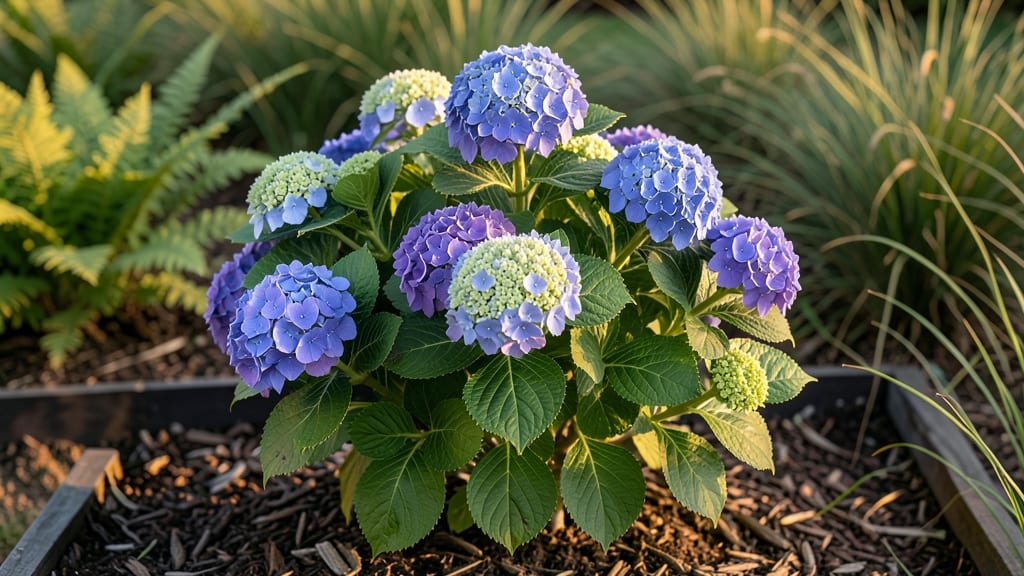
Hydrangeas in the Northeast typically bloom between late May and August, with timing varying by variety—Hydrangea paniculata (like 'Limelight') usually flowers in June–July, while H. macrophylla (such as 'Endless Summer') often blooms from July to September if deadheaded. Cooler climates (Zones 4–6) can delay blooms by 2–4 weeks compared to warmer areas.
Timing depends heavily on your specific hydrangea type and local microclimate. 🌸 For example, Hydrangea arborescens (smooth hydrangea) often blooms in early summer, while Hydrangea quercifolia (oakleaf) tends to flower slightly later, around July.
The key factor is whether your variety sets buds on old wood (like macrophylla) or new wood (like paniculata), as this determines pruning windows and bloom triggers. In colder regions, waiting until after the last frost ensures you don't accidentally prune off next year's flowers.
Pro tip: Plant near a south-facing wall or use protective mulch to create a warmer microclimate that can extend blooms into early fall. This simple adjustment can make a noticeable difference in your garden's seasonal display.
💡 In This Article
- Hydrangea Blooming Seasons by Northeast Varieties
- Tips to Extend Hydrangea Blooms in Northeast Gardens
Hydrangea blooming seasons by Northeast varieties
The Northeast's hydrangea blooming calendar is primarily dictated by two biological factors: whether the plant sets buds on old wood (last year's growth) or new wood (current season's growth), and its cold hardiness rating.
For instance, Hydrangea paniculata varieties like 'Limelight' and 'Little Lime' are new-wood bloomers, meaning their buds form on current season's shoots after winter dormancy.
This allows them to bloom reliably from mid-June to July in Zones 5–7, with a 2-3 week delay in colder Zone 4 areas where spring arrives later.
The science behind this timing involves chilling requirements—most hydrangeas need 150-300 hours below 45°F during winter to break dormancy. H. macrophylla (bigleaf hydrangeas) like 'Endless Summer' are old-wood bloomers, so their buds form in late summer/fall and require consistent moisture (1–1.5 inches per week) to survive winter.
In the Northeast, these typically bloom from July to September, but deadheading spent blooms in early fall encourages reblooming by redirecting energy to new wood growth. 🌸
Temperature fluctuations also play a critical role. A sudden late frost in May can damage emerging buds on old-wood varieties, while warm spells in winter may prevent adequate chilling. Hydrangea arborescens (smooth hydrangea) blooms on new wood from June to early August, making it more frost-resistant than old-wood types.
Meanwhile, H. quercifolia (oakleaf) blooms slightly later (July–August) due to its slower spring emergence, but its large leaves help it capture sunlight for extended flowering.
Here's how hardiness zones affect bloom timing in the Northeast:
- Zones 4–5: Blooms typically start 2–4 weeks later than Zone 6+ due to colder springs. For example, 'Limelight' may bloom in late June instead of June.
- Zones 6–7: Standard bloom windows apply, but heatwaves before June 15 can stress new wood bloomers.
- Zone 8+: Some varieties may bloom 1–2 weeks earlier, but risk bud damage from late frosts.
What most gardeners don't realize is that H. paniculata varieties often produce their second flush of blooms in September if given proper care. This happens because their new wood continues growing into early fall, allowing late-season flowers to develop.
The key is maintaining consistent moisture and avoiding heavy pruning until after blooms fade. 💫
For visual reference, imagine this timeline: paniculata (June–July), macrophylla (July–September), arborescens (June–August), and quercifolia (July–August). The overlap creates a stunning 3-month hydrangea show when planted together, with each variety playing its part in the seasonal progression.