
Blooming
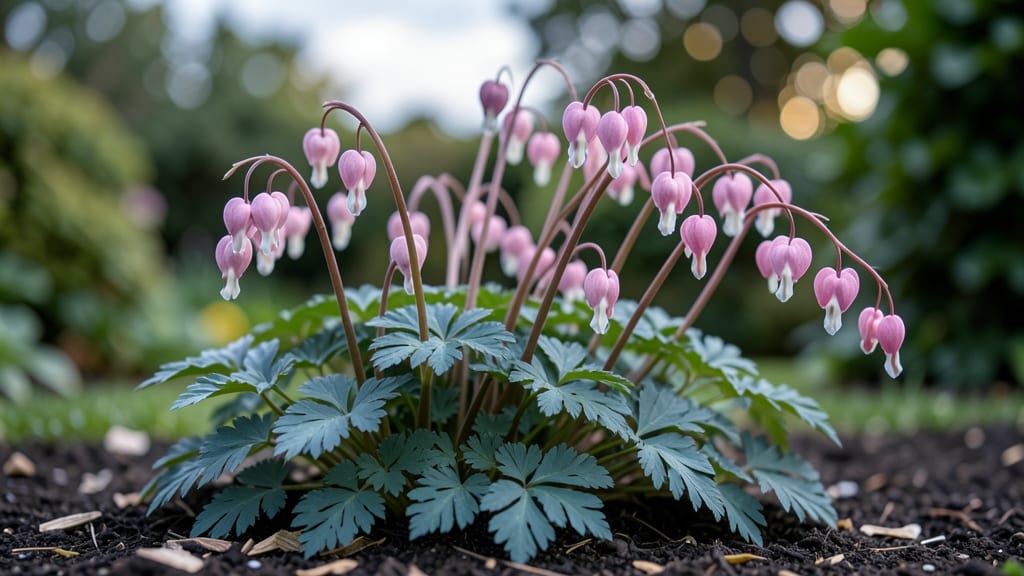
The bleeding heart bloom time depends on your zone and variety, but most burst into flower in late spring—think April or early May in General (Zone 6 default).
If you’ve ever wondered why your 💔 plant seems to vanish after spring blooms, you’re not alone—timing everything from planting to flowering is key to maximizing its stunning heart-shaped flowers each season.
In cooler zones like 6a, expect blooms to arrive a little later, around mid-May, while warmer climates might see them as early as March. The right light—partial shade with morning sun—and well-draining soil can shift that window by weeks.
Below, I’ll break down how to sync your care with nature’s clock, from planting in early spring or fall to pruning strategies that keep those delicate blooms coming year after year.
When do bleeding hearts bloom? Seasonal timeline by variety
Bleeding hearts (Dicentra spectabilis) are famous for their delicate, heart-shaped pink or white flowers that appear like clockwork each spring. But the exact bloom time varies by variety, maturity, and light exposure.
First-year plants often bloom later—or not at all—while mature plants can produce flowers for 4–6 weeks if conditions are right.
Most classic varieties like 'Alba' (white flowers) and 'Valentine' (deep pink) bloom in late spring to early summer, typically between April and June in USDA Zones 3–9. However, reblooming varieties like 'Stuart Boothman' may produce a second flush of flowers in late summer or fall with proper care.
The summary table below breaks down bloom times by variety, including key differences between first-year and mature plants. Light exposure plays a critical role—too much sun can delay blooms, while partial shade with morning sunlight encourages earlier and longer flowering.
First-year bleeding hearts often skip blooming entirely or produce only a few flowers, as they prioritize root and foliage growth. To encourage earlier blooms next year, plant in well-draining, rich soil with organic matter and mulch heavily to retain moisture. Avoid over-fertilizing with nitrogen, which can delay flowering.
Light exposure is critical: Morning sun and afternoon shade trigger blooms, while hot afternoon sun can stress the plant and push back bloom time. If you’re in a warmer climate (Zones 8–9), expect blooms to shift to late winter or early spring instead of traditional spring timing.
For reblooming varieties, deadhead spent flowers in early summer to encourage a second flush. Prune back foliage by half in late summer to redirect energy toward fall blooms. However, avoid heavy pruning—this can reduce next year’s flower production.
If your bleeding heart isn’t blooming on schedule, check for overcrowding or poor soil drainage. These plants thrive in humus-rich, slightly acidic soil (pH 6.0–7.0). Amend heavy clay or sandy soil with compost or peat moss to improve conditions.
A light feeding in early spring with a balanced fertilizer (5-10-10) can also boost flower production.
Pro tip: Plant bleeding hearts near hostas or ferns to create a shady, moisture-retentive microclimate that mimics their natural woodland habitat. This can help extend bloom time by 1–2 weeks in both spring and fall.
Remember, patience is key—first-year plants may take 2 years to reach full bloom potential. With the right care, your bleeding heart will reward you with months of stunning, heart-shaped flowers every season. 🌿
How USDA Hardiness zones impact bleeding heart bloom periods
Your USDA Hardiness Zone plays a crucial role in determining when your bleeding heart (Dicentra spectabilis) will bloom. In colder zones like Zone 3–5, expect flowers to appear 2–4 weeks later than in warmer Zone 7–9 areas.
This delay happens because cooler climates trigger dormancy longer, pushing back bloom times until soil temperatures stabilize.
For example, in Zone 4, blooms typically start in mid-to-late May, while in Zone 8, you might see flowers as early as late March. Understanding these patterns helps you adjust planting schedules to avoid frost damage and maximize flower displays.
In Zones 3–5, early bloomers like 'Alba' often emerge in late April to early May, while late varieties may wait until June. To sync blooms with your local climate, plant in early fall (6–8 weeks before first frost) for established roots that bloom earlier the following spring.
Warmer zones (Zone 6–9) offer longer bloom windows, with some varieties flowering twice a year—once in spring and again in fall. In Zone 9, you might even see blooms in winter if temperatures stay mild.
However, afternoon shade is critical to prevent leaf scorch in these climates.
Adjust your planting depth and mulch thickness based on your zone. In colder zones, add 3–4 inches of mulch to insulate roots, while in warmer zones, 1–2 inches suffices. This small tweak can shift bloom times by 1–2 weeks.
For reblooming varieties, deadhead spent flowers in Zone 7–9 to encourage a second flush. In colder zones, skip this step—energy conservation is more important for surviving winter. Always monitor your local last frost date to avoid pruning too late in the season.