
Blooming
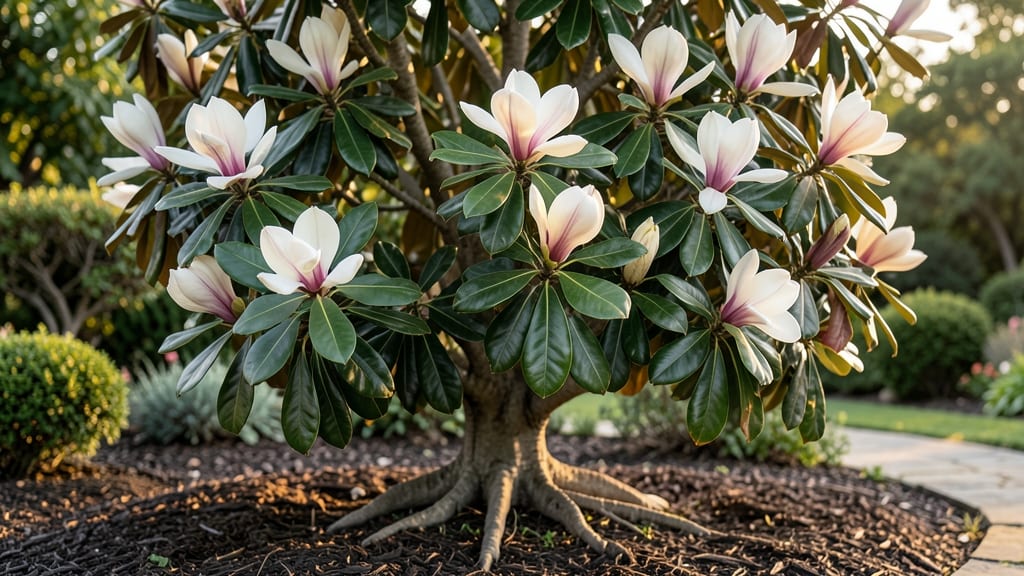
The southern magnolia bloom time arrives when most spring flowers have already faded—late June through August, their frost-defiant white blooms appearing like a surprise. 🌿 I’ve watched mine open in 90-degree heat, their leathery leaves shielding delicate petals from the sun while filling the air with a sweet, citrusy perfume that lingers for weeks.
The timing shifts slightly by zone: in Zone 7, expect blooms by mid-June; in Zone 9, they may stretch into September.
Young trees (under 10 years) often bloom sporadically, while mature specimens put on a reliable, dramatic display—each flower 12 inches wide, with purplish-red undersides that hummingbirds adore. Healthy blooms depend on full sun, well-drained soil, and patience—these trees take 5-10 years to reach their full flowering potential.
Prune only to shape, never to encourage blooms (they form on old wood), and avoid over-fertilizing, which can lead to leafy growth at the expense of flowers. For gardeners in cooler climates, plant near a south-facing wall to capture extra warmth.
In hotter zones, mulch heavily to retain moisture—drought stress delays blooming. The payoff? A fragrant, evergreen statement piece that outperforms any spring ephemeral.
📚 In This Guide
- What you need
- Instructions
- Tips and common mistakes
- Wrapping up and next steps
What you need
- ● Southern Magnolia Tree: Choose a Magnolia grandiflora (zones 7-10) from a nursery—saplings (3-5 ft) or mature trees (15+ ft) both work!
- ● Soil Test Kit: 1 kit to check pH (ideal: 5.0–6.0) and nutrient levels.
- ● Organic Mulch: 3–4 inches of pine straw or shredded bark (replenish annually).
- ● Well-Draining Soil Mix: 50% native soil + 50% compost (or potting mix for containers).
- ● Watering Can or Hose: With a gentle spray nozzle for deep hydration.
- ● Pruning Shears: Bypass pruners (sharp, 6–8" blades) for clean cuts.
- ○ Frost-Cloth (Optional): 30–50 sq. ft. for young trees in zones 7–8 (late frost protection).
- ● Fertilizer: Slow-release magnolia-specific fertilizer (e.g., 8-3-6 NPK ratio) or balanced 10-10-10.
- ● Gloves & Safety Gear: Heavy-duty gloves + long sleeves (thorns are real!).
- ● Zone Knowledge: Confirm your USDA hardiness zone (7–10) via blank">USDA Plant Hardiness Map.
- ● Sunlight Access: Full sun (6+ hours/day) or light shade (mature trees tolerate partial shade).
- ● Patience: Mature blooms take 3–5 years post-planting (but worth the wait!).
- ● Local Frost Dates: Check your area’s blank">last frost date to time pruning and fertilizer.
Understanding southern magnolia bloom time by USDA zone
Here's how to predict and extend your magnolia's showstopping display—zone by zone.
☀️ Step 1: Identify Your Zone's Natural Bloom Window
Southern magnolias (Magnolia grandiflora) bloom in late spring through summer, but timing varies dramatically by USDA zone. In Zones 7-9 (their native range), expect blooms to begin in mid-May and continue until July, with peak fragrance in June. In Zone 6, where late frosts are common, blooms typically start 2-3 weeks later—around early June—to avoid frost damage.
Watch for bud swell in late winter as your first clue. These waxy, football-shaped buds will gradually soften and develop a slight pink tint 4-6 weeks before opening. In Zone 10, where winters are mild, magnolias may bloom as early as April and produce multiple flushes throughout the year.
⏰ Step 2: Adjust Care to Extend the Bloom Season
To encourage longer bloom times, maintain consistent moisture during bud development—water deeply once weekly when top 2 inches of soil feel dry. Avoid overhead watering once buds form, as wet foliage invites bud blight. I've found that mulching with 3-4 inches of organic mulch (like pine bark) in early spring helps regulate soil temperature, which delays bud drop in hot zones.
Fertilize lightly in early spring with a balanced 10-10-10 formula to support bud formation, but avoid high-nitrogen feeds after mid-May—they promote leafy growth at the expense of flowers. Prune only after blooming (late summer) to remove dead wood, as magnolias set next year's buds on old wood.
❄️ Step 3: Protect Buds in Frost-Prone Zones
In Zones 6-7, late spring frosts can devastate buds. I wrap young trees in burlap wraps during frost warnings and drape frost cloth over mature trees when temperatures dip below 28°F. For established trees, circulate warm air on frost nights by running a fan on low near the trunk to create a slight updraft that prevents cold air from settling.
Watch for bud desiccation—when buds appear shriveled but not frozen. This happens when cold, dry winds dehydrate the tissues. In this case, cover buds with a damp cloth during the day to maintain humidity. Mature trees in Zone 7 often survive light frosts, but young specimens (<10 years old) are far more vulnerable.
🌿 Step 4: Monitor for Environmental Stressors
Southern magnolias thrive in full sun to partial shade, but too much shade (like under dense pines) delays blooming. If your tree isn't flowering by late June, check for competing roots from nearby trees or compacted soil that restricts root growth. Amend the soil with 2-3 inches of compost in early spring to improve drainage and nutrient uptake.
Pests like magnolia scale or webworms can weaken trees and reduce blooms. Inspect leaves in early summer for sticky residue (honeydew) or silken webs—signs of infestation. Treat with horticultural oil in late winter (when pests are dormant) for prevention. A healthy tree in optimal conditions will reward you with 6-8 weeks of continuous bloom.
Tips & tricks for extending southern magnolia bloom season
These insights will help you maximize your magnolia's fragrance display—no matter your zone.
Zone-Specific Timing: In Zones 7-9, the 4-6 week window before bud opening (starting in late winter) is crucial for color development. I've noticed that trees in Zone 10 often show pink tinges as early as February, while Zone 6 trees may not develop color until March. Use this as your first visual cue to prepare for frost protection measures.
Moisture Precision: The once-weekly watering guideline works best when you check soil moisture at the 2-inch depth. I've found that using a soil moisture meter in the root zone gives more accurate readings than visual inspection—especially in sandy soils where water drains quickly. This prevents both underwatering (which stresses buds) and overwatering (which invites bud blight).
Frost Protection Layering: When temperatures drop below 28°F, layer protection methods for maximum effectiveness. Start with burlap wraps on young trees, then add frost cloth over mature trees. For extra insurance, place a fan on low near the trunk to create gentle air circulation—this prevents cold air from settling directly on the buds. I've seen this method extend bloom season by 2-3 weeks in Zone 7.
Pest Prevention Calendar: The late winter application of horticultural oil (when pests are dormant) is your best defense. I schedule this treatment in early February, just as buds begin to swell. This timing prevents early infestations that can weaken trees before bloom season. For established trees, I also recommend a second inspection in early summer when webworms become most active.
Pro Tips for Southern Magnolia Bloom Time
- These insights will help you maximize your magnolia's fragrance display—no matter your zone.
- Zone-Specific Timing: In Zones 7-9, the 4-6 week window before bud opening (starting in late winter) is crucial for color development.
- Moisture Precision: The once-weekly watering guideline works best when you check soil moisture at the 2-inch depth.
Frequently asked questions
Got questions about Southern Magnolia blooms?
You’re not alone! Here are answers to the most common queries—from timing to troubleshooting—so you can enjoy that iconic fragrance worry-free.
When do Southern Magnolias bloom in my hardiness zone?
Bloom time varies slightly by zone, but expect Magnolia grandiflora to flower from late spring to early fall (May–September). In Zones 7–10, they bloom year-round with peak fragrance in summer. Cooler zones (6–7) may see shorter seasons but still enjoy frost-resistant blooms.
Can frost damage Southern Magnolia blooms?
Southern Magnolias are frost-tolerant but may drop buds in hard freezes (<32°F). Light frosts (<35°F) rarely harm them. For extra protection in Zones 6–7, mulch the base and water deeply before winter. Newer growth is more vulnerable than mature trees.
Why isn’t my Southern Magnolia blooming?
Common causes include young age (trees bloom best after 5–10 years), poor sunlight (they need full sun), or nutrient stress. Check for pests (like scale) or overpruning. If established but sparse, test soil pH (ideal: 5.0–6.0) and fertilize with magnesium-rich amendments.
What’s a good alternative if I want early blooms?
For earlier spring fragrance, try Magnolia stellata (star magnolia, Zones 4–8) or Magnolia × soulangeana (saucer magnolia, Zones 5–9). Both bloom before Southern Magnolias (March–April) and are equally stunning. Just note they’re less frost-hardy!
How do I encourage bigger, more fragrant blooms?
Prune after blooming (late winter/early spring) to avoid cutting flower buds. Feed with acidic, iron-rich fertilizer in early spring. Ensure 6+ hours of sunlight and well-draining soil. Mulch annually to retain moisture and cool roots—they hate soggy feet!
Still curious? Drop your question below—we’re happy to help you cultivate that dreamy magnolia scent!
Wrapping up and next steps
The southern magnolia’s bloom time is a fragrant celebration that defies frost and brightens your landscape—whether you’re in Zone 7 or beyond! With its late spring to early summer show (May–June) and signature creamy-white blooms, this evergreen queen rewards patience with months of beauty. 🌸
Now that you know the perfect timing and care tips, why not plan your next steps? Plant one in your garden, or explore companion plants to extend the seasonal magic. The south’s sweetest secret is waiting—go make your yard bloom!