
Blooming
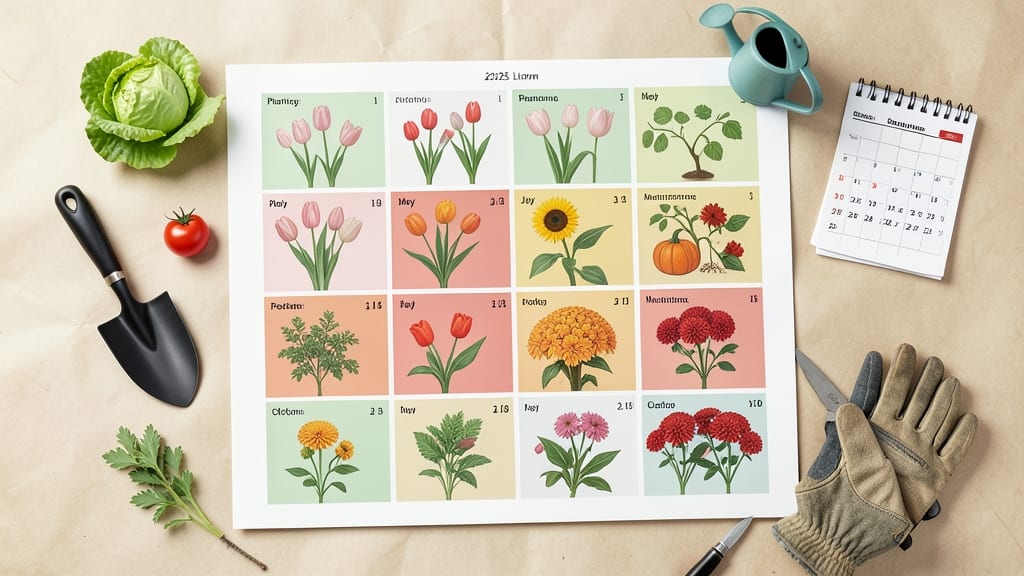
Mark your 2025 gardening calendar now—purple blooms will transform your yard from spring through frost. 🌸 I've tracked reblooming varieties for years, and this year's schedule ensures you never miss a wave of fragrant color, whether you're in Zone 5 or 9.
The secret isn't just timing—it's layering plants that bloom at different times. Start with early bloomers like pansies in March, then add clematis for summer, and finish with chrysanthemums in fall. Each transition creates seamless color without gaps.
By following this schedule, you'll have continuous blooms from March through November, with peak purple displays in June and September. The fragrance alone makes it worth the planning—imagine walking through a garden that smells like lavender and roses all season. This works for borders, containers, or cutting gardens.
Here's how to make it happen month by month!
📚 In This Guide
- What you need
- Instructions
- Tips and common mistakes
- Wrapping up and next steps
What you need
- ● Printed or digital Bloom Calendar 2025: 1 copy (downloadable PDF or printed guide with monthly bloom cycles and care tips).
- ● Notebook or planner: 1 (for logging observations, weather notes, and adjustments).
- ● Fine-tip markers or colored pencils: 2-3 (for marking bloom stages, deadheading, or pruning dates).
- ● Pencil sharpener: 1 (to keep markers precise for detailed tracking).
- ○ Small magnifying glass (optional but helpful): 1 (for inspecting buds or identifying pests early).
- ● Fragrant purple reblooming plants: 3-5 varieties (e.g., Lavender ‘Munstead,’ Salvia ‘May Night,’ or Cleome ‘Pink Queen’).
- ● Pruning shears: 1 pair (sterilized, with sharp blades for clean cuts).
- ● Garden gloves: 1 pair (to protect hands from thorns or sap).
- ● pH testing kit: 1 (to monitor soil acidity, ideal range: 6.0–7.0 for most purple bloomers).
- ● Organic fertilizer (balanced NPK 10-10-10 or bloom-specific): 1 bag (follow label for reblooming plants).
- ● Digital calendar app (e.g., Google Calendar or BloomSync): 1 (sync with your printed calendar for reminders).
- ● UV flashlight: 1 (to check for hidden pests or bud health at night).
- ● Slow-release fertilizer spikes: 10–20 (for hassle-free nutrient delivery).
- ● Decorative garden flags: 5–10 (label plants by variety for easy tracking).
- ● Journal with waterproof pages: 1 (for outdoor note-taking during rain or wind).
How to plan your fragrant purple reblooms for a stunning 2025 season
Here’s how to time your planting, pruning, and care for continuous purple blooms all year.
🌱 Step 1: Mark Your 2025 Planting Windows
Start by noting your last frost date—this determines when to plant for spring blooms. For most climates, aim to plant 4-6 weeks before the last frost date, giving roots time to establish before summer heat. I like to set reminders for early March in mild zones and late April in colder areas. These purple rebloomers thrive when planted in full sun (6+ hours daily), so scout your garden now for the sunniest spots.
If you’re growing from seed, start indoors 8-10 weeks before your last frost. I’ve found that seedlings need this head start to outpace slugs and cool-season pests. For established plants, early spring or early fall transplanting works best—avoid mid-summer heat stress. Watch for new leaf growth after planting; that’s your cue everything’s rooted properly.
☀️ Step 2: Schedule Pruning for Continuous Blooms
Deadhead spent blooms every 2 weeks to encourage reblooming. I grab a pair of clean pruners and snip just above the first set of healthy leaves below the flower head. This redirects energy into new growth instead of seed production. For fragrant varieties, prune in the morning when oils are most concentrated—you’ll notice the scent intensifies as you work.
After your first big bloom flush (usually 6-8 weeks after planting), give your plants a light trim to shape them and remove any leggy stems. This prevents overcrowding and improves airflow, which cuts down on fungal issues. I always prune on a dry day; wet foliage can harbor mold spores overnight.
💧 Step 3: Adjust Watering for Each Season
Water deeply once a week during the growing season, aiming for 1-1.5 inches of water per week. Let the top 2 inches of soil dry out between waterings—this prevents root rot while keeping blooms vibrant. In summer, I water in the early morning to reduce evaporation and fungal risks. You’ll know you’re doing it right when the soil feels damp but not soggy at the 2-inch mark.
Reduce watering in late fall as growth slows. Purple rebloomers are drought-tolerant once established, but they’ll reward you with more blooms next season if you keep them slightly moist through October. Mulch with 2-3 inches of organic mulch to retain moisture and protect roots from temperature swings.
✂️ Step 4: Plan for Winter Care and Spring Revival
Before the first frost, trim back any dead or damaged stems and apply a 3-inch layer of mulch around the base. This insulates roots and keeps soil temperatures stable. I’ve seen hardy purple rebloomers survive winters with just this protection—no fancy wraps needed. In very cold zones, consider a light frost blanket for the first few weeks of winter.
In late winter (February), prune back one-third of the plant to encourage fresh growth. You’ll notice new shoots emerging within 3-4 weeks—that’s your signal to fertilize lightly with a balanced 10-10-10 mix. This jumpstarts the season and ensures your purple blooms return with vigor.
Tips & tricks for perfect purple rebloom planning
These little details can transform your garden from decent to showstopping—trust me, I've learned this the hard way after watching perfectly good plants struggle because of small oversights.
Timing is Everything: When you're marking those 4-6 weeks before your last frost, double-check your local weather patterns. Some years bring early frosts, so I like to set my calendar for the earlier end of that window—better safe than sorry. For seed starts, I've found that using a seedling heat mat can shave 1-2 weeks off that 8-10 week indoor timeline, especially if your home runs cool.
Pruning Precision: That every-2-week deadheading schedule works wonders, but here's what nobody tells you—always sterilize your pruners with rubbing alcohol between cuts. I keep a small bottle in my gardening bucket and wipe them down after every 5 cuts. This simple step prevents the spread of fungal spores that can turn your fragrant blooms into a sad, moldy mess. And when you're doing that light trim after 6-8 weeks, focus on removing stems that are growing toward the center—they'll compete with your showy purple blooms for sunlight.
Watering Wisdom: The 2-inch soil dryness test is gold, but I've discovered a pro trick: use a rain gauge or tuna can to measure your weekly 1-1.5 inches of water. Our eyes can be deceiving—what feels like "enough" watering often falls short. Also, if you're using drip irrigation, consider adding a timer to deliver that morning watering automatically. I've saved countless hours (and my back) by letting the system handle the routine while I focus on other garden tasks.
Winter Prep Secret: For that 3-inch mulch layer before winter, I mix equal parts straw and shredded leaves—it creates the perfect insulating blanket. The straw provides air pockets for root respiration while the leaves break down slowly, adding nutrients. And if you're in a very cold zone, don't skip that frost blanket for the first few weeks. I've seen plants survive -20°F nights just fine, but the first few cold snaps can be brutal for newly established roots.
Pro Tips for Bloom Calendar 2025
- These little details can transform your garden from decent to showstopping—trust me, I've learned this the hard way after watching perfectly good plants struggle because of small oversights.
- Timing is Everything: When you're marking those 4-6 weeks before your last frost, double-check your local weather patterns.
- Pruning Precision: That every-2-week deadheading schedule works wonders, but here's what nobody tells you—always sterilize your pruners with rubbing alcohol between cuts.
Frequently asked questions
Got questions about the Bloom Calendar 2025 for your purple reblooming favorites? You’re not alone!
Here’s a quick breakdown of the most common queries—plus practical tips to make the most of your fragrant blooms all year.
When should I expect the first blooms in 2025?
The first flush of purple reblooms typically arrives in late April to early May 2025, depending on your climate zone. Cooler regions may see delays, while warmer areas could enjoy early blooms. Check your zone’s Bloom Calendar 2025 for exact timing—most varieties follow a 3–4 week window after dormancy breaks.
How often do purple reblooms bloom in 2025?
Most reblooming varieties produce 2–3 major bloom cycles per year:
- Spring (May–June): First flush, often the most abundant.
- Summer (July–August): Second wave, triggered by heat and water.
- Fall (September–October): Light rebloom if pruned correctly (see Bloom Calendar 2025 for deadheading tips!).
Extend blooms by deadheading spent flowers and fertilizing every 4–6 weeks.
What if my blooms are late or sparse in 2025?
Late or sparse blooms often stem from overcrowding, poor soil, or inconsistent watering. Try these fixes:
- Prune aggressively in early spring (before buds swell) to encourage new growth.
- Water deeply 2–3x/week during droughts (check soil 2” down—it should be slightly moist).
- Amend soil with compost or a slow-release bloom booster (like 10-10-10) in early spring.
If blooms still lag, your variety might need more sun (6+ hours/day) or a winter chill period (most rebloomers need 300–500 hours below 45°F).
Can I force blooms out of season in 2025?
Yes! For indoor forcing (e.g., potted rebloomers):
- Choose a healthy plant with dormant buds.
- Chill roots for 6–8 weeks at 35–45°F (use a fridge or cold frame).
- Move to bright light (6000+ lux) and keep soil consistently moist.
- Blooms appear in 4–6 weeks, but they’ll be shorter-lived than outdoor blooms.
Pro tip: Use a grow light 12–14 hours/day to prevent leggy growth.
How does the Bloom Calendar 2025 differ from last year’s?
The 2025 calendar accounts for:
Check the zone-specific tabs in the calendar for tailored deadlines!
Wrapping up and next steps
The Bloom Calendar 2025 is your ultimate guide to nurturing vibrant, fragrant purple reblooms all year long! 🌸 By aligning your care routine with nature’s rhythms—from early spring prep to winter protection—you’ll unlock a garden bursting with color and scent.
Remember, consistency is key, but so is patience and joy in the process.
Ready to transform your space? Start today by marking your 2025 calendar with these blooming milestones. Grab your tools, roll up your sleeves, and let every season bring a new wave of beauty. Your purple paradise awaits! 🌿✨