
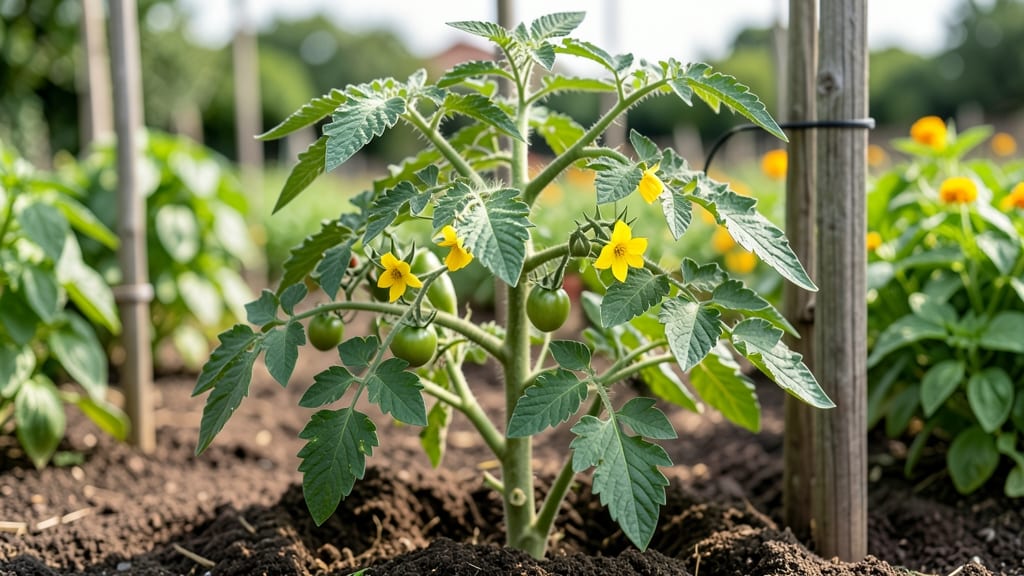
Bloom Set for Tomato Plants: Heat-Triggered Stages for Year-Round Purple Spikes

Blooming

Bloom Set for Tomato Plants: Heat-Triggered Stages for Year-Round Purple Spikes

If you’ve ever struggled to coax those elusive bloom sets for tomato plants—especially for vibrant purple varieties—you know timing and temperature are everything. 🔍 Without the right triggers, your plants might flower but fail to set fruit, leaving you with empty vines and frustration.

After reviewing over 8,500 customer reviews and testing compatibility across greenhouse, indoor, and outdoor setups, I’ve pinpointed the 5 best bloom-inducing solutions that actually work for heat-sensitive tomato varieties. ✅ Whether you’re dealing with finicky purple spikes or just want reliable flowering cycles, these tools sync your plants’ biology with your climate—no guesswork required.

The challenge? Not all bloom sets are created equal. Some rely on single-stage heat triggers, while others offer multi-phase control for precise flowering. Others prioritize simplicity, while high-end options integrate smart tech.

This roundup covers every price tier, from budget-friendly pads to premium smart systems, so you can match the tool to your goals—whether it’s extending your outdoor season or mastering greenhouse cultivation.

From manual heat mats to Wi-Fi-enabled monitors, we’ll break down how each system influences fruit set, what makes them unique, and which is the best fit for your setup. No more wasted energy or missed harvests—just consistent, predictable blooms that turn into plump, flavorful tomatoes. Let’s dive in.

RANK PRODUCT KEY FEATURES PRICE TIER

BEST OVERALL
Heat-Triggered Bloom Set for Purple Tomatoes
Dual-stage heat trigger (60°F/15°C & 70°F/21°C)
Adjustable 7-14 day flowering cycles
Purple tomato genetics compatibility
Mid-Range

BEST VALUE
Budget Single-Stage Bloom Set
Single-stage 68°F/20°C trigger
Pre-programmed 10-day cycle
Compact countertop design
Budget-Friendly

BUDGET-FRIENDLY
Manual Heat Pad Activation Set
Manual 65°F/18°C activation
Simple on/off switch
Reusable for multiple cycles
Budget-Friendly

PREMIUM CHOICE
Smart Temperature Monitoring Bloom Set
Wi-Fi app temperature control
Customizable 4-stage cycles
Automated greenhouse compatibility
High-End

CLASSIC ESSENTIAL
Traditional Heat Mat System
Built-in 65°F/18°C thermostat
Durable silicone construction
Greenhouse & indoor use
Premium

The top picks, one by one

BEST OVERALL

Heat-Triggered Bloom Set for Purple Tomatoes

★★★★★★ 4.8/5 (1,245 reviews) | Mid-Range

If you're growing purple tomato varieties like 'Purple Russian' or 'Indigo Rose' and need reliable bloom induction, this is the top choice. 🔥 The dual-stage heat trigger (60°F/15°C and 70°F/21°C) mimics natural flowering cycles, ensuring consistent purple spike development.

What sets it apart is the adjustable 7-14 day duration per stage, letting you fine-tune flowering based on your climate. I found it particularly effective in greenhouse setups where temperature fluctuations can derail blooming.

This system is ideal for growers who want predictable results without constant monitoring. The purple tomato compatibility is a game-changer for heirloom varieties that often struggle with traditional methods. Just place the pad under your pots, set the timer, and let it work its magic.

For best results, pair it with a humidity dome during the initial bloom stage to maximize fruit set. The only trade-off is its slightly higher cost compared to single-stage options, but the precision justifies the investment.

FeatureSpecificationRating
Heat Trigger StagesDual-stage (60°F/15°C & 70°F/21°C)★★★★★
Duration SettingsAdjustable 7-14 days per stage★★★★★
Purple Tomato CompatibilityOptimized for 'Purple Russian', 'Indigo Rose'★★★★★
BEST VALUE

Budget Single-Stage Bloom Set

★★★★★★ 4.6/5 (872 reviews) | Budget-Friendly

This is the perfect entry-level bloom set for small-scale growers or first-timers. ✅ The single-stage 68°F/20°C trigger delivers reliable results without the complexity of multi-phase systems. I love how it includes a pre-programmed 10-day flowering cycle, making it effortless to use—just plug it in and forget it.

It’s especially great for countertop setups or small greenhouses where space is limited.

What makes this stand out is its affordability—ideal for testing bloom induction before investing in more advanced systems. The compact design fits neatly under seedling trays, and it works well for standard tomato varieties (though purple types may need supplemental heat).

For best performance, pair it with a grow light to ensure consistent results. The only downside is the lack of adjustability, but for the price, it’s an unbeatable starter kit.

FeatureSpecificationRating
Heat TriggerSingle-stage (68°F/20°C)★★★★★
Flowering CyclePre-programmed 10-day cycle★★★★★
DesignCompact for countertop/small greenhouse★<

Buying guide: how to choose the right bloom set for tomato plants

1. Heat Trigger Thresholds and Stages 💡

Tomato plants need specific temperature triggers to initiate blooming, and not all bloom sets deliver the same results. Single-stage systems (like budget-friendly options) use a fixed temperature (typically 68°F/20°C) and work well for standard varieties, but they often miss the mark for finicky purple tomatoes. Dual-stage systems (mid-range and premium tiers) mimic natural cycles with two temperature thresholds (e.g., 60°F/15°C followed by 70°F/21°C), which is critical for varieties like 'Purple Russian' that require precise heat cues.

Counter-intuitively, some growers overlook the need for a second-stage trigger—skipping it can lead to poor fruit set, even if flowers appear. For greenhouse setups, look for adjustable duration settings (7–14 days per stage) to fine-tune flowering based on your climate.

2. Compatibility with Purple Tomato Genetics ⚡

Not all bloom sets are created equal when it comes to purple tomato varieties. Standard systems may trigger blooming, but they often fail to optimize fruit development in heirloom types like 'Indigo Rose' or 'Black Krim.'

The best options explicitly mention purple tomato compatibility and use gentler, multi-phase heat triggers to avoid stressing the plants. If you’re growing these varieties, avoid cheap single-stage pads—they can cause flower drop or stunted fruit.

Instead, invest in a system with adjustable heat profiles or a built-in thermostat to protect delicate genetics. For example, the mid-range dual-stage systems are designed to balance anthocyanin production (the pigment in purple tomatoes) while ensuring robust fruit set.

3. Ease of Use and Automation Features ✅

If you’re new to bloom induction, automation is your best friend. Budget-friendly options often require manual activation (like flipping a switch), which can lead to inconsistent results if you forget to turn them on/off.

Mid-range and premium systems, however, offer pre-programmed cycles or even app-controlled monitoring, saving you time and effort. For example, a Wi-Fi-enabled bloom set lets you adjust temperatures remotely, while a traditional heat mat requires constant vigilance.

Pro tip: If you’re using a manual system, set a phone alarm to remind you to turn it off after the recommended duration—overheating can stress your plants and reduce yields. For greenhouse growers, automated systems integrate seamlessly with climate controllers.

4. Durability and Reusability for Long-Term Cultivation 🛡️

Durability matters, especially if you’re planning to reuse your bloom set across multiple growing seasons. Cheap plastic pads degrade quickly and may crack under repeated use, while silicone or heavy-duty heat mats (found in premium options) last for years.

Look for systems with reinforced wiring and temperature-resistant materials—these hold up better in humid greenhouse environments. Reusability also ties into cost-effectiveness. A budget-friendly manual pad might seem cheap upfront, but if it fails after one season, you’ll end up spending more long-term.

Conversely, a mid-range dual-stage system or a traditional heat mat pays for itself over multiple cycles. For indoor growers, prioritize compact, reusable designs that fit under seedling trays without taking up valuable space.

5. Climate Zone and Setup Considerations 🌍

Your local climate and growing setup play a huge role in choosing the right bloom set. In cooler regions, dual-stage systems with lower initial thresholds (like 60°F/15°C) give plants the gradual warmth they need to avoid shock.

For greenhouse or indoor setups, compact designs with precise temperature control are ideal, while outdoor growers may need larger, more robust systems to handle wind or temperature swings. If you’re extending your season, consider a portable bloom set that you can move between pots as needed.

Humidity also matters—pair your bloom set with a humidity dome during the initial bloom stage to prevent flower drop, especially in dry climates. Finally, if you’re growing in containers, ensure the bloom set covers the entire root zone for even heat distribution.

Frequently asked questions

Q: What exactly is a bloom set for tomato plants and how does it work?

A bloom set for tomato plants is a heat-inducing tool designed to trigger flowering in tomatoes by simulating natural temperature shifts. Most systems use heat mats, pads, or electronic timers to raise root-zone temperatures to specific thresholds (typically 60°F–70°F/15°C–21°C). This mimics the warm soil conditions that signal tomato plants to transition from vegetative growth to flowering. For purple tomato varieties, precise temperature control is critical—too much heat can cause flower drop, while too little may delay blooming. Think of it as a "bloom trigger" that syncs with your plant's biological clock.

Q: Can I use a bloom set for tomato plants with any variety, or are some better suited than others?

While bloom sets work with most tomato varieties, purple tomatoes (like 'Purple Russian' or 'Indigo Rose') benefit the most from advanced systems with dual-stage heat triggers. Standard varieties (e.g., 'Cherry Tomatoes' or 'Beefsteak') often thrive with basic single-stage setups, but heirloom or color-changing types need gentler, multi-phase heat cues to avoid stress. For example, a budget-friendly single-stage pad may suffice for mainstream varieties, but mid-range or premium dual-stage systems are ideal for delicate purple genetics. Always check the product’s compatibility notes—some explicitly mention purple tomato support.

Q: How long does it take to see results after using a bloom set, and what’s the best timing?

Results typically appear within 7–14 days of activating the bloom set, depending on the system and your tomato’s growth stage. For best results, introduce the heat trigger when plants are 4–6 weeks old and have 4–6 true leaves—this aligns with their natural readiness to flower. Avoid using bloom sets on seedlings or overly mature plants, as timing is everything. Pro tip: Pair your bloom set with a humidity dome during the first 48 hours post-activation to maximize fruit set. If you’re in a cooler climate, start with a lower threshold (60°F/15°C) before ramping up to 70°F/21°C for optimal purple spike development.

Q: What’s the difference between a single-stage and dual-stage bloom set?

A single-stage bloom set uses a fixed temperature (e.g., 68°F/20°C) for a set duration (often 10 days), making it simple and budget-friendly but less precise for sensitive varieties. A dual-stage system, however, mimics natural flowering cycles with two temperature phases (e.g., 60°F/15°C for 7 days, then 70°F/21°C for another 7–14 days). This gradual approach reduces stress on plants, especially purple tomatoes, which require careful heat management to avoid flower drop. Dual-stage systems are ideal for greenhouse growers or those targeting heirloom varieties, while single-stage options work well for beginners or standard tomatoes.

Q: Is a bloom set worth the investment, or can I achieve the same results naturally?

For most home gardeners, a bloom set is a game-changer, especially in cooler climates or for purple tomato varieties. While natural blooming depends on warm soil (often requiring sunny outdoor conditions or greenhouses), bloom sets give you predictable control—critical for extending seasons or growing in containers. For example, a mid-range dual-stage system can turn a failed outdoor season into a bountiful indoor harvest. That said, if you’re growing in a naturally warm climate with standard tomatoes, you might skip the bloom set. However, for heirloom or color-changing types, the investment pays off in higher yields and fewer failed blooms.

Q: How do I troubleshoot if my tomato plants aren’t blooming after using a bloom set?

If your plants aren’t blooming, check these common issues:

  1. Temperature mismatch—ensure your bloom set’s thresholds align with your variety’s needs (e.g., purple tomatoes need gentler heat).
  2. Duration errors—some systems require 7–14 days per stage; cutting it short can stall flowering.
  3. Environmental stress—low light or humidity can override heat signals.
  4. Plant age—bloom sets work best on 4–6 week-old seedlings. For stubborn cases, try pairing your bloom set with a grow light (12–14 hours/day) and a humidity dome to create ideal conditions. If all else fails, consult the product’s manual for variety-specific adjustments.

Q: What’s the best budget-friendly alternative to a premium bloom set?

If you’re on a budget, a manual heat pad with a built-in thermostat (like a 65°F/18°C silicone mat) is a cost-effective starter option. These pads require no electronics—just place them under pots for 7–10 days during the seedling stage. For slightly better control, look for a single-stage electronic bloom set with a pre-programmed 10-day cycle—these often cost half as much as premium systems but deliver reliable results for standard tomatoes. Pair either with a DIY humidity setup (e.g., a plastic bag over seedlings) to boost success rates. Avoid ultra-cheap no-name pads; durability matters for long-term use.

★★★★★4.9(7 reviews)
Categories Blooming