
Blooming
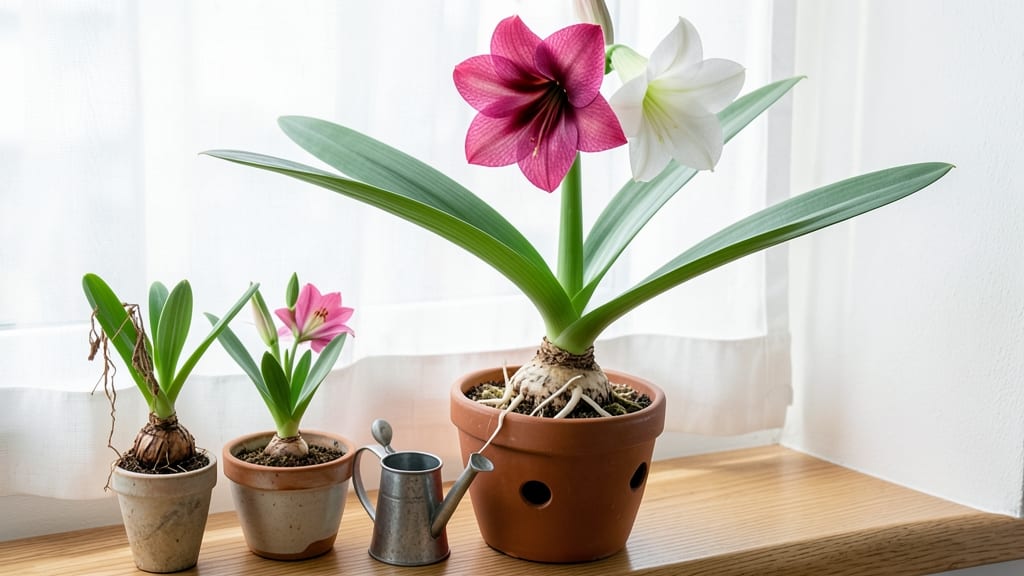
Amaryllis do bloom every year—but only when you provide the right conditions: consistent bright indirect light, well-draining potting mix, and a strict 6-8 week dormancy period after blooming ends. Some varieties, especially Hippeastrum hybrids, need extra triggers like cooler nighttime temperatures or reduced watering to restart their growth cycle.
Amaryllis plants aren't naturally annual bloomers—they follow a seasonal rhythm that mimics their South American origins. 🌱 The key is replicating their natural environment: bright light (but not scorching sun) and a dormancy period where you reduce watering and let the soil dry out completely.
I've seen amaryllis rebloom reliably when given this cycle, though some tropical varieties may need additional temperature shifts to break dormancy. The biggest mistake growers make is skipping dormancy or overwatering during this rest phase, which confuses the plant and prevents bud formation.
What's fascinating is how different varieties respond—some Hippeastrum hybrids actually require a temperature drop below 65°F at night to trigger new blooms. If your amaryllis isn't reblooming after a year, try adjusting these factors before assuming it's a one-time bloomer.
The good news? With proper care, you can enjoy those dramatic flowers every spring and fall.
💡 In This Article
- Why Amaryllis Flowering Cycles Vary by Species
- Step-by-Step Guide to Encouraging Year-Round Amaryllis Blooms
Why amaryllis flowering cycles vary by species
The confusion about annual blooming starts with the plant's taxonomy. True amaryllis (Amaryllis belladonna) is a perennial native to South Africa, where it experiences distinct seasons with dry winters and wet summers.
This species naturally produces one dramatic bloom per year, typically in late winter or early spring, followed by a dormancy period. The flower stalk emerges from the bulb's center, growing rapidly to 2-3 feet tall before producing 2-6 trumpet-shaped blooms that last 7-10 days each. 🌸
However, most commercial "amaryllis" sold today are actually Hippeastrum hybrids, which belong to a different genus but share similar care requirements. These hybrids originated in South America and have evolved to handle more varied climates.
The key difference lies in their blooming triggers: while Amaryllis belladonna responds primarily to light cycles, Hippeastrum varieties often need additional temperature cues. For example, the popular 'Red Lion' cultivar typically requires 6-8 weeks of cooler temperatures (55-65°F) to break dormancy and initiate new flower buds.
This explains why some growers see annual blooms while others struggle—environmental triggers vary by species.
The plant's internal clock, called photoperiodism, plays a crucial role. During dormancy, the bulb stores energy in its scales while metabolic processes slow dramatically. When exposed to 12+ hours of daylight combined with cooler nighttime temperatures, the bulb's apical meristem (growth center) reactivates, prompting flower stalk formation.
This is why amaryllis often bloom in late winter—it mimics the natural transition from dry season to rainy season in their native habitats. The mistake many make is assuming all amaryllis have identical needs; in reality, even slight variations in light exposure or temperature can prevent reblooming.
Consider this comparison: Amaryllis belladonna may rebloom more reliably with just proper light and water adjustments, while Hippeastrum hybrids often need that extra temperature drop. For instance, the 'Paper White' variety typically requires 10 weeks of cooler conditions, whereas 'Paradise' needs only 6 weeks.
The bulb's size also matters—larger bulbs (> 8 inches in diameter) generally have the energy reserves to produce multiple blooms annually, while smaller ones may need 2-3 years to reach full flowering potential. 🌱
What's particularly interesting is how these plants sense their environment. The bulb contains specialized cells that detect temperature fluctuations through changes in membrane permeability. When nighttime temperatures drop below 60°F, these cells trigger hormonal signals that promote flower bud formation.
This biological mechanism explains why some growers see better results by moving plants to a cooler garage or basement during dormancy—it's not just about reducing water, but creating that critical temperature shift that mimics natural seasonal changes.
The color of the blooms can also hint at care needs. Darker-colored varieties like deep red or purple often require more intense light to maintain their pigmentation, while lighter blooms may tolerate slightly lower light conditions.
This visual clue helps growers adjust their care routines—if your amaryllis produces pale blooms, it might be getting insufficient light, which can also affect reblooming consistency.
The relationship between light intensity and flower production is direct: insufficient light leads to weaker flower stalks that may fail to produce buds entirely. 💡