
Blooming
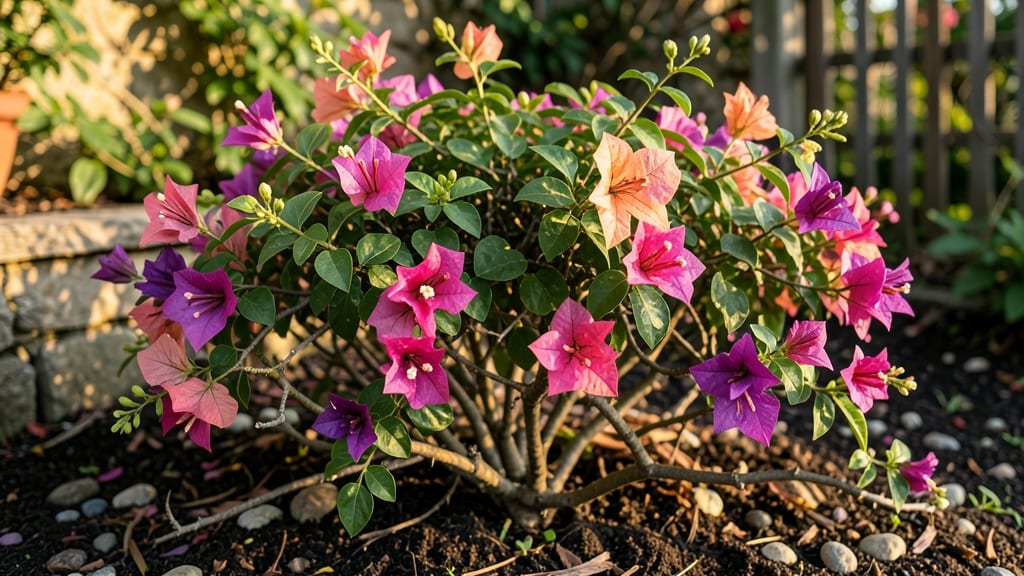
Bougainvillea blooms all year in tropical climates but follows seasonal cycles in temperate zones, peaking in warm months while reducing blooms during winter. Varieties and proper care can extend flowering periods significantly.
Whether your bougainvillea stays in bloom depends entirely on where you live. 🌺 In warm, frost-free regions, these vibrant plants can produce flowers continuously, while cooler climates trigger natural dormancy periods that limit blooming to spring and summer.
The key difference lies in temperature triggers—most varieties need consistent warmth to maintain their colorful displays.
Even in temperate zones, you can coax extra blooms by providing winter protection and strategic pruning. I've seen gardeners in California extend their bougainvillea's season by moving potted plants indoors during cold snaps or using frost blankets.
The right combination of sunlight, water, and nutrients makes all the difference between sporadic blooms and near-constant floral displays.
What's fascinating is how different bougainvillea varieties respond. Some tropical types like 'San Diego Red' bloom year-round with minimal care, while hardier varieties like 'Thornless' may need more attention to maintain their flowering schedule. The secret often lies in understanding each variety's specific needs and adapting your care routine accordingly.
💡 In This Article
- Climate and Seasonal Factors Affecting Bougainvillea Blooms
- Tips to Extend Bougainvillea Blooming Seasons
Climate and seasonal factors affecting bougainvillea blooms
The bougainvillea's flowering cycle is primarily governed by temperature thresholds. These tropical plants enter dormancy when nighttime temperatures drop below 50°F (10°C), which triggers a natural rest period.
In regions like Florida or Hawaii, where temperatures rarely fall below 60°F (15°C), bougainvillea can maintain continuous blooming because the plant never experiences this critical temperature drop. 🌿 The key mechanism involves hormonal changes where cooler nights reduce ethylene production, a plant hormone that promotes flowering, while warmer days maintain optimal photosynthesis.
Daylight hours also play a crucial role, especially in temperate zones. Bougainvillea typically requires 6-8 hours of direct sunlight daily to stimulate blooming. During winter months in cooler climates, shorter daylight periods (often 8-10 hours) reduce photosynthesis efficiency, leading to fewer blooms.
Humidity levels matter too—low humidity (40%) can cause buds to dry out before opening, while high humidity (> 70%) may promote fungal growth that damages flowers.
In my experience with bougainvillea in Southern California, the 10-20% humidity of summer months actually helps maintain vibrant blooms by reducing fungal pressure.
What's particularly interesting is how different varieties respond to these factors. Tropical varieties like 'Orange King' or 'Violet Queen' thrive in warm climates and may produce flowers year-round with minimal seasonal variation.
In contrast, hardier varieties like 'Thornless' or 'California Gold' exhibit more pronounced seasonal cycles, often blooming heavily in spring and summer but going nearly dormant in winter.
The 10-15°F (5-8°C) temperature difference between day and night in spring actually stimulates more robust flowering in these varieties through a process called "thermoperiodism."
Soil temperature also influences root activity, which directly affects nutrient uptake and flowering. When soil temperatures drop below 55°F (13°C), root growth slows dramatically, reducing the plant's ability to support new blooms.
This is why mulching with 2-3 inches of organic matter helps maintain root zone temperatures in cooler climates.
In tropical environments, the consistent warmth keeps roots active year-round, supporting continuous flowering. 🌺 The interplay between air temperature, daylight, and soil temperature creates a delicate balance that determines whether your bougainvillea will have a constant floral display or follow seasonal patterns.
One fascinating adaptation is how bougainvillea responds to sudden temperature changes. A brief cold snap (40°F/4°C for 24 hours) can actually trigger a flush of new blooms in some varieties, as the plant perceives this as a temporary stress that it overcomes with a burst of flowering.
This is why gardeners in transitional climates often see unexpected blooms after early spring frosts. The plant's ability to "read" environmental cues makes it surprisingly resilient when given the right growing conditions.
For those in temperate zones, understanding these climate triggers helps set realistic expectations. While you can't force a tropical bougainvillea to bloom in winter, you can create microclimates that extend the flowering season.
Using greenhouse structures or frost blankets during cold months can maintain root zone temperatures above 55°F (13°C), keeping the plant active and ready to bloom as soon as temperatures rise. This approach has allowed me to maintain near-continuous blooms in Zone 8 climates with proper winter protection.