
Blooming
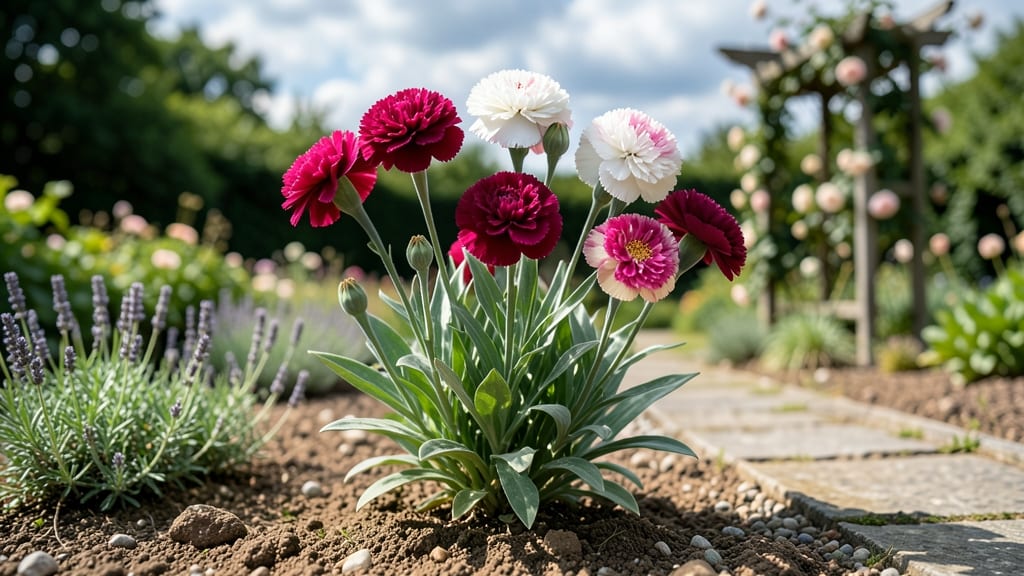
Carnations don't bloom all summer continuously; most varieties focus their energy on spring and fall blooms, with heat-sensitive types often pausing production during peak summer unless you actively encourage reblooming. Different varieties adapt differently to temperature changes.
Most carnations are cool-season plants, meaning they naturally slow down flowering when temperatures rise above 85°F. 🔥 This heat-induced dormancy isn't permanent—regular deadheading (removing spent blooms) can trick the plant into producing new flowers, especially in partial shade.
Tropical carnation varieties handle summer heat better but still benefit from consistent moisture and well-draining soil to maintain their blooming schedule.
What's fascinating is how these plants respond to environmental cues. When daytime temperatures climb too high, carnations conserve energy by pausing blooms, only resuming when conditions become more favorable. This survival strategy explains why you might see sporadic summer blooms rather than continuous color.
💡 In This Article
- Carnation Bloom Cycles: Seasonal Heat Sensitivity Explained
- Extending Summer Carnations: Deadheading and Care Tips
Carnation bloom cycles: seasonal heat sensitivity explained
Carnations are sensitive to temperature shifts, particularly when daytime highs exceed 85°F. This threshold triggers a biological response called heat-induced dormancy, where the plant conserves energy by halting flower production.
The mechanism involves hormonal changes—ethylene levels rise in response to stress, signaling the plant to focus on survival rather than reproduction. 🔥 Cool-season varieties (like the classic Dianthus caryophyllus) are especially prone to this reaction, often going dormant between June and August unless actively managed.
The plant's internal clock, or photoperiodism, also plays a role. Carnations detect daylight length, which shortens in summer. When days exceed 14 hours of light, many varieties interpret this as a signal to pause blooming—a survival strategy to avoid expending energy during harsh conditions.
Tropical hybrids, bred for heat tolerance, can extend flowering but still require consistent moisture to offset the stress of high temperatures.
What's often misunderstood is that this dormancy isn't permanent. The plant isn't dying—it's simply waiting for cooler conditions. For example, a spray carnation variety might produce 30-50% fewer blooms in peak summer but can rebound quickly once temperatures drop below 80°F at night.
This explains why gardeners in USDA Zones 7-9 often see sporadic summer blooms rather than continuous color.
Soil temperature matters just as much as air temperature. Carnations prefer soil between 60-70°F. When roots overheat (common in black plastic mulch or concrete planters), the plant redirects energy to root protection, further delaying blooms.
This is why raised beds with organic mulch (like straw) can help maintain cooler root zones and encourage summer reblooming.
Comparing varieties highlights the differences: Cool-season types (e.g., Sim series) may produce 80% of their annual blooms in spring/fall, while tropical hybrids (like Crimson Velvet) can stretch blooming into summer but require daily watering to compensate for heat stress.
The key takeaway? Carnations aren't lazy—they're responding to their environment with precise biological adaptations.
For gardeners in hot climates, this means strategic planning. Planting heat-tolerant varieties (like Perpetual carnations) in partial shade can extend the blooming window by 4-6 weeks, while cool-season types may need afternoon shade to survive summer at all.
The goal isn't to force continuous blooms but to align care with the plant's natural rhythms.