
Blooming
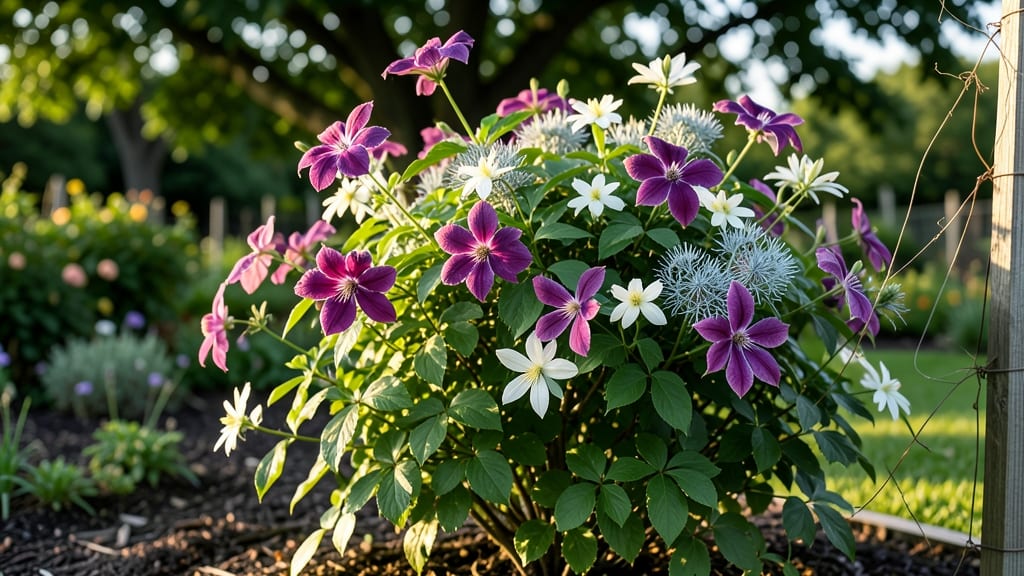
Clematis don't bloom all summer long—most varieties have one primary flowering season, but reblooming types like 'Jackmanii' or 'Nelly Moser' produce a second round of flowers in late summer or fall with the right care. Early-season bloomers often fade by mid-summer unless you're growing late-season hybrids.
Clematis plants are famous for their dramatic blooms, but their flowering patterns vary dramatically by variety. 🌸 The key difference lies in their natural growth cycles—some bloom early and fade by summer's end, while others are bred specifically to rebloom.
For example, group 1 clematis (early bloomers) typically flower in spring on last year's growth, while group 3 (late bloomers) produce flowers on current season's growth, giving you that second flush. The secret to extending their bloom time is understanding their specific needs, from pruning timing to soil conditions.
What many gardeners don't realize is that even reblooming varieties need proper care to maintain their second flush. I've found that regular deadheading spent blooms and providing consistent moisture during dry spells can make all the difference.
For those who want summer-long color, late-season varieties like 'Hagley Hybrid' or 'Perle d'Azur' are excellent choices—they naturally extend their blooming period when given the right growing conditions.
💡 In This Article
- Clematis Flowering Groups: How Pruning Affects Summer Blooms
- Tips to Encourage Extended Clematis Blooms Through Summer
Clematis flowering groups: how pruning affects summer blooms
Clematis are classified into three distinct flowering groups, each with unique blooming patterns tied to their growth habits and pruning needs. Group 1 varieties like 'Early Sensation' bloom on previous year's wood in early spring, often fading by summer unless you're growing late-season hybrids.
Group 2 (repeat bloomers) such as 'Jackmanii' produce flowers on both old and new growth, giving you that coveted second flush in late summer when properly pruned. Group 3 (late bloomers) like 'Comtesse de Bouchaud' flower exclusively on current season's growth, typically from mid to late summer.
The magic happens in how these plants respond to temperature cues and pruning. Group 1 blooms are triggered by winter chilling requirements (typically 40-50°F for 4-6 weeks), while Group 3 varieties need consistent warmth (above 60°F) to stimulate new growth and flowering.
What most gardeners miss is that reblooming types require strategic pruning: cut back Group 2 varieties by one-third in early spring to encourage new growth, but avoid heavy pruning of Group 3 after mid-July or you'll sacrifice their late-season blooms. 🌿 The light exposure matters too—most clematis need at least 6 hours of sunlight daily, but their roots prefer shade to prevent moisture loss.
Here's where things get interesting: the pruning timeline directly impacts your summer blooms. For Group 2 varieties, you should prune in late winter (February-March) to remove dead wood while preserving flower buds on last year's stems.
Group 3 varieties get their second bloom from current season's growth, so prune them in early spring to encourage vigorous new shoots. The key is timing—prune too early and you might miss the first flush, prune too late and you risk losing the second bloom entirely.
Temperature plays a crucial role in reblooming cycles. Most clematis enter a semi-dormant state during hot summer months (above 85°F), which can halt flowering. This is why late-summer bloomers like 'Nelly Moser' thrive in cooler coastal climates where temperatures stay moderate.
In hotter regions, providing afternoon shade can help maintain blooming. What's fascinating is how these plants use photoperiodism—they respond to daylight length changes, with many varieties needing shorter days (below 14 hours) to trigger their second flush.
Consider these pruning group characteristics when selecting varieties:
- Group 1 (Early Bloomers): Prune immediately after flowering (May-June) to remove spent blooms and encourage minimal new growth
- Group 2 (Repeat Bloomers): Prune in late winter (February-March) to stimulate both old and new wood flowering
- Group 3 (Late Bloomers): Prune in early spring (March) to promote current season's growth for summer/fall blooms
The most reliable way to extend summer blooms is to choose Group 2 or 3 varieties and follow their specific pruning schedules. For example, 'Jackmanii' (Group 2) can produce flowers from June through September with proper care, while 'Perle d'Azur' (Group 3) blooms from July to October.
The secret lies in understanding how each group's growth cycle interacts with seasonal temperature changes and daylight patterns. 🌸