
Blooming
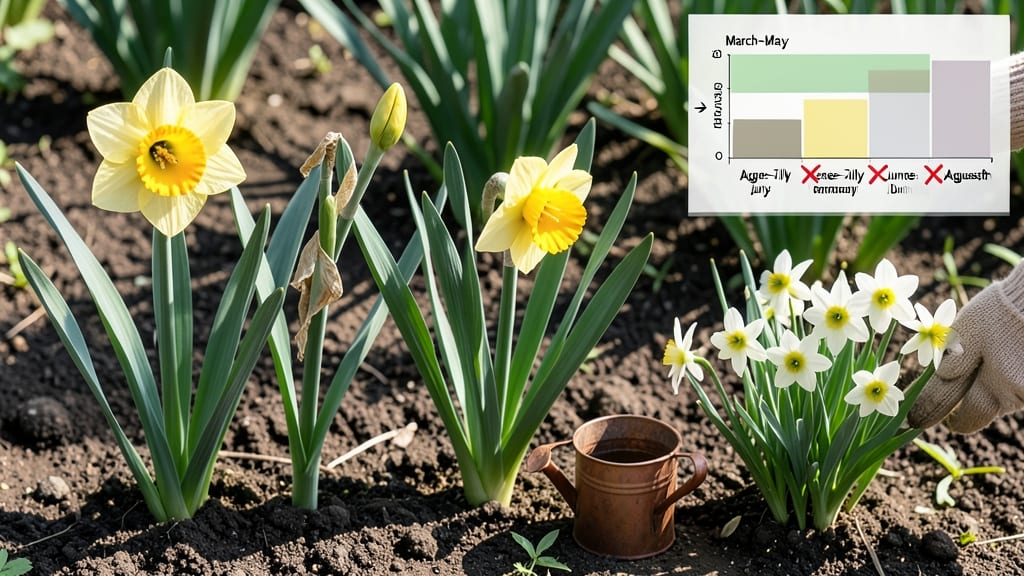
Daffodils do not bloom all summer—they're spring's star performers, with most varieties flowering between February and April. Their vibrant blooms typically last just 2-3 weeks, depending on the specific type and local growing conditions.
Daffodils are what I call "seasonal showstoppers"—their blooming cycle is tightly linked to nature's annual rhythm. 🌸 The key trigger is vernalization, a botanical process where cold temperatures (typically below 40°F) for several weeks prepare the bulbs to flower.
Once the days lengthen and temperatures warm, they burst into bloom, but this doesn't last long. Some late-blooming varieties might extend into early May, but true summer blooms? That's not in their genetic programming.
What's fascinating is how regional climates can shift these timelines by a few weeks—warmer southern gardens might see daffodils bloom earlier, while northern areas could experience a delayed but longer display.
This seasonal pattern isn't just about timing—it's about energy conservation. Daffodils store nutrients during their summer dormancy to fuel next year's blooms. That's why you'll often see them fading just as other summer flowers are getting started. The good news?
With the right care, you can encourage some varieties to produce a second, smaller bloom later in the season—but don't expect a full summer display. It's all about working with their natural rhythms rather than against them.
💡 In This Article
- Understanding Daffodil Blooming Seasons and Climate Factors
- Extending Daffodil Bloom Time with Gardening Strategies
Understanding daffodil blooming seasons and climate factors
The daffodil's spring bloom is governed by a precise biological sequence called vernalization, where bulbs require 6-12 weeks of cold temperatures below 40°F to trigger flowering. This cold period mimics winter conditions and signals the bulb that it's time to prepare for spring growth.
Without sufficient chilling, daffodils may produce weak stems or no flowers at all—a phenomenon gardeners call "blind stems." 🌱 The process works because cold temperatures stabilize specific proteins that regulate flower development in the bulb's meristem (growth center).
Daylight hours also play a crucial role. Daffodils are long-day plants, meaning they respond to increasing daylight after the winter solstice. Once temperatures rise above 50°F consistently and days lengthen beyond 12 hours, the bulbs receive the final signal to bloom.
This explains why daffodils in northern climates often flower later than those in southern regions—warmer winters provide less natural chilling time. For example, daffodils in Zone 5 might bloom in late March, while those in Zone 9 could appear as early as January.
Varieties show remarkable diversity in bloom times. Early bloomers like 'February Gold' typically appear in late winter, while late varieties such as 'Ice Follies' may not peak until early May. The difference comes down to genetic programming—some cultivars require shorter chilling periods or respond more quickly to warming temperatures.
Even within the same garden, you might see a 2-3 week spread between the first and last blooms of different varieties. This staggered timing creates a beautiful, extended display that's one of daffodil's greatest charms.
Climate factors create additional variations. In coastal areas with milder winters, daffodils often bloom earlier due to less extreme temperature swings. Conversely, inland continental climates with sharp temperature fluctuations can delay blooming until the soil warms consistently.
What's fascinating is how these factors interact—while cold winters trigger vernalization, too much cold (below 20°F) can damage bulbs, potentially reducing next year's bloom quality. This delicate balance explains why daffodils thrive in temperate climates but struggle in extreme environments.
The bloom duration itself is determined by the plant's energy reserves. Once daffodils flower, they allocate resources to seed production (if pollinated) and foliage growth, which must photosynthesize for 6-8 weeks to replenish bulb energy.
Cutting back foliage too soon starves the bulb, while allowing it to yellow naturally ensures robust blooms next season. This biological trade-off explains why daffodils never bloom throughout summer—they're following an evolutionary strategy designed for spring's brief but intense display of color. 🌿