
Blooming
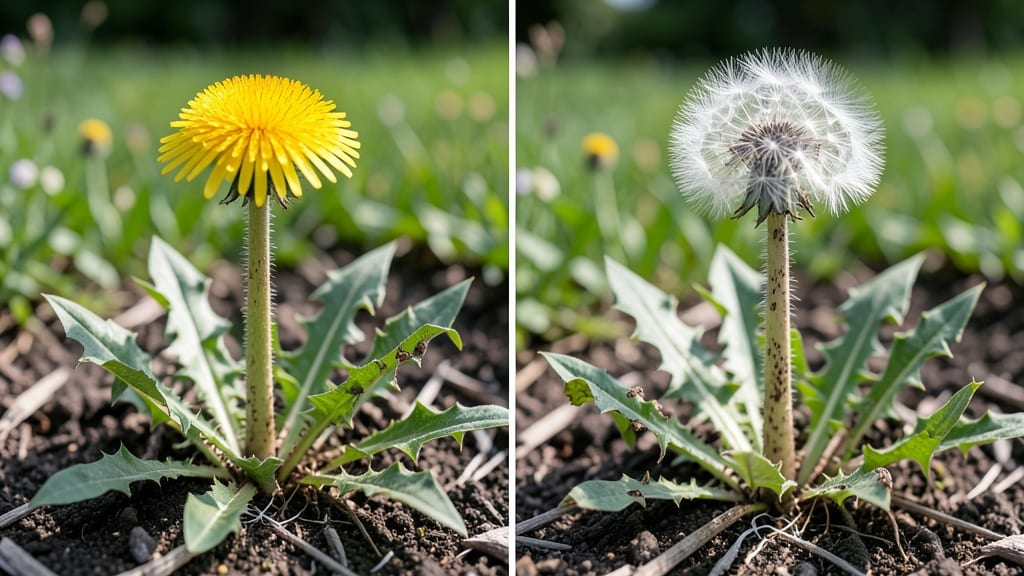
Dandelions don't bloom all summer continuously—they flower heavily in early spring, then sporadically through summer based on heat and daylight cycles, pause with frost, and may rebloom when conditions warm again.
Dandelions follow a heat-sensitive blooming pattern rather than continuous flowering.
Their buds form in response to temperature shifts and daylight length, which is why you'll see heavy blooms in spring when days lengthen, followed by sporadic flowers as summer progresses. 🌸 Once frost arrives, their growth halts completely until warmer weather returns.
This cycle explains why some gardens seem to have dandelions year-round—what you're actually seeing are different plants in various bloom stages, not the same plant flowering continuously.
Understanding this pattern helps gardeners manage expectations. While you won't get endless blooms from a single plant, creating ideal conditions—like well-draining soil and consistent moisture—can encourage multiple generations of dandelions to bloom sequentially throughout the growing season.
💡 In This Article
- How Heat and Daylight Trigger Dandelion Blooming Cycles
- Year-Round Dandelion Care for Extended Blooms
How heat and daylight trigger dandelion blooming cycles
Dandelions are masters of seasonal timing, using a process called thermoperiodism—their response to temperature shifts—to determine when to bloom. Unlike many perennials that flower continuously, dandelions (Taraxacum officinale) rely on daylength (photoperiodism) and soil temperature to trigger flowering.
When average daytime temperatures rise above 50°F (10°C) and daylight exceeds 12-14 hours, their rosette leaves transform into flower buds within 4-6 weeks. This explains the explosive spring blooms you see—nature's way of ensuring seeds disperse before summer droughts set in.
The key mechanism involves a plant hormone called florigen, which accumulates in response to these environmental cues. When temperatures drop below 32°F (0°C) or frost occurs, florigen production halts, and the plant enters dormancy.
This is why you'll notice dandelions disappearing in late fall—they're not dying, just conserving energy until spring. Interestingly, dandelions exhibit perennial behavior in mild climates but can act like biennials in colder regions, where they store energy in taproots to survive harsh winters and bloom aggressively the following year.
What makes dandelions unique is their ability to produce multiple generations in a single season. Each seedling can bloom within 8-12 weeks under ideal conditions, creating the illusion of continuous flowering.
For example, in Zone 7 climates, you might see the first spring blooms in March, sporadic flowers through June, a lull in July due to heat stress, then another flush in September before frost.
This staggered pattern ensures pollinators have a food source throughout the growing season while conserving the plant's resources.
Daylight length plays a surprising role too. Dandelions are considered long-day plants, meaning they flower when days exceed 14 hours. This is why northern gardens often see more prolific blooms than southern ones—longer summer daylight in the north triggers extended flowering periods.
In contrast, southern gardens may experience more sporadic blooms due to shorter daylight variations and higher summer temperatures that stress the plants. The result? A delicate balance between too much heat (which stunts growth) and just enough daylight to keep the cycle going.
Here's what this means for gardeners: If you're trying to extend the blooming season, focus on soil temperature management—mulching with straw can keep roots warm during cool snaps, while avoiding waterlogged soil prevents stress.
The trade-off? Dandelions thrive on neglect, so over-tending can actually reduce their natural blooming cycles. Their resilience comes from this precise adaptation to seasonal changes, making them both a gardener's challenge and a pollinator's delight.
One fascinating detail: dandelion flowers are protandrous, meaning their stamens release pollen before the pistils are receptive. This timing ensures cross-pollination while preventing self-fertilization.
Combine this with their heat-triggered blooming cycles, and you get a plant that's perfectly adapted to maximize seed production under changing conditions—nature's version of a well-oiled machine.