
Blooming
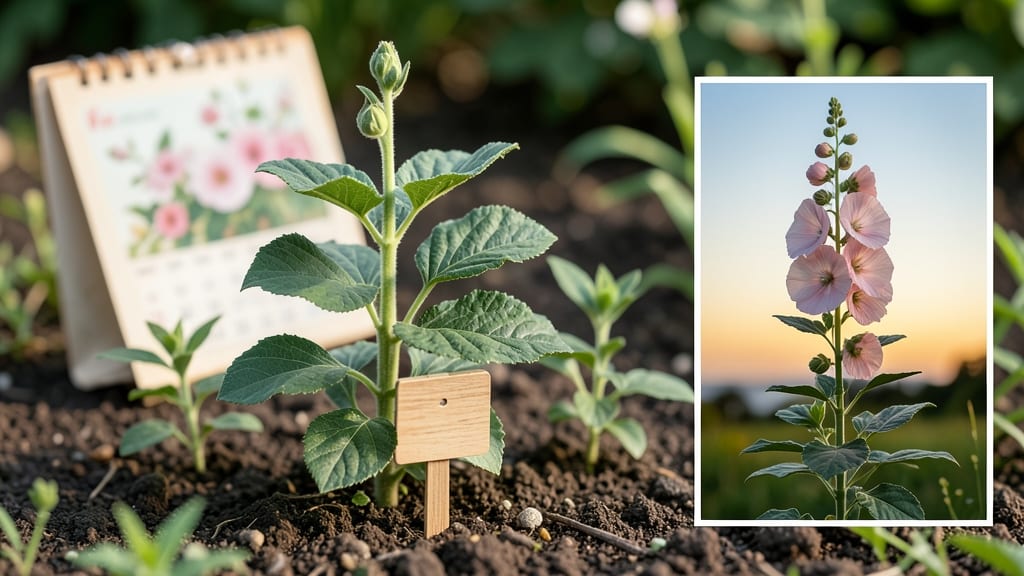
Hollyhocks typically do not bloom the first year, focusing instead on establishing strong roots and foliage. Most varieties require 12-18 months to flower, though some dwarf or hybrid types may produce sparse blooms sooner under ideal conditions.
Hollyhocks are biennials or short-lived perennials, meaning they prioritize root and leaf growth before flowering. 🌱 This first-year focus helps them store energy for future blooms, especially in cooler climates where growth slows naturally.
Some gardeners report dwarf varieties like 'Peach Blossom' showing occasional flowers by late summer if given rich soil and consistent moisture, but don't expect full blooms until the second season. The key is patience—what looks like slow progress is actually strategic preparation for those stunning vertical blooms you'll get later.
For those eager to see color sooner, try these tricks: plant in containers where roots warm up faster, pinch back early growth to redirect energy upward, and use a balanced fertilizer in early summer. 💫 Even then, most hollyhocks will wait until their second year for their signature floral display, but these methods can coax a few early blooms from lucky plants.
💡 In This Article
- Hollyhock Growth Stages and Flowering Timeline
- Fastest-Blooming Hollyhock Varieties for Early Color
Hollyhock growth stages and flowering timeline
The hollyhock's first-year focus on root and foliage development is a biological strategy called vegetative dominance.
This biennial growth pattern means the plant prioritizes building a robust taproot system that can reach 3-5 feet deep—critical for anchoring the towering stems (which can grow 5-7 feet tall) and accessing moisture during the flowering stage. 🌱 During this phase, you'll notice the plant's leaves growing larger and thicker, a sign it's storing energy in its roots through starch accumulation, similar to how carrots store nutrients underground.
Environmental factors dramatically influence this timeline. Hollyhocks thrive in full sun (6-8 hours daily) and well-draining soil with a pH of 6.0-7.5.
In cooler climates (USDA zones 3-7), the plant may take 18-24 months to flower due to slower metabolic processes, while warmer zones (8-10) can see flowering in 12-15 months.
The key trigger for flowering is day length and temperature—hollyhocks typically need 10-12 hours of daylight combined with consistent 60-70°F temperatures to initiate bloom formation. This explains why northern gardeners often see delayed flowering compared to southern growers.
What most gardeners don't realize is that the plant's leaf-to-flower ratio determines bloom quality. A healthy hollyhock will have 10-15 large leaves per stem before flowering, each acting like a solar panel to convert sunlight into energy.
The larger the leaf surface area, the more energy stored for blooms. 💫 This is why over-fertilizing with nitrogen (which promotes leafy growth) can actually delay flowering—it throws off the plant's natural balance between vegetative and reproductive phases.
There's also a fascinating genetic variation between biennial and perennial hollyhocks. True biennials (like Alcea rosea) follow the strict two-year cycle, while perennial varieties (such as Alcea ficifolia) may produce occasional first-year blooms if given perfect conditions.
The difference lies in their meristem development—biennials store energy in root meristems, while perennials distribute it more evenly throughout the plant structure. This genetic quirk means some gardeners report seeing 1-3 blooms on first-year perennials if planted in well-amended soil with compost and bone meal.
One often-overlooked factor is the plant's stress response. Hollyhocks are surprisingly resilient but will delay flowering if they experience drought stress or nutrient deficiencies during their first year.
For example, a lack of phosphorus (common in sandy soils) can stunt root growth by 30-40%, directly impacting flowering potential. 🌿 This is why many gardeners swear by a spring application of 5-10-10 fertilizer to kickstart healthy development.
The phosphorus component is particularly crucial—it's the nutrient most directly linked to root and flower development in biennials.
Understanding these growth stages helps explain why some gardeners see hollyhocks bloom in their first year while others wait two seasons. The difference often comes down to three critical factors:
- Soil quality: Plants in loamy soil with 2-3% organic matter flower 4-6 weeks earlier than those in poor soil
- Watering consistency: 1-1.5 inches of water weekly prevents stress that delays flowering
- Variety selection: Dwarf types like 'Black Prince' may show 1-2 blooms by late summer if given ideal care