
Blooming
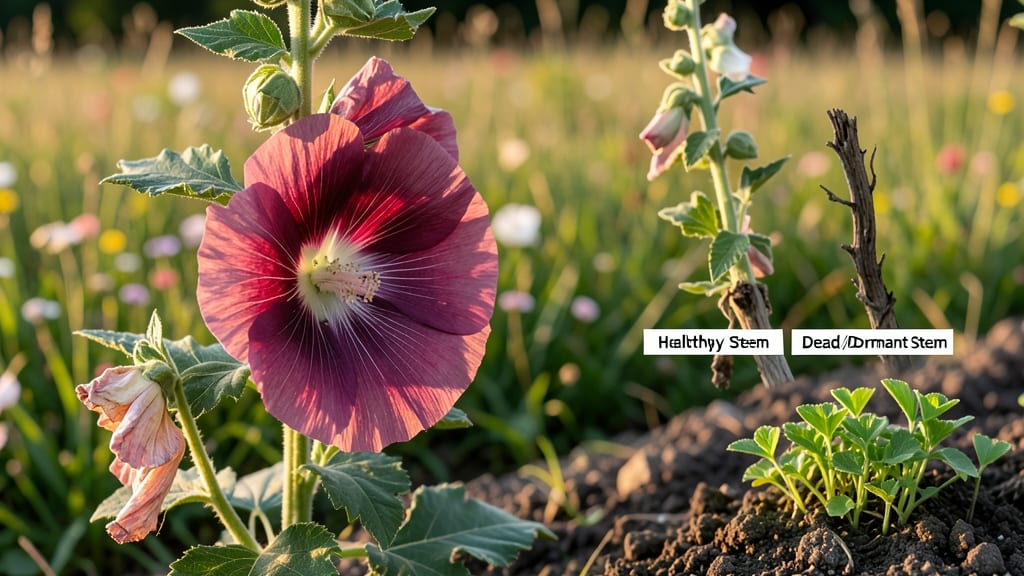
Hollyhocks do bloom every year in most climates as perennials, though colder regions may see them act as biennials, flowering their second year before fading. With the right care, you can encourage consistent annual blooms.
Whether hollyhocks return annually depends on your climate and how you care for them.
In warmer zones, these plants establish strong root systems that let them regrow each spring, producing those classic tall spikes of blooms year after year. 🌸 However, in colder areas, the first year often focuses on root development, with flowers appearing only in the second season before the plant eventually declines.
The key to extending their lifespan lies in proper winter protection and regular maintenance.
What makes this interesting is how hollyhocks adapt—some varieties naturally behave as short-lived perennials, while others might self-seed to create new plants. I've found that dividing mature clumps every few years can rejuvenate older plants, often bringing back that first-year vigor and prolonging the flowering cycle.
💡 In This Article
- Hollyhock Life Cycle: Perennial vs Biennial Behavior Explained
- Tips to Ensure Hollyhocks Bloom Year After Year
Hollyhock life cycle: perennial vs biennial behavior explained
The key to understanding why hollyhocks (Alcea rosea) behave differently lies in their root systems and climate adaptation. In USDA Hardiness Zones 6-9 (mild winters), hollyhocks develop deep, fibrous roots that store energy year-round, allowing them to regrow from the same crown each spring—classic perennial behavior.
These roots can extend 12-18 inches deep, accessing moisture and nutrients even during dry spells, which fuels their 4-7 foot tall flowering stalks annually. 🌱
In colder zones (Zones 3-5), hollyhocks often behave as biennials because their roots struggle to survive freezing temperatures. The first year focuses entirely on root development, with minimal top growth, while the second year produces those iconic papery blooms before the plant exhausts its energy reserves.
The difference comes down to dormancy triggers: in cold climates, hollyhocks enter a deeper winter dormancy that resets their life cycle, similar to how biennial vegetables like carrots or onions operate.
What's fascinating is how temperature affects flowering timing. Hollyhocks are day-neutral plants, meaning they bloom based on plant maturity rather than daylight hours. In warm climates, they may produce flowers 60-90 days after planting, while in cooler regions, the biennial cycle delays blooming until the second summer.
This explains why gardeners in Zone 5 might see their first flowers in year two but then lose the plant after just 3-4 years of growth.
The root system's role can't be overstated—healthy roots mean perennial behavior. When hollyhocks get consistent moisture (1-1.5 inches per week) and well-draining soil (pH 6.0-7.5), their roots expand aggressively, creating a network that can sustain multiple years of blooming.
Without proper care, however, the roots weaken, leading to that biennial decline. Think of it like a battery: strong roots = perennial power, weak roots = biennial burnout. ⚡
Another critical factor is the plant's energy allocation. Hollyhocks prioritize either root growth or flowering—never both simultaneously. In cold climates, the plant conserves energy for survival, while in warm zones, it diverts resources to both roots AND flowers.
This biological trade-off explains why your Zone 7 hollyhocks might bloom every year while your Zone 4 neighbor's plant takes two years just to flower once.
Interestingly, some hollyhock varieties are more adaptable than others. 'Chater's Double', for example, tends to perform better as a perennial in cooler climates than single-flowered types, thanks to its slightly hardier root structure.
The lesson here? Choose the right cultivar for your zone, and you're halfway to annual blooms. 🌸