Blooming
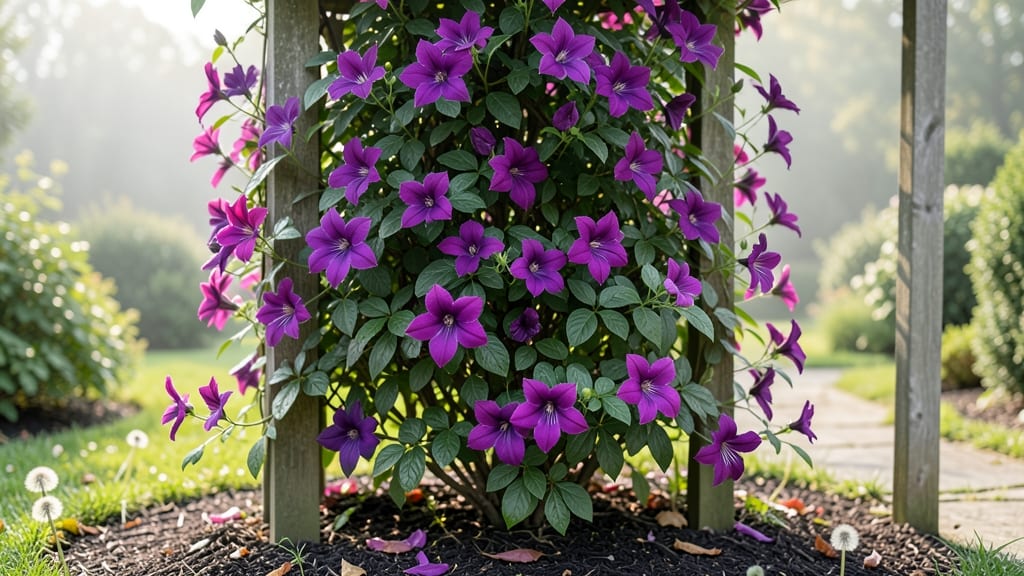
Large bloom clematis varieties like 'Jackmanii' and 'Nelly Moser' transform any garden into a vertical masterpiece—if you nail the pruning and timing. ✨ I've learned the hard way that these stunning vines demand specific care, especially when it comes to when and how to prune them, or you'll end up with a tangle of leaves and no blooms.
The secret to their showstopping flowers lies in understanding their pruning groups—Group 1, 2, or 3—and matching that to their bloom time.
Group 3 varieties, like 'Jackmanii,' bloom on new growth, so you prune them hard in late winter, while Group 2 varieties like 'Nelly Moser' bloom on old wood and need a gentler touch. Get this wrong, and you'll miss the 6-8 week window when they put on their best show.
With the right approach, you'll see football-sized blooms that last for weeks, with vines that climb effortlessly on trellises, arbors, or even fences. The key is patience—they take 2-3 years to fully mature, but once they do, they reward you with flowers that make every neighbor stop and stare.
Whether you're dealing with powdery mildew or struggling to get those first blooms, this guide covers the exact steps to keep your clematis thriving year after year. Let's get those vines blooming like crazy!
📚 In This Guide
- What you need
- Instructions
- Tips and common mistakes
- Wrapping up and next steps
What you need
- ● Clematis plants: Choose large-flowering varieties (e.g., 'Jackmanii,' 'Nelly Moser,' or 'Princess Diana') from a reputable nursery. Buy 2–3 plants for fuller coverage.
- ● Support structure: A 5–8 ft trellis, arbor, or sturdy fence (clematis vines can reach 10+ ft!). Opt for galvanized metal or wooden lattice for durability.
- ● Well-draining potting mix: 1 part compost, 1 part peat moss or coconut coir, and 1 part perlite (for container gardening). For in-ground planting, amend soil with organic matter (e.g., leaf mold or aged manure).
- ● Mulch: 2–3 inches of shredded bark or wood chips to retain moisture and regulate soil temperature.
- ● Garden trowel or spade (for planting).
- ● Pruning shears (sterilized with rubbing alcohol).
- ● Gloves (to protect hands from thorns and soil-borne pathogens).
- ● Watering can or hose with a gentle spray nozzle (clematis roots are shallow!).
- ○ pH testing kit (optional but helpful—aim for 6.0–7.0).
- ● Sunlight: 6+ hours of direct sun daily (morning sun + afternoon shade in hot climates).
- ● Moisture: Consistently moist (but not soggy) soil. Drought-tolerant once established, but young plants need 1–2 inches of water weekly.
- ● Wind protection: Plant near a sheltered wall or fence to prevent wind damage to delicate blooms.
- ● Know your pruning zone: Research your clematis variety’s pruning group (1–3) to time cuts correctly (e.g., Group 3 blooms on new wood—prune in early spring!).
- ● Slow-release fertilizer (e.g., 10-10-10 or compost tea) to boost blooms.
- ● Copper tape (to deter slugs/snails from young shoots).
- ● Plant ties or soft twine for securing vines to supports.
- ● Seasonal bloom food (e.g., Miracle-Gro Bloom Booster) for mid-season feeding.
How to prune and time blooms for large-flowered clematis varieties
Here's the straightforward method I use to keep my clematis thriving with those showstopping blooms.
🌱 Step 1: Identify Your Pruning Group First
First, figure out which pruning group your clematis belongs to—this determines everything else. Large-flowered varieties typically fall into Groups 2 or 3 (early or mid-season bloomers). Group 2 blooms on previous year's growth, while Group 3 blooms on both old and new wood. Check your plant's label or note when it flowers: if it blooms in early summer, it's likely Group 2; if it flowers in mid-to-late summer, it's probably Group 3.
This is the moment that matters: pruning at the wrong time can mean no flowers that season. I always mark my calendar with the last frost date—Group 2 gets pruned right after flowering, while Group 3 gets a light trim in early spring and a heavier cut back after the first flush of blooms.
✂️ Step 2: Prune Group 2 Varieties After Flowering
For Group 2 clematis (like 'Jackmanii' or 'The President'), wait until after all blooms have faded before pruning. Using clean, sharp pruners, cut back the entire plant to 12-18 inches from the ground. This encourages strong new growth for next year's flowers. I like to make my cuts just above a pair of healthy buds facing outward—this promotes bushier growth and better air circulation.
Don't rush this step. If you prune too early, you'll sacrifice this year's blooms. If you prune too late, the plant may not have enough time to establish new growth before winter. Watch for the last flower to drop completely before reaching for your pruners.
✂️ Step 3: Prune Group 3 Varieties in Two Stages
Group 3 clematis (such as 'Nelly Moser' or 'Perle d'Azur') need a two-step approach. First, in early spring, give them a light trim to remove any dead or crossing stems. Then, after the first flush of blooms in early summer, cut back the entire plant to just above a strong pair of buds. This ensures a second, often even more spectacular, bloom later in the season.
Here's the thing—Group 3 plants are more forgiving, but you still need to time it right. If you cut back too early, you might lose the first flush of flowers. If you wait too long, the second bloom may be smaller. I find that pruning right after the first blooms have fully opened gives the best balance.
☀️ Step 4: Support and Feed for Maximum Blooms
Large-flowered clematis need strong support—install a 5-6 foot tall trellis or sturdy arbor near your plant. Use soft plant ties to secure the main stems as they grow. I also add a 3-4 inch layer of mulch around the base (but keep it away from the stem) to retain moisture and regulate soil temperature. Feed with a balanced, slow-release fertilizer in early spring and again after the first flush of blooms.
Watch for leggy growth or sparse foliage—these are signs your plant needs more sunlight (clematis thrive in full sun to partial shade) or better nutrition. I always check the soil moisture too; clematis roots are shallow and need consistent moisture, but they hate soggy soil.
⏰ Step 5: Time Your Deadheading for Extended Blooms
To encourage more blooms, deadhead spent flowers by cutting back to the nearest pair of healthy buds. For Group 2, this is your last pruning of the year. For Group 3, you'll deadhead after each flush of blooms. I like to do this in the morning when the flowers are still fresh, and the plant has the whole day to recover.
Don't skip this step—deadheading not only keeps your clematis looking tidy but also redirects the plant's energy into producing more flowers. You'll see new buds forming within 2-3 weeks after deadheading, especially if you've provided enough water and nutrients.
Tips & tricks for perfect large bloom clematis care
These simple strategies will help you maximize those stunning clematis blooms all season long.
Pruning Group Visual Cues: I've learned that Group 2 clematis (like 'Jackmanii') have thicker, more woody stems compared to Group 3's (like 'Nelly Moser') more flexible growth. For Group 2, look for stems that are about pencil-thick—these are your main flowering stems. Group 3 stems will be thinner and more vine-like. This visual difference helps me confirm my pruning group before making any cuts.
Timing is Everything: The instructions mention waiting until blooms have completely faded for Group 2, but here's the thing—don't wait until the flowers turn brown and crispy. Aim for when they've dropped naturally and the seed heads are just starting to form. This gives you that perfect window between enjoying the flowers and preparing for next year's growth. I mark my calendar with the first bloom date and count back 8-10 weeks for my pruning day.
Bud Selection Matters: When making those critical cuts to 12-18 inches for Group 2 or just above a strong pair of buds for Group 3, focus on buds that are facing outward. These will grow into stems that reach away from the center, creating that lush, bushy look. I always make my cuts at a slight angle just above the bud—this prevents water from pooling and causing rot. Think of it like training your plant to grow in the direction you want.
Support System Check: That 5-6 foot tall trellis isn't just for looks—it's essential for large bloom varieties. I've found that using a trellis with 1.5-inch diameter poles gives the most stability. Install it before your clematis gets too tall, and use soft plant ties (not wire or anything that can cut into the stems) to secure the main stems. This prevents wind damage and helps the flowers face outward for better display.
Pro Tips for Large Bloom Clematis
- These simple strategies will help you maximize those stunning clematis blooms all season long.
- Pruning Group Visual Cues: I've learned that Group 2 clematis (like 'Jackmanii') have thicker, more woody stems compa...
- Timing is Everything: The instructions mention waiting until blooms have completely faded for Group 2, but here's the...
Frequently asked questions
Got questions about growing large bloom clematis? You’re not alone! Here are answers to the most common concerns—from pruning to pests and everything in between.
When is the best time to prune large bloom clematis?
Timing depends on your clematis group. Group 1 (early bloomers) prune right after flowering. Group 2 (repeat bloomers) prune in early spring before new growth starts. Group 3 (late bloomers) also prunes in early spring. Always use clean, sharp shears to avoid disease!
Why aren’t my clematis blooms as big as they should be?
Oversized blooms need 6+ hours of sunlight, well-draining soil, and regular watering. Check for over-pruning or nutrient deficiencies (like phosphorus). Feed with a balanced fertilizer in early spring and mid-summer for optimal growth.
What pests or diseases commonly affect large bloom clematis?
Watch for clematis wilt (fungal), aphids, or slugs. Treat fungal issues with neem oil or copper fungicide. For pests, use insecticidal soap or introduce ladybugs. Keep foliage dry to prevent mildew.
Can I grow large bloom clematis in containers?
Yes! Choose a large container (15+ gallons) with drainage holes and use a well-draining potting mix. Ensure it gets morning sun and evening shade to prevent stress. Move containers indoors if frost is expected.
What’s the best companion plant for large bloom clematis?
Pair with low-growing perennials like heuchera, hostas, or ferns to provide shade for the base. Avoid competitive plants like ivy or deep-rooted trees. A mulch layer helps retain moisture.
Wrapping up and next steps
Growing large bloom clematis is a rewarding journey—once you understand their unique pruning needs and bloom timing, you’ll be treated to stunning, vibrant flowers year after year! 🌸 Whether you’re a seasoned gardener or just starting, these varieties thrive with the right care, so don’t hesitate to experiment and find your perfect match. Ready to elevate your garden? Grab your pruners, pick a variety, and get planting—your clematis will thank you with breathtaking blooms!