
Blooming
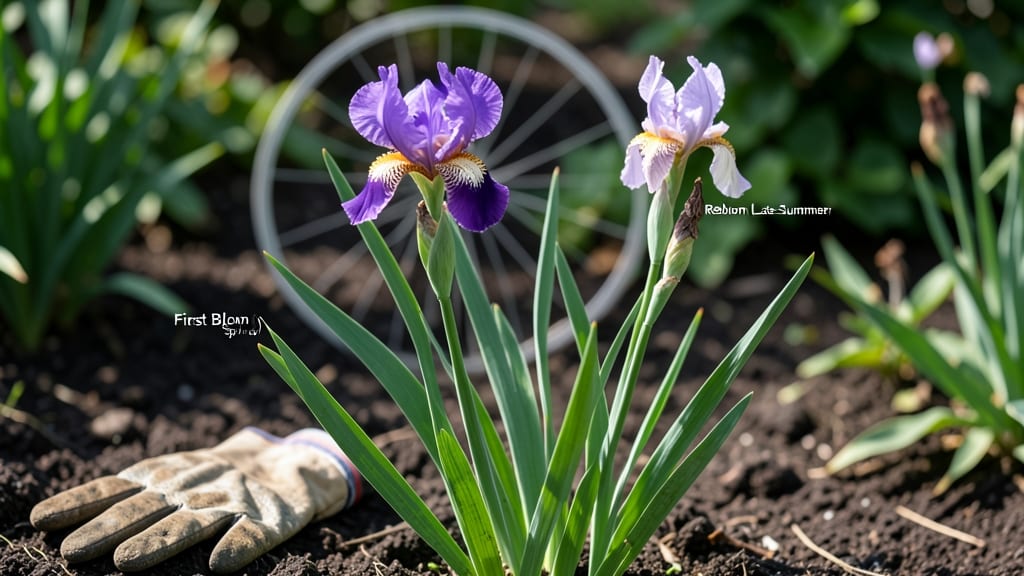
Do irises bloom more than once? Most irises bloom only once per season in spring, but reblooming varieties like Louisiana, Siberian, and Japanese irises can produce a second flush of flowers with proper care—including deadheading spent blooms and strategic fertilization.
Not all irises follow the same schedule—reblooming types actually have two distinct bloom periods. 🌸 The key difference lies in their growth patterns: standard bearded irises store energy underground for one big spring show, while rebloomers like Siberian irises have a more flexible energy system that allows for a late-summer revival.
This second bloom is often smaller but equally stunning, especially when you maintain consistent care throughout the growing season.
What makes this possible is a combination of genetics and cultivation techniques. Reblooming varieties evolved to take advantage of extended growing seasons, but they still need your help to perform their best.
Removing spent blooms (deadheading) redirects energy to foliage growth, while balanced fertilization—especially with phosphorus—encourages stronger root development for that second push of flowers.
💡 In This Article
- Reblooming Iris Varieties: Which Ones Flower Twice?
- Deadheading and Care Tips to Encourage Repeat Blooms
Reblooming iris varieties: which ones flower twice?
The secret to irises blooming twice lies in their genetics and growing habits. Standard bearded irises, like the classic Germanica hybrids, focus all their energy on a single spring bloom because they store nutrients in thick rhizomes.
These rhizomes act like natural batteries, releasing energy in one big burst when conditions are perfect—typically April to June in most climates. However, reblooming varieties have a different strategy: they distribute their energy more evenly throughout the season.
Three standout reblooming types deserve special attention: Louisiana irises (like 'George' or 'Storm Cloud'), which thrive in wet, humid conditions; Siberian irises (such as 'Caesar's Brother'), known for their delicate blooms and hardy nature; and Japanese irises (including 'Kodak Color' or 'Kodomo'), which often produce a second flush in late summer.
What makes these varieties unique is their ability to produce two distinct flower stalks—one in spring and another in late summer—thanks to their more flexible growth cycles. Siberian irises, for example, can even rebloom if given proper care, though their second bloom may be smaller than the first.
The key difference between these varieties and standard irises lies in their root systems. Rebloomers like Siberian irises develop fibrous roots that can absorb nutrients more continuously, while bearded irises rely on their thick rhizomes for a single energy surge.
This structural difference allows rebloomers to recover from the first bloom and produce a second round of flowers, provided they receive consistent moisture and nutrients. 🌿 In my garden, the Siberian irises always put on a second show in August to September when I maintain regular watering and fertilize every 6 weeks during the growing season.
Color plays a role too—reblooming varieties often feature softer hues like lavender, white, or pale yellow, which are less demanding on the plant's energy reserves than bold, deep colors.
For instance, the Japanese iris 'Kodomo' produces delicate pink blooms in both spring and fall, while the Louisiana iris 'George' offers rich purple flowers that can rebloom if deadheaded promptly. The trade-off?
These second blooms are typically 20-30% smaller than the first, but they more than make up for it in sheer volume of flowers.
If you're wondering how to identify a reblooming iris, look for these clues: multiple flower stalks (called scapes) emerging from the same rhizome, and a tendency to produce new growth after the first bloom.
Standard bearded irises, by contrast, will send up just one or two scapes in spring and then go dormant until the following year. This is why choosing the right variety is crucial—if you want that second bloom, you'll need to select a rebloomer from the start.
Here's a quick comparison to help you decide:
- Standard Bearded Irises: One spring bloom (April-June), thick rhizomes, bold colors, no reblooming potential
- Siberian Irises: Two blooms (May and August-September), fibrous roots, delicate petals, thrives in cooler climates
- Louisiana Irises: Two blooms (May-June and August-September), loves wet soil, dramatic blooms, heat-tolerant
- Japanese Irises: Two blooms (June-July and September), prefers moist, acidic soil, intricate flower forms
For gardeners in USDA Zones 3-8, Siberian and Japanese irises are excellent choices for extending your iris season well into fall. The key is to match the variety to your climate—Louisiana irises, for example, need high humidity and won't thrive in arid regions. 🌸