
Blooming
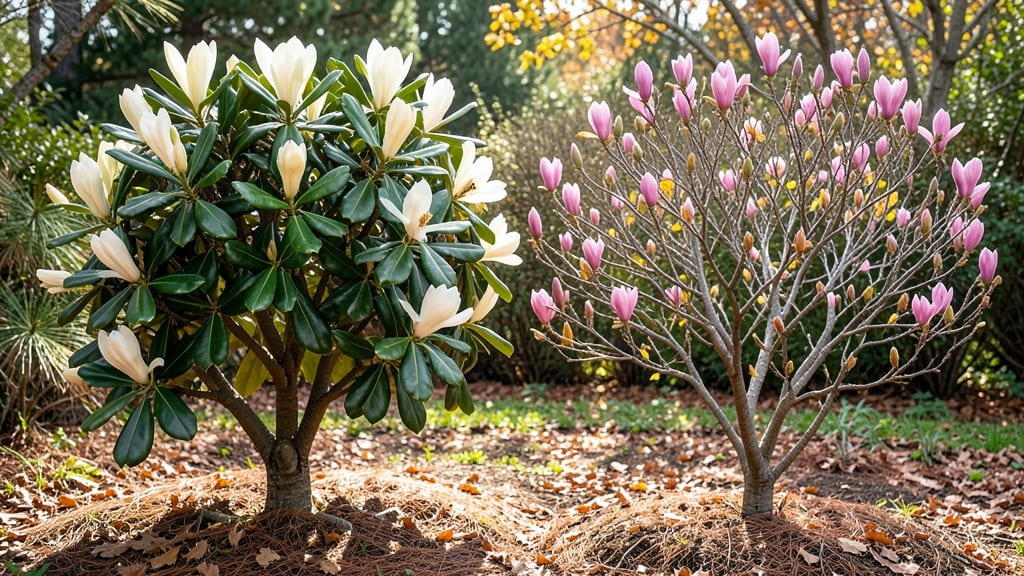
Most magnolias do not bloom twice a year, but some varieties may occasionally produce a second flush of flowers under specific conditions.
Most magnolias follow this annual blooming pattern because their energy reserves are focused on producing flowers once, followed by leaf growth and root development. 🌸 The timing aligns with their evolutionary strategy—early blooms ensure pollinators are active before summer heat arrives.
Some gardeners report occasional second blooms after heavy pruning or drought stress, but these are exceptions rather than the rule.
What's interesting is how different magnolia species adapt: Southern magnolias (Magnolia grandiflora) typically bloom in late spring, while star magnolias (Magnolia stellata) often flower in early spring.
The key to encouraging rare secondary blooms lies in maintaining consistent care—proper watering, balanced fertilization, and strategic pruning after the main bloom cycle can sometimes trigger a modest rebound.
💡 In This Article
- Why Most Magnolias Bloom Just Once Annually
- Encouraging Rare Second Blooms in Magnolias
Why most magnolias bloom just once annually
The annual blooming pattern of magnolias is deeply rooted in their evolutionary biology. These ancient trees prioritize a single, spectacular flowering event each year to maximize reproductive success.
The process begins in late winter when hormonal shifts trigger bud formation, typically requiring 60-90 days of chilling temperatures (32-45°F) to break dormancy. This cold requirement ensures blooms coincide with optimal pollinator activity in spring when temperatures stabilize around 50-65°F.
Energy allocation plays a critical role—magnolias invest heavily in either flowers or foliage, not both simultaneously. After blooming, the tree redirects resources to leaf growth and root development, a process that can take 4-6 weeks.
This physiological trade-off explains why secondary blooms are rare: the tree simply doesn't have enough stored energy to produce another flush of flowers without compromising its overall health. 🌿 For example, Magnolia grandiflora (Southern magnolia) typically blooms in late spring, while Magnolia stellata (star magnolia) flowers in early spring before leaves emerge—both follow this strict annual cycle.
The timing of magnolia blooms also reflects their adaptation to climate zones. Early bloomers like Magnolia stellata rely on mild winters and gradual warming to trigger flowering, while late bloomers such as Magnolia virginiana (sweetbay magnolia) may flower in summer or fall in warmer regions.
This variation shows how temperature cues regulate the blooming window, but the core principle remains: magnolias are hardwired for one primary bloom cycle per year to conserve energy and ensure survival.
What's fascinating is how light exposure influences this pattern. Magnolias require 12-14 hours of daylight to initiate flowering, a phenomenon called photoperiodism. When days lengthen in spring, this light signal combined with warming temperatures triggers the hormonal cascade that opens those iconic fragrant blooms.
The tree's internal clock ensures this happens at the perfect moment—before summer heat arrives—when pollinators like bees and moths are most active.
Environmental stress can sometimes disrupt this pattern. Drought conditions or extreme heat waves may cause magnolias to skip their annual bloom entirely, as the tree prioritizes survival over reproduction.
Conversely, in ideal growing conditions with consistent moisture and balanced nutrition, some varieties might produce a modest second bloom—though this is more common in younger trees with ample energy reserves. The key difference lies in the tree's ability to recover from the first flowering event without significant stress.
Consider the contrast between Magnolia soulangeana (Saucer magnolia) and Magnolia × loebneri (Loebner magnolia). The former often blooms in early spring with large, showy flowers, while the latter may produce smaller blooms later in the season.
Both follow the annual pattern, but their timing reflects how microclimates and local conditions fine-tune the blooming window. This adaptability is why magnolias thrive across diverse climates—from the humid South to temperate zones—yet maintain their core annual blooming strategy.
The takeaway? Magnolias are biological clockwork, designed to bloom once a year with precision. While occasional second blooms can happen, they're exceptions that prove the rule—these trees are built for one grand floral performance annually, not a continuous display.
Understanding this natural rhythm helps gardeners provide the right care to support their magnolias' primary blooming season. 🌸