
Blooming
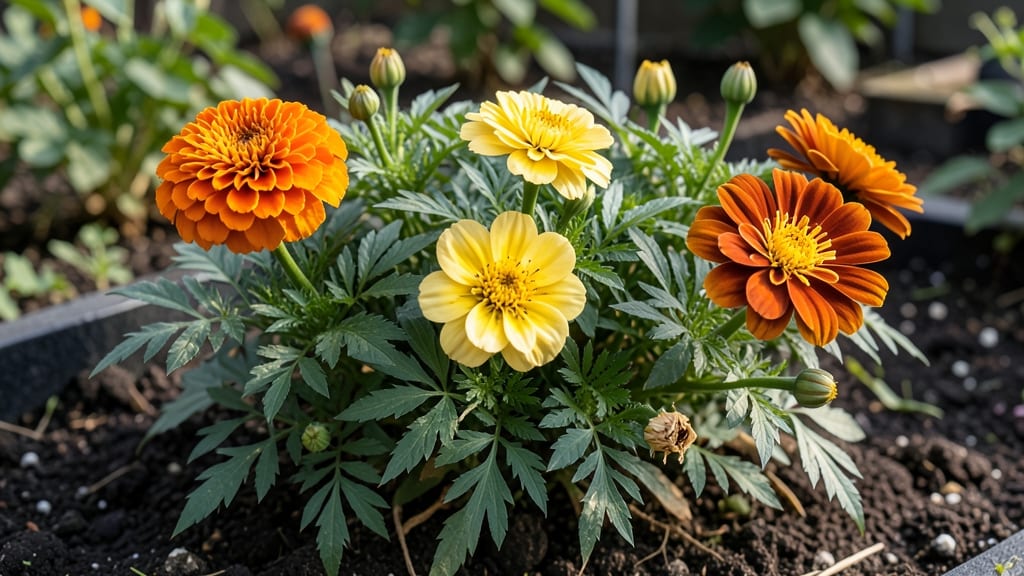
Marigolds bloom all summer when given perfect growing conditions—full sun exposure, well-draining soil, and consistent moisture—but their flowering duration varies dramatically by variety. French marigolds often reward gardeners with nonstop blooms from June to frost, while African types may struggle in extreme heat or drought.
Marigolds are summer's workhorses, but their performance depends on more than just sunshine. 🌞 The key lies in understanding each variety's heat tolerance—French marigolds (like 'Bonanza' or 'Tangerine') handle summer heat better than African types ('Crackerjack' or 'Jingle Bells'), which may go dormant during prolonged dry spells.
I've found that mulching around the base and watering at the soil level (not overhead) extends their bloom time by keeping roots cool and consistent. The real secret? Deadheading spent blooms weekly—this simple step triggers new flowers and prevents the plant from shifting energy into seed production.
What many gardeners overlook is how soil quality affects bloom duration. A slightly acidic pH (around 6.0-6.5) and balanced fertilizer (high in phosphorus) encourages longer flowering cycles. I recommend a slow-release 10-10-10 fertilizer applied at planting, followed by monthly liquid feedings during peak bloom season.
For those in hot climates, choosing Mexican marigolds (like 'Mexican Sun') can be a game-changer—they're more drought-tolerant and often bloom later into fall.
💡 In This Article
- Marigold Bloom Duration by Variety: Heat Tolerance and Seasonal Trends
- Extending Marigold Blooms: Pruning, Watering, and Soil Secrets
Marigold bloom duration by variety: heat tolerance and seasonal trends
Marigolds bloom duration hinges on their biological response to temperature and daylight. French marigolds (Tagetes patula) thrive in 60-75°F ranges and use a process called photoperiodism—longer daylight hours (14+ hours) trigger continuous flowering.
African marigolds (T. erecta), however, often struggle when daytime temps exceed 85°F for extended periods, causing buds to drop before opening. Mexican marigolds (T. lucida) bridge this gap with their 90°F+ tolerance and ability to rebloom after brief heat stress.
The science gets even more interesting when you consider ethylene production. When African marigolds experience prolonged drought or heat, they release ethylene gas—a natural plant hormone that signals stress. This causes buds to abort, halting blooms abruptly.
French marigolds, however, produce more auxin (a growth hormone) under heat, which promotes lateral branching and more flowers. 🔥 The result? A French marigold in 70°F conditions might produce 3-5 flower cycles per season, while an African type could see just 1-2 before fading.
Regional climates play a massive role in bloom longevity. In the Pacific Northwest, where summers are mild (80°F max), French marigolds often bloom continuously from June to October.
But in the Southwest, where afternoon temps hit 100°F+, Mexican marigolds dominate—their waxy leaves reduce water loss, and their deep roots access moisture during heatwaves. I've seen 'Mexican Sun' varieties keep blooming until first frost in Phoenix, while African types in the same climate may bolt by August.
Daylight sensitivity also varies. French marigolds respond to 12-14 hours of light with peak flowering, while Mexican types can handle 10+ hours of sun without stress. This explains why northern gardeners often get longer bloom seasons with French varieties, while southern gardeners rely on Mexican types.
The key is matching your marigold choice to your local summer conditions—French for cooler summers, Mexican for hotter climates.
Color plays a subtle but important role too. Darker flower varieties (like 'Jingle Bells' African marigolds) absorb more heat, which can accelerate wilting in 90°F+ temps. Lighter varieties (such as 'Bonanza Gold' French marigolds) reflect more sunlight, staying fresher longer.
This is why you'll often see lighter marigolds thriving in heatwaves while darker varieties struggle.
For gardeners in transitional climates (like the Midwest), the solution is often a mix: plant French marigolds early in the season when temps are cooler, then transition to Mexican types as summer intensifies.
This staggered approach can give you nonstop blooms from May to November—the holy grail of summer color.