Blooming
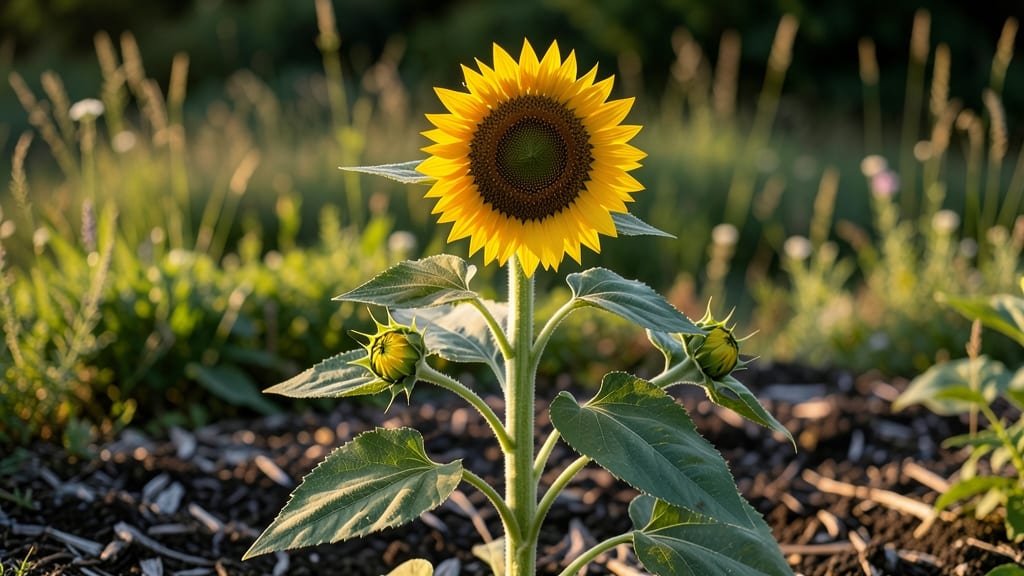
Sunflowers bloom in spring only if you plant early varieties or live in warm climates, but most types prefer summer's warmth for full-size blooms. Late spring plantings often yield smaller flowers by early fall.
Sunflowers are summer's showstoppers, but their timing depends on both variety and climate. 🌻 Early bloomers like 'Teddy Bear' can push flowers in spring if planted in frost-free zones, while giant varieties like 'Mammoth' need summer's heat to reach their full 12-foot potential.
The secret lies in their growth cycle: cooler spring soil slows germination, while summer's warmth accelerates flowering. I've found that starting seeds indoors 4-6 weeks before your last frost date gives them a head start for spring blooms in cooler regions.
For optimal spring results, focus on soil preparation—sunflowers crave well-drained, slightly acidic soil with a pH of 6.0-7.5. Mix in compost before planting, and choose a location with at least 6-8 hours of direct sunlight daily.
In regions with short growing seasons, succession planting every 2-3 weeks can extend your blooming window from summer into early fall.
💡 In This Article
- Sunflower Blooming Seasons by Variety
- Optimizing Sunflower Growth for Spring Planting
Sunflower blooming seasons by variety
Sunflowers aren't one-size-fits-all when it comes to blooming seasons. The 60-90 day varieties like 'Teddy Bear' can produce spring blooms in frost-free zones (USDA zones 7-10), while 100-120 day giants like 'Mammoth' need summer's warmth to reach their full 12-foot potential.
The key difference lies in their growth cycles: early varieties prioritize flower production over stem height, while late varieties invest energy in vertical growth first. 🌱
Climate plays a massive role in timing. In cooler regions (zones 3-6), spring-planted sunflowers often struggle with slow germination in 45-55°F soil, delaying blooms by 2-4 weeks compared to summer plantings. The Helianthus annuus species (common sunflower) has evolved to thrive in summer's 75-85°F temperatures, which accelerate photosynthesis and flowering.
Even in warm climates, spring-planted sunflowers may produce smaller blooms because their energy goes toward establishing roots rather than flower development.
Variety-specific examples show this clearly: 'Autumn Beauty' sunflowers planted in late spring can produce 3-5 inch blooms by early fall, while 'Russian Giant' needs 120+ days of warm weather to reach its 16-inch diameter flowers.
The color spectrum also shifts seasonally—spring blooms often feature more yellow and orange hues, while summer varieties develop richer red and brown centers as temperatures rise. 🌻
Perennial sunflowers (like Helianthus debilis) offer a different approach—they can bloom in spring if planted in protected microclimates, but their 1-3 foot height makes them less dramatic than annuals. These varieties often produce multiple blooms throughout the season, adapting to temperature fluctuations better than their annual cousins.
The trade-off? Their flowers are typically 2-4 inches across, perfect for pollinator gardens but not for large cut arrangements.
What most gardeners miss is how day length affects flowering. Sunflowers are short-day plants—they flower when daylight shortens, which happens naturally in late summer. This is why summer plantings often produce larger blooms: the plants experience the ideal 12-14 hour daylight trigger for maximum flower development.
Spring plantings may miss this window entirely in northern latitudes, resulting in smaller, less vibrant blooms.
For those chasing spring blooms, focus on early-maturing dwarf varieties like 'Sunspot' (50-60 days) or 'Moulin Rouge' (60-70 days). These can produce 6-8 inch flowers in spring if planted in well-drained, compost-amended soil and given full sun exposure.
The secret? Start seeds indoors 4-6 weeks before your last frost date to give them a head start against cool spring temperatures.