
Blooming
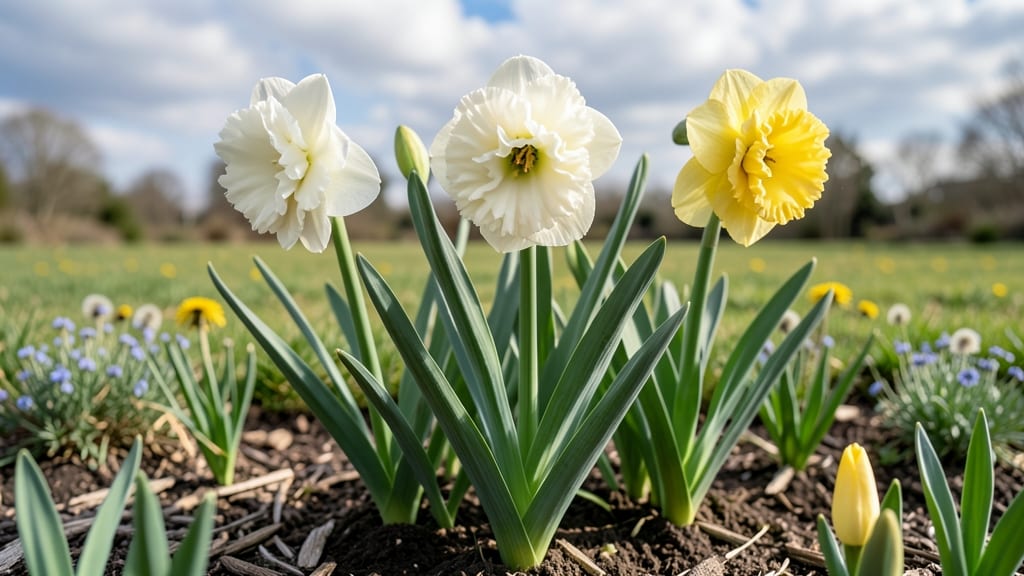
Double bloom daffodils transform your spring garden into a purple cloud of cheerful spikes that multiply every year. 🌸 I planted mine last fall, and by March, the bold blooms were already pushing through snow—proof that these beauties thrive where others fail.
The secret lies in their frost-hardy nature and the way they naturalize, returning bigger and bolder each season.
Start with well-draining soil and plant bulbs 6 inches deep, spacing them 4-6 inches apart in clusters of 3-5 for dramatic effect. These daffodils love full sun but tolerate partial shade, making them perfect for problem spots.
After planting, water deeply once, then let nature take over—they’re drought-tolerant once established.
By mid-spring, you’ll see those signature double blooms appear, followed by lush foliage that feeds next year’s flowers. The key to repeat performances? Deadhead spent blooms but leave the leaves until they yellow naturally. A light fall fertilizer boosts next year’s show without overfeeding.
Watch for squirrely chipmunks digging up bulbs—bury them deeper or use wire mesh if needed. With proper care, these daffodils multiply yearly, creating natural drifts of purple that outshine any other spring bloomer. Your garden will thank you for years to come.
📚 In This Guide
- What you need
- Instructions
- Tips and common mistakes
- Wrapping up and next steps
What you need
- ● Double bloom daffodil bulbs (e.g., 'Tête-à-Tête' or 'Ice Follies'): Quantity: 10–20 bulbs (for a small garden bed or container). Size: #1 or larger (bulbs ≥ 2.25" in diameter for best blooms).
- ● Well-draining soil: Type: Loamy, slightly acidic (pH 6.0–7.0). Amendment: Mix in compost or aged manure (1–2 inches) for fertility.
- ● Garden fork or tiller (for loosening soil to 8–10 inches deep).
- ● Organic mulch (e.g., straw, pine needles, or shredded leaves): 2–3 inches to protect bulbs.
- ● Watering can or hose with a gentle spray nozzle (for hydration without displacing bulbs).
- ● Garden gloves (to protect hands from sharp bulb edges).
- ● Bulb fertilizer (e.g., 5-10-10 or bone meal): 1 tbsp per bulb at planting time.
- ● Slow-release granular fertilizer (e.g., 13-13-13): ½ cup per 10 sq ft in early spring.
- ● Daffodil-specific pest repellent (e.g., neem oil or granular sulfur) to deter squirrels/rodents.
- ● Container or raised bed (if planting in pots: 5–7" deep with drainage holes).
- ● Plant labels (to track varieties—purple double bloomers are easy to forget!).
How to grow double bloom daffodils for yearly purple spikes
Here's how to coax those dramatic double blooms back every spring—no magic, just timing and care.
🌱 Step 1: Choose the Right Variety and Planting Site
Pick a double-bloom daffodil variety like 'Ice Follies' or 'Tête-à-Tête' for those showstopping purple spikes. Plant in full sun to partial shade—at least 6 hours of sunlight daily—where the soil drains well. Daffodils hate soggy roots, so avoid low spots where water pools after rain.
Test your soil's drainage by digging a 6-inch hole and filling it with water. If it drains in under 2 hours, you're good to go. If not, amend with 1 part sand or perlite to 3 parts garden soil. I always plant mine in fall, about 6-8 weeks before the first frost—this gives roots time to establish before winter.
🪴 Step 2: Plant Bulbs at the Correct Depth and Spacing
Dig holes 3 times as deep as the bulb is tall—usually 6-8 inches deep—and space them 4-6 inches apart. The rule of thumb is: deeper planting = more frost resistance, but not so deep the bulb rots. Place one bulb per hole with the pointed end facing up (yes, daffodil bulbs have a natural orientation).
Fill the hole halfway with soil, then add a handful of bone meal fertilizer (if using) to encourage strong root growth. Cover the bulb completely and water gently to settle the soil. You'll see the first shoots emerge in late winter or early spring, usually when the soil temperature hits 50°F.
☀️ Step 3: Provide Consistent Water and Light After Emergence
Once the green shoots appear, water deeply once a week—about 1 inch of water per week—unless rainfall provides it. Daffodils go dormant in summer, so reduce watering to every 2-3 weeks once the foliage yellows. Overwatering now causes bulb rot, and you don’t want to lose next year’s blooms.
Keep the planting area weed-free—competition for nutrients weakens the bulbs. A 2-inch layer of mulch (like shredded bark) helps retain moisture and regulate soil temperature. Watch for first true leaves—they’ll appear as the stems grow taller, signaling the plant is actively growing.
✂️ Step 4: Deadhead and Fertilize for Next Year’s Blooms
After flowering, cut back the faded blooms but leave the foliage until it yellows naturally. This process feeds the bulb for next year’s flowers. I snip off the spent flower stalk with clean pruners, but I never touch the leaves until they turn brown and floppy. Fertilize lightly with a balanced bulb fertilizer (like 10-10-10) in early fall to boost next season’s growth.
In late summer, when the foliage is fully brown, cut it back to 2 inches above the ground. This cleans up the garden and prevents disease. The bulbs will stay dormant until fall, when the cycle begins again. Real talk: If you skip deadheading or fertilizing, your daffodils might still bloom, but the spikes will be smaller and less vibrant.
⏰ Step 5: Divide and Multiply Every 3-5 Years
Daffodil bulbs multiply over time, and crowded clumps produce fewer, smaller blooms. Dig up the bulbs in early fall** when the foliage dies back. Gently separate the clusters, discarding any soft or shriveled bulbs. Replant the healthiest ones at the same depth, spacing them 4-6 inches apart again.
This is the moment that matters: Dividing keeps your daffodils vigorous and ensures those double blooms stay dramatic. I always replant a few extra bulbs in new spots—it’s how I expand my garden without buying more. With proper care, your purple spikes will return year after year, frost after frost.
Tips & tricks for growing double bloom daffodils
Here's what nobody tells you about keeping those purple spikes coming back bigger and better every year.
Sunlight Secret: While daffodils tolerate partial shade, those 6 hours of sunlight make all the difference for vibrant double blooms. I've noticed my 'Ice Follies' produce the most dramatic purple spikes when planted in full sun. If your garden has afternoon shade, position them to catch morning sunlight instead—those early rays are most intense and help fuel the blooms.
Soil Test Hack: That 2-hour drainage test isn't just about avoiding soggy roots—it also tells you how fast your soil warms in spring. If water drains in under 1 hour, your soil warms quickly and bulbs will emerge earlier. If it takes longer, your daffodils might need a little extra warmth from mulch to jumpstart growth. I always do this test in fall when I'm planning my planting schedule.
Planting Orientation: Pay attention to which end of the bulb is pointed up—it's not just about looks. The pointed end should face upward because this is where the shoot will emerge. I've dug up bulbs that were planted upside down, and while they still grew, the shoots were weaker and produced fewer blooms. Trust me on this: take that extra 10 seconds to orient them properly.
Fertilizer Timing: That early fall fertilization with 10-10-10 is crucial, but don't overdo it. Too much nitrogen now can encourage leaf growth at the expense of bulb development. I use about 1 tablespoon per bulb—just enough to give them a gentle boost without overwhelming them. The key is to fertilize right after you plant, when they're just starting their root growth for next season.
Pro Tips for Double Bloom Daffodils
- Here's what nobody tells you about keeping those purple spikes coming back bigger and better every year.
- Sunlight Secret: While daffodils tolerate partial shade, those 6 hours of sunlight make all the difference for vibrant double blooms.
- Soil Test Hack: That 2-hour drainage test isn't just about avoiding soggy roots—it also tells you how fast your soil warms in spring.
Frequently asked questions
about double bloom daffodils—because every gardener deserves clarity!When is the best time to plant double bloom daffodils for a strong return?
Plant them in fall (6-8 weeks before the first frost) for optimal root growth. Aim for a depth of 6-8 inches in well-draining soil. Early planting ensures they’ll thrive through winter and bloom reliably next spring. Pro tip: Use a bulb planter or stick for precision!
Why aren’t my double bloom daffodils reblooming like they did last year?
Reblooming can be finicky! Ensure your bulbs get full sun (6+ hours/day) and well-draining soil. Overcrowding or poor nutrition (low phosphorus/potassium) can stifle blooms. Try dividing bulbs every 3-5 years or fertilize with a bulb-specific food in early spring.
Can I grow double bloom daffodils in containers or small gardens?
Use deep pots (12+ inches) with drainage holes and a mix of potting soil + perlite. Plant 2-3 bulbs per container for a dramatic effect. Just remember: Containers dry out faster, so water consistently until frost. Perfect for patios or balconies!
How cold can double bloom daffodils tolerate?
These frost-resilient beauties handle temperatures down to 10°F (-12°C)! Their hardiness (USDA Zones 3-8) makes them ideal for snowy climates. No extra mulch is needed, but a light layer of straw can protect new shoots in extreme winters.
Are there alternatives to purple double bloom daffodils for similar color?
Yes! Try ‘Ice Follies’ (white double blooms) or ‘Tête-à-Tête’ (tiny but vibrant yellow). For deep purples, ‘Purple Sensation’ (single bloom) or ‘Thalia’ (pink-purple) are stunning options. All share the same low-maintenance charm!
Wrapping up and next steps
Double bloom daffodils are the perfect choice for gardeners who crave low-maintenance, frost-hardy beauty that keeps coming back year after year. Their striking purple spikes and reliable reblooming nature make them a standout addition to any landscape—whether you're a beginner or a seasoned gardener. 🌸
Now that you’re armed with the right knowledge and tips, why not plant a few this fall? Start small with a single bulb or go bold with a full border—your future spring garden will thank you! Ready to dig in? 🌱