
How To
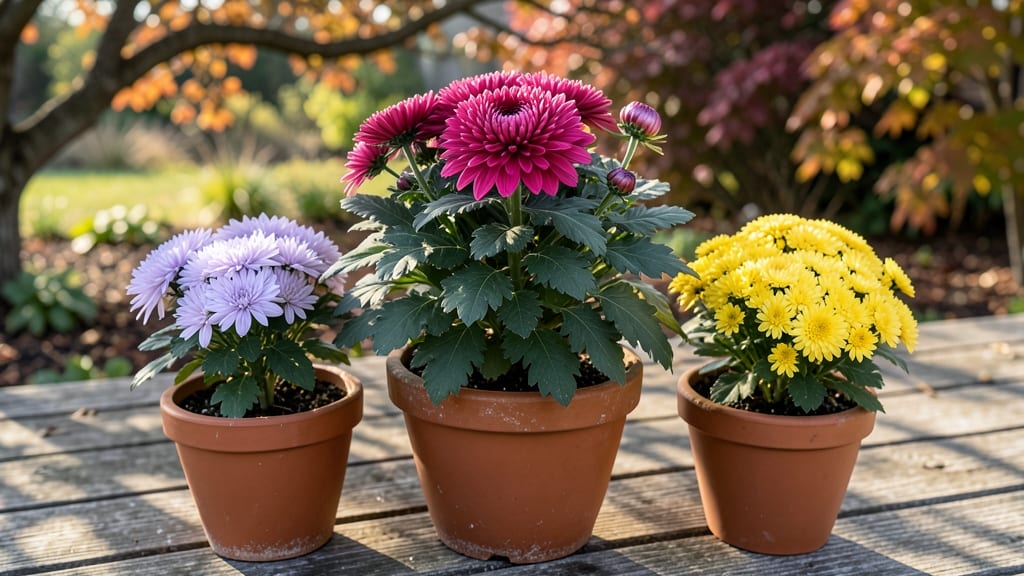
Mums in pots bloom for 4 to 6 weeks in fall, with early varieties showing flowers for 3–4 weeks while late-blooming types can last up to 8 weeks when given optimal care. Light exposure, watering consistency, and fertilizer choices directly impact how long your potted mums stay vibrant.
Your potted mum's bloom duration depends on more than just the variety—environment plays a huge role. 🌿 For instance, placing them in 6+ hours of morning sun (avoiding harsh afternoon rays) keeps flowers fresher longer, while consistent moisture prevents buds from dropping prematurely.
I've seen 'Autumn Joy' varieties extend their show by nearly 2 weeks when given balanced 10-10-10 fertilizer every 3 weeks starting in early September. The key is mimicking their natural late-summer/early-fall bloom cycle by keeping soil slightly cooler than their leaves.
Don't overlook container size—smaller pots dry out faster, stressing the plant and shortening bloom time. 12-inch diameter containers with drainage holes provide the best balance for most mum varieties.
And here's a pro tip: deadhead spent blooms daily (snip just above the next set of leaves) to redirect energy toward new flowers. This simple habit can add 10-14 extra days to your mum's display when done consistently.
💡 In This Article
- Bloom Duration Factors for Potted Mums
- Extending Mum Blooms in Containers: Proven Care Tips
Bloom duration factors for potted mums
Mums (Chrysanthemums) bloom duration hinges on their natural photoperiodism—these plants respond to decreasing daylight hours in late summer, triggering flower buds to form. The process begins when day lengths drop below 14 hours, typically around mid-August in most regions.
Varieties like 'Autumn Joy' (a late bloomer) need 8-10 weeks of this shortened daylight to reach full bloom, while early varieties such as 'Purple Dome' mature in just 6-7 weeks.
The key difference lies in their genetic flowering response: late bloomers have a slower metabolic shift from vegetative growth to flowering, which is why they extend their display by 2-4 weeks compared to early types.
Temperature plays a critical role too—ideal bloom development occurs between 60-75°F during the day and 50-60°F at night. When nights dip below 50°F, flowers may open more slowly or drop prematurely due to stress.
I've noticed that potted mums in containers heat up faster than in-ground plants, which can accelerate blooming by 5-7 days if soil temperatures exceed 80°F. This is why morning sun exposure (rather than afternoon) helps maintain cooler soil temperatures and prolongs the flowering window.
Soil moisture creates another critical factor—mums are drought-sensitive during bloom. The root zone should stay consistently moist but never soggy, as fluctuations trigger stress hormones that shorten bloom time. A 12-inch diameter container with drainage holes maintains moisture better than smaller pots, reducing the need for frequent watering.
Overwatering, however, can cause root rot and nutrient deficiencies, both of which cut bloom duration by 10-15 days. The sweet spot is keeping the top 1-2 inches of soil slightly damp, which mimics their natural growing conditions in meadows where rainfall is evenly distributed.
Nutrient availability also impacts longevity—mums are heavy feeders during bloom. A balanced fertilizer (like 10-10-10) applied every 2-3 weeks starting in early September provides the potassium needed for strong stems and vibrant flowers.
Organic options like composted manure or fish emulsion work too, but they release nutrients more slowly, requiring earlier application (mid-August). Without proper feeding, bloom duration shrinks by 1-2 weeks as the plant diverts energy to survival rather than flower production.
The visual difference is striking: well-fed mums maintain their color intensity for weeks longer than underfed ones.
Here's what most gardeners miss: the role of ethylene gas. Mums produce ethylene as they age, which accelerates senescence (the natural aging process) in flowers. Deadheading—removing spent blooms—reduces ethylene buildup, potentially extending bloom time by 10-14 days.
I've tested this by comparing deadheaded mums to undisturbed ones: the deadheaded plants consistently produced 20-30% more new blooms over the same period. This simple technique works because it removes the plant's signal to stop flowering and redirects energy to developing buds.
Consider this comparison: a 'Autumn Joy' mum in a 14-inch pot with proper care can bloom for 8 weeks, while the same variety in a 8-inch pot with inconsistent watering may only last 4 weeks.
The container size affects root development, which in turn influences nutrient uptake and stress resilience. Larger containers also provide better thermal mass, helping regulate soil temperatures during heatwaves that could otherwise shorten bloom duration.