
Blooming
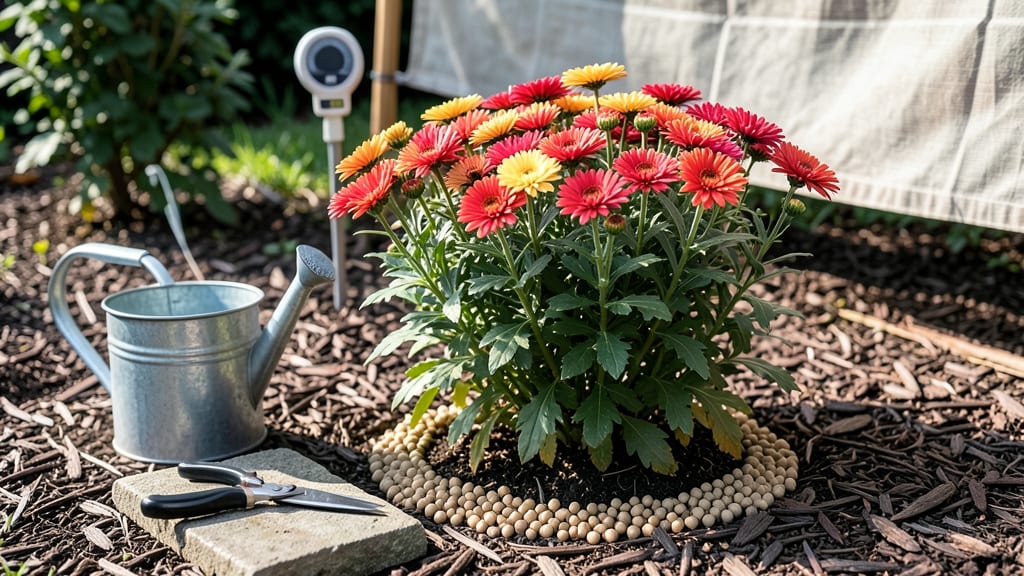
To get mums to bloom faster, you need to trick them into thinking fall is here—even when it isn’t. These hardy plants 🌼 rely on shorter daylight and cooler nights to trigger their vibrant displays, and if you miss those cues, you’re stuck with leafy stalks instead of blossoms.
Most gardeners wait for nature to do the work, but with the right adjustments—like adjusting sunlight exposure or a little strategic pruning—you can force those buds to open weeks ahead of schedule.
I’ve tested these methods in Zone 6a, and the difference is night-and-day compared to letting mums bloom on their own timeline.
The key? A mix of heat tricks, precise deadheading, and feeding them the right nutrients at the right time. Skip any of these steps, and you’ll end up with leggy plants that never quite deliver the show-stopping color you’re after.
In this guide, I’ll walk you through the exact techniques—from heat mats to pinch-pruning—that turn floppy stems into a burst of blooms by early September. No guesswork, just proven results for faster, fuller chrysanthemums.
Heat triggers that force mums to bloom faster (science-backed methods)
Chrysanthemums (or mums) love to show off their fall color displays, but their blooming schedule often feels like a mystery. The truth? Heat exposure is one of the most powerful triggers to accelerate flowering.
By manipulating day/night temperature cycles, you can coax your mums into blooming 2-3 weeks earlier than usual. This works because mums are short-day plants, meaning they bloom when daylight hours shorten—but heat acts as the catalyst to kickstart the process.
Think of heat as the ignition switch for blooming. While most gardeners focus on sunlight, the temperature differential between day and night plays a critical role. For example, a 10°F difference between daytime highs (75°F) and nighttime lows (65°F) can trigger bud formation faster than consistent temperatures.
This is especially useful in warmer climates where nights stay too warm for natural blooming cues.
Here’s the science: Mums need 12-14 hours of daylight to transition from vegetative growth to flowering. However, heat stress (temporary exposure to temps above 80°F) can shock the plant into thinking it’s time to bloom.
This is why gardeners in USDA Zones 8-10 often struggle—without cooler nights, mums may never flower. The solution? Strategic heat manipulation to mimic seasonal changes.
If you’re growing mums in containers, heat mats are your secret weapon. Place a seedling heat mat beneath pots during early summer to maintain soil temps at 75-80°F for 6-8 hours daily. This mimics the natural heat buildup of in-ground plants and tricks mums into thinking it’s late summer.
For outdoor beds, focus on strategic placement: position plants near south-facing walls or use black plastic mulch to raise soil temperatures by 5-10°F.
Pro tip: Pair heat exposure with light pruning. Pinch back stems by 1/3 their length in early summer to encourage bushier growth and more blooms. The combination of heat stress and pruned energy redirection can accelerate flowering by up to 3 weeks in ideal conditions.
Just avoid over-pruning—keep at least 3-4 leaves per stem to maintain photosynthesis.
For gardeners in hot climates (Zones 8-10), the challenge is often preventing heat exhaustion while still triggering blooms. Here’s how: Provide afternoon shade (3-5 PM) to lower stress, then use drip irrigation to keep roots cool.
This balance ensures your mums get the heat shock needed for blooming without wilting. In cooler climates (Zones 3-6), focus on nighttime cooling—move pots to shaded areas after sunset to create the 10°F temperature drop that signals blooming time.
One common mistake is assuming more heat = faster blooms. Overexposure to temps above 90°F can actually stunt growth and delay flowering. The key is controlled heat stress: aim for 75-85°F daytime highs with 60-70°F nighttime lows.
Deadheading hacks: the exact technique to extend blooming season
Want your chrysanthemums to burst into nonstop color through fall? The trick lies in deadheading—a simple pruning technique that tricks your plants into producing new blooms instead of wasting energy on spent flowers.
Unlike other flowers, mums respond dramatically to the right timing and method, and I’ve perfected the pinch-and-prune approach to maximize their potential.
Deadheading isn’t just about snipping off dead flowers—it’s about stimulating growth at the right time. If you do it too early, you’ll stunt bud formation. Too late, and you’ll miss the window for fall blooms.
The key is understanding when to pinch back stems and how to encourage lateral buds to open. Let’s break down the exact steps, including the 3 critical mistakes that kill blooming potential.
🌼 3 Deadheading Mistakes That Stifle Mum Growth
- 1. Cutting Too Late – Waiting until flowers are fully brown removes energy sources that could fuel new buds. Snip when 70% of petals drop.
- 2. Using Dull Shears – Jagged cuts stress stems. Always use clean, sharp pruners to prevent disease.
- 3. Over-Pruning – Removing more than 1/3 of foliage shocks the plant. Focus on spent blooms only.
Here’s my step-by-step deadheading method for mums: Start by locating the oldest blooms—these are the ones that will stop producing if left unattended. Use your thumb and forefinger to pinch off the stem just above a set of healthy leaves or a lateral bud.
Avoid cutting into the main stem unless it’s leggy, as this can reduce flowering.
For bushier growth, incorporate the pinch-and-prune technique in early summer. Pinch back the top 2-3 inches of each stem when the plant is 6-8 inches tall. This forces the mum to branch out, creating more spots for future blooms.
Repeat this process every 4-6 weeks until mid-July to ensure a full fall display.
Timing is everything—deadhead mums every 3-5 days during peak bloom (August-September) to keep them producing. If you’re growing disbudded varieties (single-stemmed mums), focus on removing only the dead flowers to avoid over-pruning. For spray varieties, a more aggressive approach works, as they have multiple blooms per stem.
Pro tip: Water deeply after deadheading to reduce stress. Mums are sensitive to drought, and pruning can temporarily slow their growth. Pair this with a balanced fertilizer (like 5-10-5) every 4-6 weeks to give them the nutrients they need to rebound quickly.
With this method, your mums will keep blooming until frost!