
Blooming
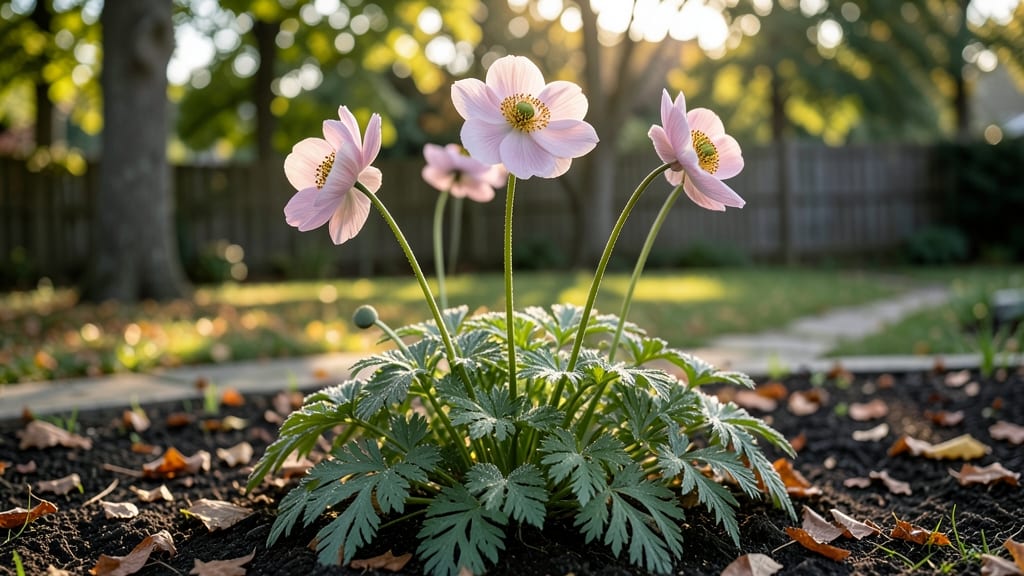
Japanese anemones bloom in late summer to early fall, delivering those dreamy purple spikes when most gardens are fading 🌸—but timing them perfectly takes strategy.
Picture this: your neighbors’ gardens are brown and crispy by September, while yours is still bursting with color. That’s the magic of Japanese anemones, which thrive when others give up. But if you plant them too early or too late, you might miss their 4-6 week show entirely.
Here’s the secret to predicting—and even extending—their bloom time, from zone-specific timing to soil tweaks that trigger earlier (or longer) flowers. We’ll also cover the one mistake that kills blooms before they start.
By the end, you’ll know exactly when to expect those dramatic spikes in your garden, plus how to pair them with companion plants for a fall display that lasts.
Japanese Anemone bloom time: exact months & climate Zones for peak purple spikes
Japanese anemones (Anemone × hybrida) are late-season superstars, offering vibrant purple blooms when most gardens fade into dormancy. Their bloom time varies dramatically by USDA hardiness zone, with early varieties pushing blooms into late August while late types extend into October.
Understanding these windows helps you plan for maximum impact—whether you're designing a fall garden display or troubleshooting delayed blooms.
In cooler climates (Zones 3–5), Japanese anemones typically bloom 2–3 weeks later than in warmer regions (Zones 8–9). This delay occurs because cooler temperatures slow early growth, while mild winters in southern zones allow for earlier emergence.
Even within the same zone, microclimates—like urban heat islands or sheltered garden nooks—can shift bloom times by 10 days or more.
Here’s the key: Temperature fluctuations after planting trigger blooming. Japanese anemones need consistent 60–70°F days followed by cooler nights (50–55°F) to set flower buds. In Zone 6, this often aligns with mid-September, while Zone 8 gardens may see blooms as early as late August.
Urban gardens, with their heat-retaining surfaces, can delay blooms by 1–2 weeks compared to rural areas.
For Zone 5 gardens, where frosts can arrive early, choose early-blooming varieties like 'Honorine Jobert' or 'September Charm' to ensure color before mid-October.
In Zone 8, where mild winters extend growing seasons, varieties like 'Prinz Heinrich' may rebloom briefly in spring if given consistent moisture and partial shade.
Temperature swings are the biggest wild card in bloom timing. A heatwave in July can advance blooms by 2–3 weeks, while a cool, wet summer may delay them until October. To mitigate this, mulch heavily in early summer to stabilize soil temps and water deeply during dry spells.
In urban gardens, where pavement radiates heat, plant Japanese anemones near deciduous trees to filter afternoon sun.
If you’re in Zone 6 or higher, you can extend blooms into November by deadheading spent flowers and providing morning sun only. Avoid fertilizing after mid-August, as new growth won’t harden off before frost.
For Zone 4 gardens, focus on late-September plantings of tubers, which gives roots time to establish before winter.
Pro tip: Plant Japanese anemones near late-blooming perennials like Russian sage or sedum to create a staggered fall display. Their dark foliage contrasts beautifully with anemone blooms, while their similar water needs make maintenance easier.
In containers, choose compact varieties like 'Pamela' to ensure they bloom on balconies or patios alongside other seasonal favorites.
Remember, Japanese anemones are one-time bloomers in most climates, but with the right soil prep and light conditions, you can coax a second, smaller flush in Zone 7–9 gardens. The secret? Reduce nitrogen in fall fertilizers and increase phosphorus to encourage flower bud formation.
This tweak can add 2–3 weeks to your display—turning a single burst of color into a prolonged spectacle.
For urban gardeners, microclimates are your ally. A north-facing wall can delay blooms by 10 days compared to a south-facing bed, while a raised bed warms up faster in spring, potentially advancing blooms by 1–2 weeks.
Test small batches of tubers in different spots to find your garden’s sweet spot for timing.
Finally, don’t overlook late-summer planting as a strategy. In Zones 5–7
How to trigger earlier or longer Japanese Anemone blooms: pro gardener secrets
Japanese anemones (Anemone × hybrida) are famous for their late-season blooms that light up gardens when most flowers have faded. But what if you could push those purple spikes to appear weeks earlier—or extend their display into October?
With a few science-backed tweaks, you can transform your garden’s fall color show. The key lies in understanding their vernalization needs and how to manipulate their environment.
These perennials rely on a period of cool temperatures to trigger blooming, a process called vernalization. In warmer climates, this can be tricky, but with the right techniques—like soil pH adjustments, strategic deadheading, and light exposure control—you can coax earlier or longer blooms.
Let’s dive into the pro gardener secrets that will give your Japanese anemones a second act.
- 1 Adjust soil pH to 6.0–7.0: Japanese anemones thrive in slightly acidic to neutral soil. Test your soil and amend with lime (to raise pH) or sulfur (to lower it) for optimal nutrient uptake.
- 2 Deadhead spent blooms immediately: Removing faded flowers redirects energy to new buds, often extending the bloom period by 2–3 weeks. Use clean pruners to snip stems just above the next set of leaves.
- 3 Provide morning sun, afternoon shade: These plants need 4–6 hours of sunlight but can scorch in intense afternoon heat. Use light shade cloth or plant near taller shrubs for protection.
- 4 Simulate vernalization in warm climates: If your area rarely drops below 50°F (10°C), dig up tubers in late winter, store them in a cool, dark place (35–45°F / 2–7°C) for 6–8 weeks, then replant for earlier blooms.
- 5 Fertilize with phosphorus-rich feed: Use a 5-10-10 or 10-20-10 fertilizer in early summer to encourage bloom development. Avoid high-nitrogen feeds, which promote foliage over flowers.
Forcing a second flush of blooms in mild climates is also possible. After the first wave of flowers fades, cut back the stems by one-third and feed with a low-nitrogen fertilizer.
This often triggers a second round of blooms in late September or early October, just as other perennials begin to decline. Pair this with consistent moisture (but never soggy soil) to keep the tubers happy.
One final pro tip: Mulch heavily in early spring with 2–3 inches of organic mulch (like shredded leaves or straw) to insulate the soil and encourage steady root growth. This stability helps the plant allocate energy efficiently, leading to stronger, longer-lasting blooms.
With these adjustments, your Japanese anemones could become the star of your garden for nearly two months instead of one.
Experiment with these techniques, and soon you’ll have a purple paradise that outshines even the most competitive late-season flowers. Happy gardening! 🌸