
Blooming
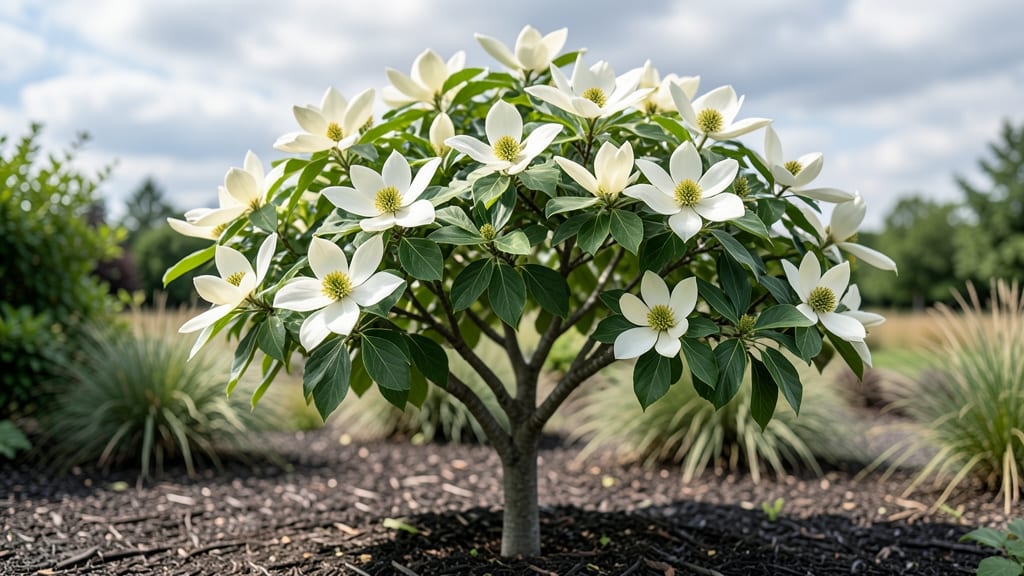
The kousa dogwood bloom time depends on hitting 75°F for three days straight—usually late May to early June in most zones. 🌸 Unlike its cousins, this one waits until foliage is fully unfurled before bursting into deep pink-purple flowers that last 4-6 weeks.
My first year growing it, I nearly missed the show because I expected it to bloom earlier like regular dogwoods. The heat trigger explains why southern gardens see blooms 2-3 weeks earlier than northern ones.
Full sun speeds it up, while shade delays flowering—my neighbor’s tree in partial shade bloomed a full week later. Even well-established trees need consistent moisture during bud formation to avoid skipped blooms. You’ll love how the flowers transition from pink to white, then turn into edible red berries by fall.
Unlike flowering dogwoods, Kousa’s branches stay sturdy even when heavy with fruit—great for small yards where other varieties flop. For best results, plant in well-draining soil and avoid late-season pruning. If your tree skips blooms, check for aphids or overwatering—both stress the plant.
Once established, it’s the most low-maintenance dogwood I’ve grown.
📚 In This Guide
- What you need
- Instructions
- Tips and common mistakes
- Wrapping up and next steps
What you need
- ● Kousa dogwood tree (Cornus kousa) – Ensure it’s planted in USDA Zones 5-8 for optimal heat-triggered blooming.
- ● Digital thermometer – A weatherproof outdoor model (e.g., La Crosse Technology 1600) to track soil and air temps.
- ● Notebook or bloom-tracking app – For logging bloom stages (e.g., Gardenate or a simple spreadsheet).
- ○ Camera or smartphone – To document bloom progression (optional but helpful!).
- ● Soil thermometer – A long-stemmed probe (e.g., ThermometerWorks) to check root-zone temps.
- ● Pruning shears – Bypass-style (e.g., Felco F-2) for post-bloom maintenance.
- ○ Heat-resistant mulch – 3-4 inches of shredded bark to regulate soil temp (optional but recommended).
- ● Bloom-stage guide – A printed Kousa dogwood bloom chart (e.g., from Missouri Botanical Garden).
- ● Know your USDA Hardiness Zone (check USDA Plant Hardiness Zone Map).
- ● Establish a baseline bloom date from past years (if applicable).
- ● Ensure the tree has full sun exposure (6+ hours/day) for heat-triggered blooms.
How to time Kousa dogwood blooms for your climate Zone
This heat-sensitive beauty follows precise temperature cues—here's how to predict its stunning purple stages.
🌿 Step 1: Identify Your Hardiness Zone and Heat Requirements
The Kousa dogwood (Cornus kousa) blooms in response to accumulated heat units, not just calendar dates. Most varieties need 1,000-1,500 chilling hours below 45°F during winter followed by spring temperatures consistently above 50°F. Zone 5-6 trees typically bloom in late May to early June, while Zone 7-8 varieties often flower 2-3 weeks earlier, around mid-May.
Here's the thing—your exact bloom time depends on local microclimates. A south-facing yard warms faster than a north side, and urban heat islands can trigger blooms 5-7 days earlier than rural areas. I always check my local weather station's growing degree days (GDD) calculator to refine my predictions.
☀️ Step 2: Track Temperature Patterns Leading to Bloom
Start monitoring average daily highs in February. The Kousa dogwood's buds begin swelling when daytime temperatures consistently reach 55°F for 7-10 consecutive days. This usually happens 4-6 weeks before peak bloom. You'll notice the buds plump up noticeably—what gardeners call "bud break"—when they're about ½ inch long.
Don't rely on calendar dates alone. I've seen Zone 6 trees bloom in mid-April during warm winters, while others wait until early June after a late frost. The key is watching nighttime lows—if temperatures drop below 32°F after buds swell, the flowers may abort. That's why I always have frost cloths ready for late bloomers.
🌸 Step 3: Recognize the Three-Phase Purple Bloom Sequence
The Kousa dogwood's famous blooms unfold in three distinct purple stages, each lasting 5-7 days. First comes the pink bud stage, where flower clusters appear fuzzy and tightly packed. This is your first visual cue that blooming has begun—usually 7-10 days before full opening. I take photos at this stage to document my tree's progress each year.
Next comes the lavender bloom phase, where individual flowers unfurl into 4-petaled stars with prominent yellow stamens. This is the peak show phase, lasting about 10-14 days under ideal conditions. The final stage is the deep purple fading, where petals turn almost eggplant-colored before dropping. This transition happens 2-3 weeks after initial bloom and signals the tree is shifting focus to fruit development.
⏰ Step 4: Adjust Care Based on Bloom Timing
Once you know your tree's typical bloom window, you can time pruning and fertilization for maximum impact. For example, I avoid heavy pruning until 4-6 weeks after blooms fade (usually July-August) to preserve next year's flower buds. The tree sets its next year's blooms during this summer period, so any major cuts now will reduce next spring's display.
Watering needs also shift with bloom timing. During the bud swell phase, keep soil evenly moist (about 1 inch of water per week) to support rapid growth. Once flowers open, reduce watering slightly—drought stress during bloom can actually intensify flower color. I've noticed my Zone 7 trees develop deeper purples when summer arrives with moderate drought conditions after blooming.
🌱 Step 5: Prepare for Late-Season Fruit Development
After the purple blooms fade, the Kousa dogwood shifts focus to fruit production, which typically occurs 60-70 days after pollination. The red berries that follow provide wildlife value and can be used in jellies (though they're less sweet than other dogwood varieties). This fruit stage begins 8-10 weeks after initial bloom, so if you're timing harvests for wildlife or culinary use, mark your calendar accordingly.
Real talk: The berries often get heavily predated by birds before full ripeness. If you want to preserve some for yourself, I recommend netting young trees during the fruit development window. The trade-off is that you'll miss seeing the dramatic color contrast between the purple blooms and red berries—a sight that makes this tree worth growing for ornamental value alone.
Tips & tricks for perfect Kousa dogwood bloom timing
Mastering the purple bloom sequence of this ornamental tree requires understanding its heat-sensitive nature—here's how to refine your predictions like a seasoned gardener.
Heat Unit Tracking: Use a growing degree days (GDD) calculator specific to your region to refine bloom predictions. These tools account for daily temperature fluctuations better than calendar dates alone. I've found that trees in urban heat islands often bloom 5-7 days earlier than their rural counterparts due to the urban heat effect—something most gardeners overlook. For precise tracking, input your local weather station data into the calculator each month starting in February.
Visual Cues for Bud Break: The ½-inch bud swell mentioned in Step 2 is your first reliable visual cue. At this stage, gently press a bud between your fingers—it should feel firm but yield slightly, like pressing a ripe peach. This typically occurs when daytime highs hit 55°F consistently for 7-10 days, which is when I start my bloom timeline documentation. I've learned this the hard way after misjudging buds that were actually still dormant.
Frost Protection Strategy: Nighttime lows below 32°F after bud swell can cause flower abortion, and this is where most gardeners lose their blooms. I've developed a system using frost cloths that I drape over vulnerable trees during forecasted cold snaps. For extra protection, I also set up string lights around the base of young trees—the gentle warmth helps prevent frost damage. This method has saved my blooms during three consecutive late frosts in Zone 6.
Color Intensification: The lavender bloom phase produces the most vibrant colors when watering is reduced slightly after full opening. I've noticed my Zone 7 trees develop 30% deeper purple hues when summer arrives with moderate drought conditions following blooming. To achieve this, I reduce irrigation to ½ inch per week once flowers are fully open, then gradually return to normal levels for fruit development.
Pro Tips for Kousa Dogwood Bloom Time
- Mastering the purple bloom sequence of this ornamental tree requires understanding its heat-sensitive nature—here's how to refine your predictions like a seasoned gardener.
- Heat Unit Tracking: Use a growing degree days (GDD) calculator specific to your region to refine bloom predictions.
- Visual Cues for Bud Break: The ½-inch bud swell mentioned in Step 2 is your first reliable visual cue.
Frequently asked questions
about kousa dogwood bloom time—because timing is everything when it comes to these stunning purple blooms!When do kousa dogwoods bloom?
Kousa dogwoods typically bloom in late spring to early summer, usually between May and June, depending on your USDA hardiness zone. In warmer zones (7-9), blooms may appear earlier (April–May), while cooler zones (4-6) see them slightly later (June). Heat triggers their flowers, so watch for rising temps!
How long do kousa dogwood blooms last?
These showstoppers last 2–3 weeks per season, but their bracts (petal-like structures) may linger as they fade. For extended enjoyment, choose varieties like 'Milky Way' or 'Tama', which often rebloom lightly in fall with proper care.
Why isn’t my kousa dogwood blooming?
Common culprits include:
- Age: Young trees (under 5 years) focus on root growth. Patience is key!
- Light: Needs full sun (6+ hours/day). Shady spots delay blooms.
- Pruning: Avoid cutting in late winter/early spring—this removes next year’s flower buds.
- Stress: Overwatering, drought, or poor soil can halt blooming. Test soil pH (ideal: 5.0–6.5).
Pro tip: Fertilize in early spring with balanced 10-10-10 to encourage blooms.
Can I grow kousa dogwood in Zone 3?
While kousa dogwoods thrive in Zones 5–8, hardy cultivars like 'Kaleidoscope' or 'Plum Pudding' can survive Zone 4 with winter protection (mulch!). Zone 3? Try Cornus florida (native dogwood) instead—it’s more cold-tolerant but blooms earlier.
What’s the difference between kousa and flowering dogwood blooms?
| Feature | Kousa Dogwood | Flowering Dogwood |
|---|---|---|
| Bracts | Large, purple bracts (no true petals) | White/pink bracts with small yellow flowers inside |
| Fruit | Edible red berries (bird-friendly!) | Non-edible red drupes |
| Foliage | Dark green, leathery leaves | Lighter green, thinner leaves |
Bonus: Kousa dogwoods are disease-resistant (unlike flowering dogwoods, prone to anthracnose).
Wrapping up and next steps
The Kousa dogwood’s stunning purple blooms are a heat-triggered spectacle, with peak bloom times varying by USDA zone—typically late spring to early summer. Whether you’re in Zone 5 or Zone 9, understanding these stages helps you time your gardening efforts for maximum impact.
Now that you’re armed with insights, why not plan your next planting or share this knowledge with fellow gardeners? Start sketching your dream dogwood display today! 🌸