
Blooming
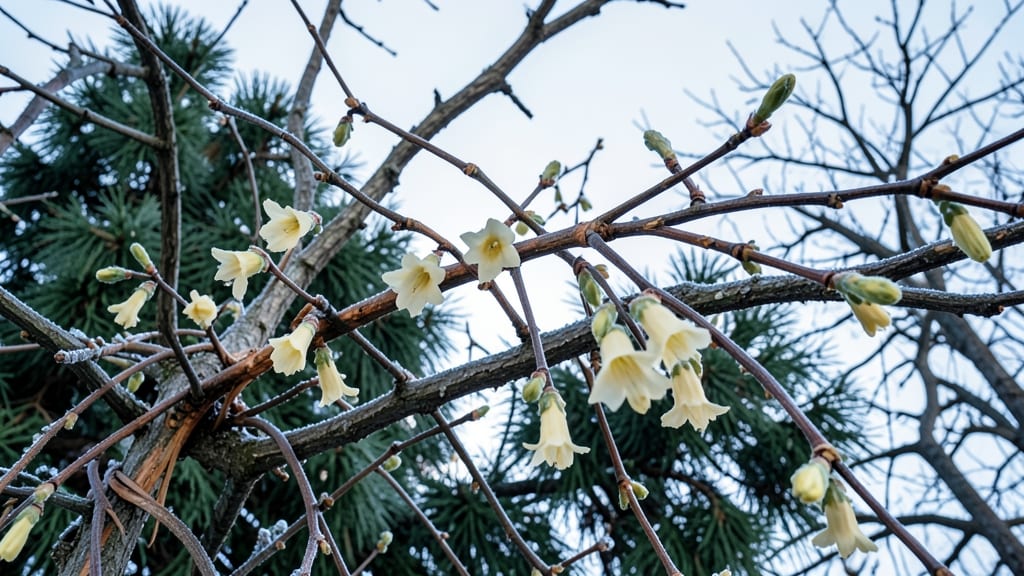
Cold weather shouldn’t mean the end of your garden’s beauty. These 10 hardy perennials defy seasonal norms by blooming in fall and winter, offering vibrant color and texture when most plants have faded. Perfect for extending your garden’s season and attracting late-season pollinators.
Hellebore Winter Blooms for Shady Gardens
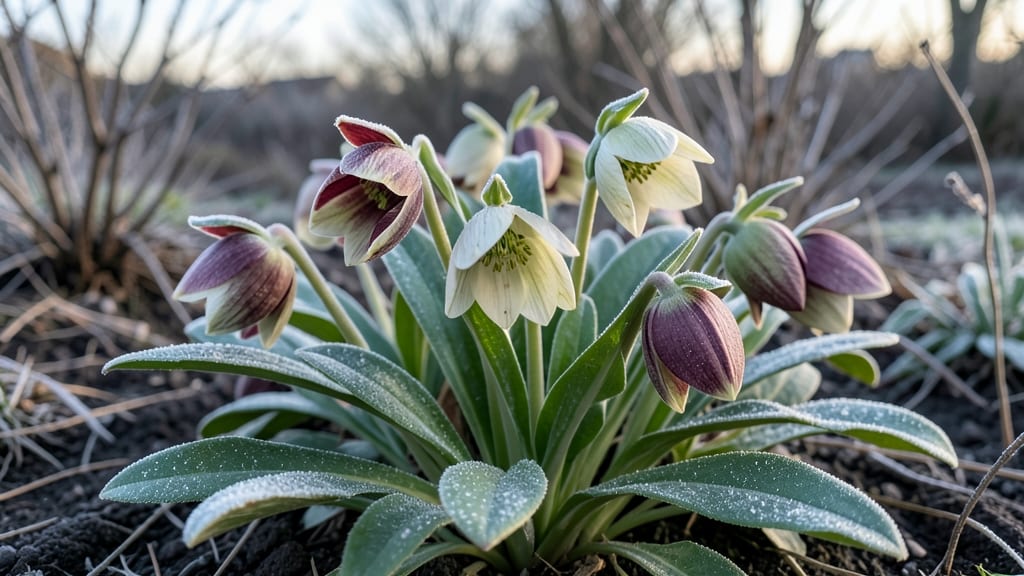
When your garden looks like a blank canvas after the first frost, hellebores step in as the unsung heroes of winter color. These shade-lovers produce delicate, nodding blooms from late fall through early spring, proving that cold weather doesn't have to mean a dormant garden.
Thriving in partial to full shade, hellebores (also called Lenten roses) tolerate frost down to -20°F and are nearly deer-proof, making them ideal for problem areas. Their evergreen foliage provides structure year-round, while flowers in white, pink, purple, and green hues add unexpected cheer. For best results, plant in well-draining soil with occasional watering—once established, they're remarkably low-maintenance.
Perfect for woodland gardens, foundation plantings, or even containers, hellebores reward patient gardeners with months of blooms when most perennials have retired for the season. 🌿
Snowdrops Bringing Early Winter Color
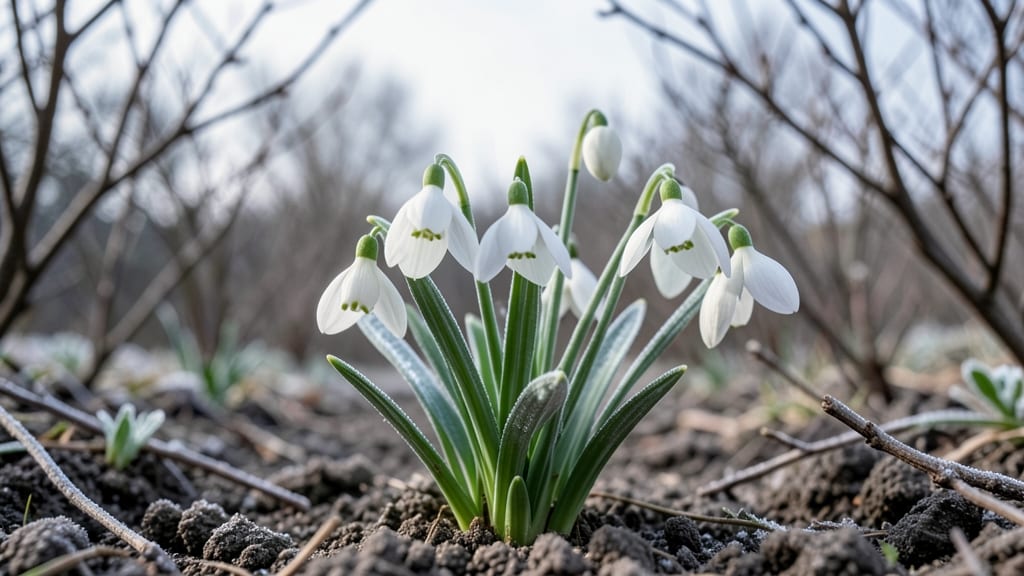
If you crave color when most gardens are dormant, snowdrops (Galanthus) are your secret weapon. These tiny harbingers of spring bloom in late winter—often under snow—with their elegant, nodding white flowers that feel like nature’s first smile after the coldest months.
Plant them in partial to full shade where they’ll naturalize over time, spreading gently to form colonies. Snowdrops thrive in well-draining soil and require minimal care—just avoid disturbing their roots once established. Their early blooms attract pollinators like bees, giving them an ecological edge too.
Perfect for woodland gardens, under trees, or along shady borders, snowdrops bring hope and beauty to winter landscapes while being nearly maintenance-free. 🌱
Winter Jasmine Climbing Beauty for Walls
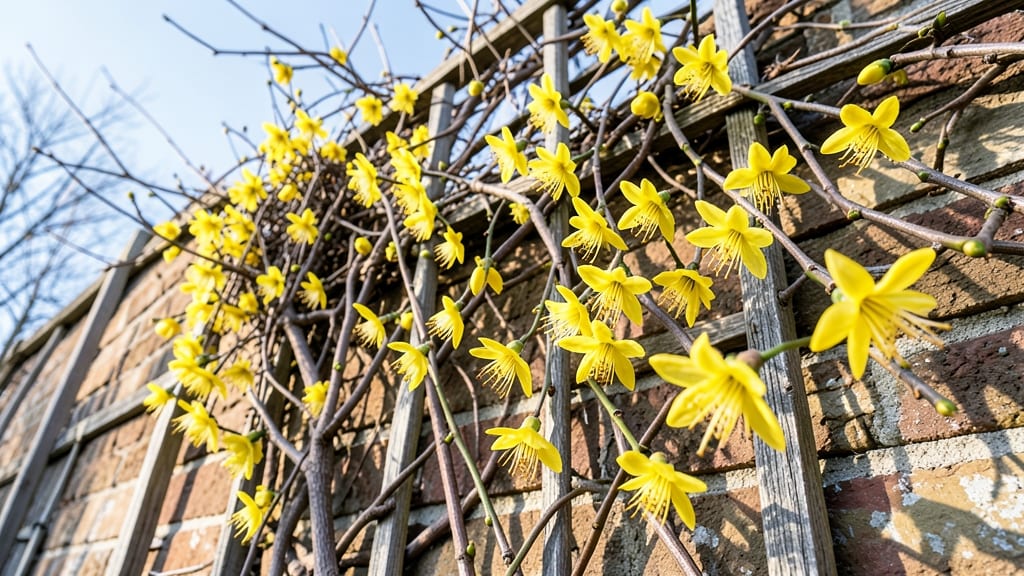
When your garden feels like it’s taking a winter nap, winter jasmine (Jasminum nudiflorum) wakes up with a burst of sunshine. This fast-growing climber throws out bright yellow blooms from late winter through early spring, turning bare walls and trellises into cheerful canvases. Unlike spring-flowering jasmine, this variety thrives in cold weather, making it a standout for USDA Zones 5-9.
Plant it in full sun to partial shade against a fence, arbor, or wall—its arching stems can reach 8-10 feet in a single season. Prune after blooming to maintain shape, and watch it transform dull winter backdrops into golden cascades. The flowers are sterile (no fragrance), but their bold color attracts early pollinators like bees. Perfect for urban gardens with limited space or rural landscapes needing vertical drama.
This low-maintenance beauty is ideal for beginner gardeners or anyone craving instant winter interest. Once established, it’s drought-tolerant and deer-resistant, so you’ll enjoy its cheery display year after year with minimal effort. 🌟
Crocus Late-Season Purple Delights
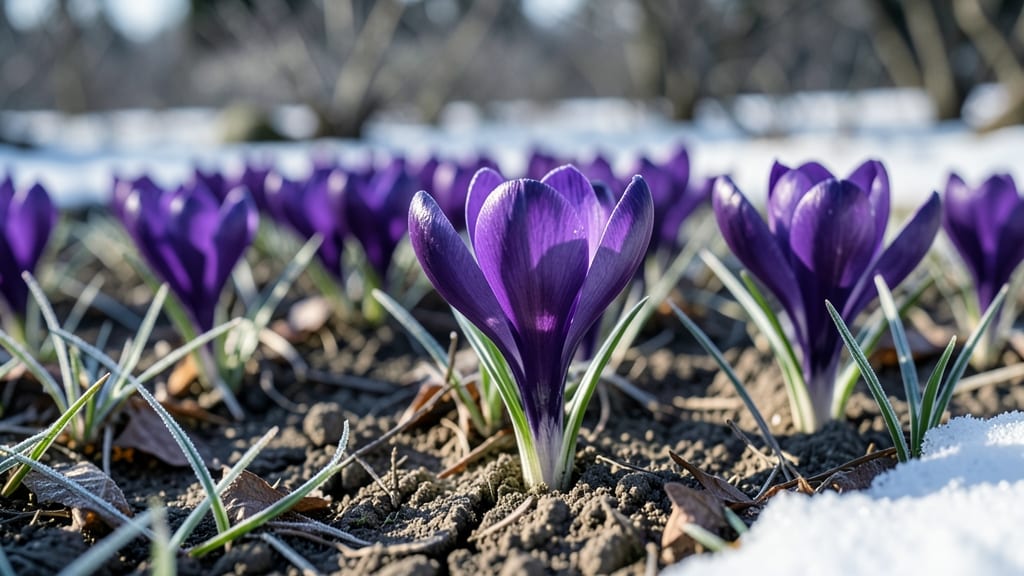
When most gardens lie dormant under winter’s chill, late-season crocus like ‘Zwanenburg’ burst forth with dramatic deep purple blooms, turning bare soil into a carpet of color. These hardy perennials defy the cold, often emerging through snow to provide a vital food source for bees when little else is in bloom.
Plant them in full sun to partial shade with well-draining soil, and they’ll naturalize beautifully over time, spreading to create stunning drifts. Their fall-to-winter bloom cycle (October through February in many climates) makes them ideal for adding structure to late-season borders or meadow-style gardens. A single bulb costs just a few dollars but delivers months of effortless beauty.
Perfect for beginner gardeners and pollinator enthusiasts alike, these crocus varieties bring joy with minimal care—just remember to deadhead spent blooms to encourage next year’s flowers. 🌷
Pansies Cold-Hardy Annual-Like Perennials
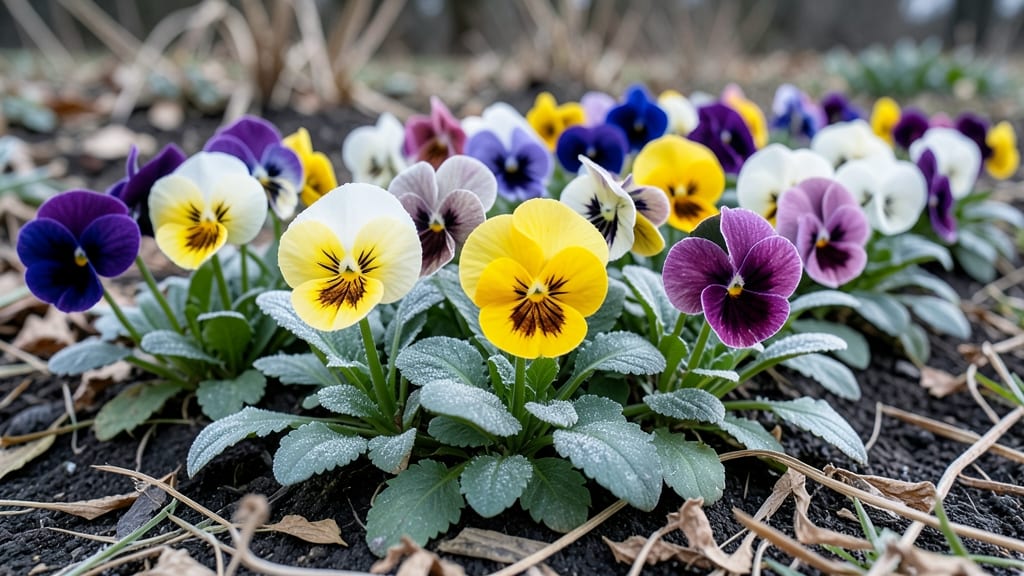
When most gardens fade into dormancy, pansies burst onto the scene with their bold, smiling faces—perfect for adding color to cool-season beds. These annual-like perennials thrive in temperatures as low as 25°F, making them ideal for fall, winter, and early spring displays.
With over 12 colors (including bi-colors and ruffled varieties), pansies brighten containers, borders, and even lawns. Their self-seeding habit ensures new blooms appear year after year, while deadheading spent flowers encourages even more prolific flowering. Plant them in full sun to partial shade for best results.
Urban gardeners and small-space lovers will appreciate how pansies fit into tight spots—whether in window boxes, hanging baskets, or mixed borders. Their cheerful resilience makes them a must-have for year-round interest. 🌷
Winter Aconite Bright Yellow Ground Cover
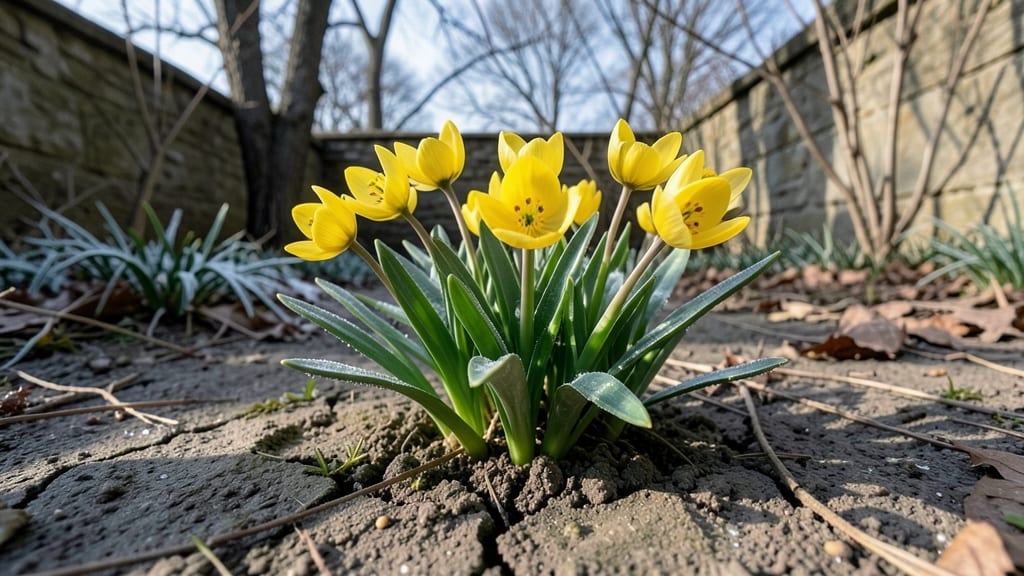
When your garden looks like a blank canvas in late winter, winter aconite steps in with its cheerful bright yellow blooms, turning dull corners into sunny spots. This hardy perennial thrives in partial to full shade, making it perfect for under trees or along north-facing walls where few other plants survive.
Unlike many winter bloomers, winter aconite emerges early—often as soon as snow melts—to provide critical nectar for bees and other pollinators waking from dormancy. Its low-growing habit (6–12 inches tall) makes it ideal as a ground cover, suppressing weeds while adding color. Plant bulbs in fall in well-draining soil, and watch for blooms in late winter or early spring before most gardens wake up.
This underrated gem is especially valuable for shade gardeners and those seeking low-maintenance perennials that reward patience with vibrant early color. 🌻
Heath and Heather Evergreen Shrubs for Pollinators
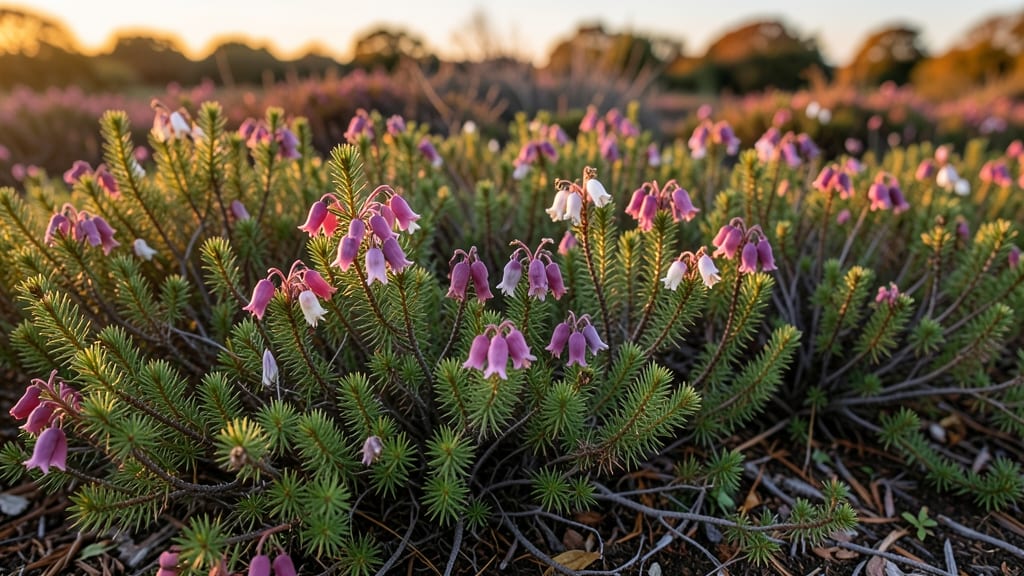
When your garden needs a pollinator powerhouse that thrives in drought and repels deer, heath and heather shrubs deliver year-round value. These evergreen beauties burst into bloom in late summer and fall, offering bell-shaped flowers that bees and butterflies adore when other plants have faded. Their deep pink, purple, or white blooms create stunning contrasts against winter’s muted palette.
Plant them in full sun to partial shade with well-draining soil, and they’ll thrive with minimal water once established. Prune lightly after blooming to maintain shape, and watch them spread into dense mounds that suppress weeds. Varieties like ‘Sunset’ heather or ‘Golden Heather’ add golden foliage for extra texture, while ‘Spring Torch’ heath provides fiery red blooms in fall.
Perfect for xeriscaping, pollinator gardens, or deer-prone areas, these shrubs bring four-season interest with their evergreen foliage and late-season blooms. 🌻
Lenten Rose for Late Winter Blooms
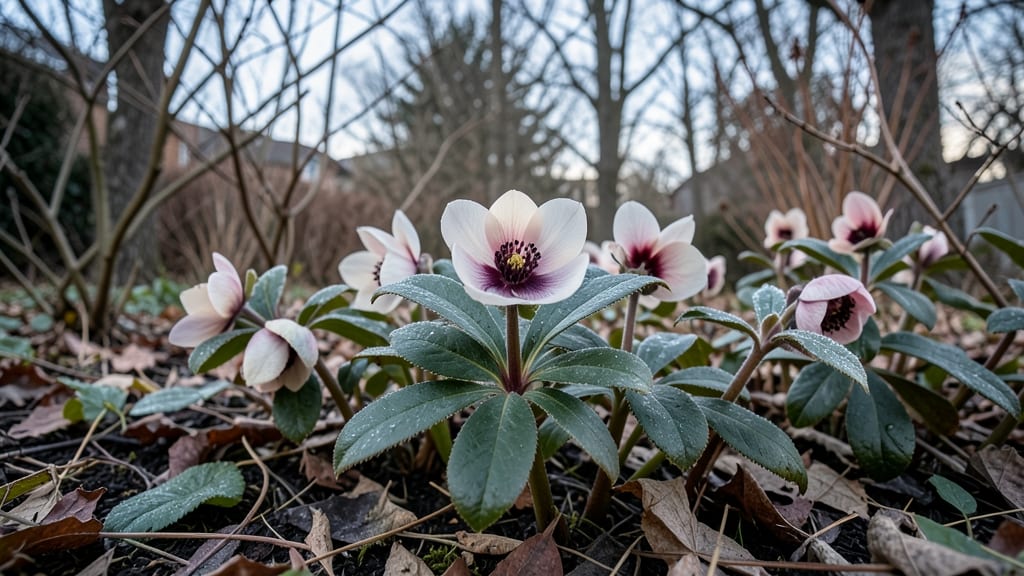
When your garden feels dormant under winter’s chill, lenten roses (Helleborus orientalis) burst forth with rose-like blooms in late winter, defying the season’s gloom. These semi-evergreen perennials thrive in partial shade, making them ideal for understory planting where sunlight is limited but moisture lingers.
With their delicate, cup-shaped flowers in shades of pink, white, and purple, lenten roses provide a romantic focal point in borders or woodland gardens. They’re surprisingly low-maintenance—just ensure well-draining soil and moderate watering during dry spells. Their late winter bloom (February–March) coincides with early pollinators, adding ecological value beyond aesthetics.
Perfect for gardeners seeking year-round structure with minimal effort, lenten roses reward patience with months of subtle beauty before spring’s showier stars arrive. 💚
Daffodils Naturalizing Spring Forerunners
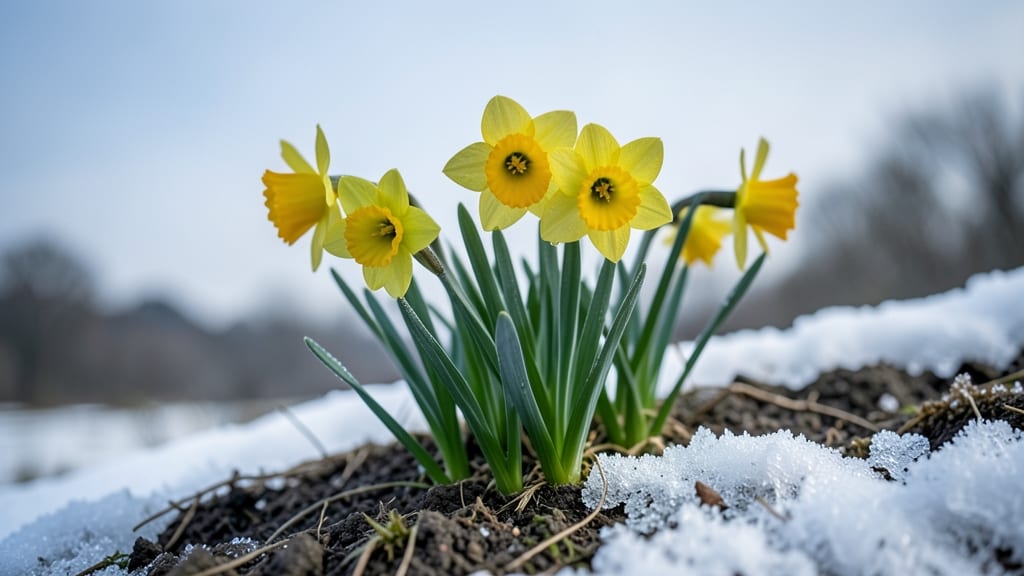
When winter feels endless, daffodils arrive like nature’s cheerful wake-up call, pushing through snow with their bright trumpets. Unlike most spring bloomers, varieties like ‘February Gold’ and ‘Tête-à-Tête’ often emerge weeks before other flowers, signaling the thaw with their vibrant colors.
These hardy bulbs thrive in full sun to partial shade and naturalize beautifully over time, multiplying each year to create dense, low-maintenance colonies. Their early blooms provide crucial nectar for bees and other pollinators emerging from winter dormancy, making them a pollinator magnet when little else is in bloom.
Perfect for gardeners who want instant color with minimal effort, daffodils also deter deer and squirrels—ideal for rural or suburban plots. Plant bulbs in fall for next winter’s surprise. 🌱
Winter Honeysuckle Fragrant Climbing Vine

When you crave winter color that actually thrives in cold snaps, winter honeysuckle (Lonicera fragrantissima) delivers with a fragrant punch. Unlike its summer-blooming cousins, this deciduous vine bursts into delicate, tubular cream-yellow flowers in late winter—often before spring arrives—while still handling USDA Zones 4-8 with ease.
Its arching growth habit (reaching 10-15 feet) makes it perfect for training over pergolas, arbors, or trellises, where its cascading blooms create a romantic winter display. The flowers emit a light, honey-like fragrance that attracts early hummingbirds and bees, giving your garden a pollinator boost when food is scarce. Prune lightly in late winter after flowering to encourage dense growth.
Ideal for gardeners in colder climates who want vertical interest without summer maintenance, winter honeysuckle’s late-season blooms signal spring’s arrival while keeping your garden alive with color. 🌱