Blooming
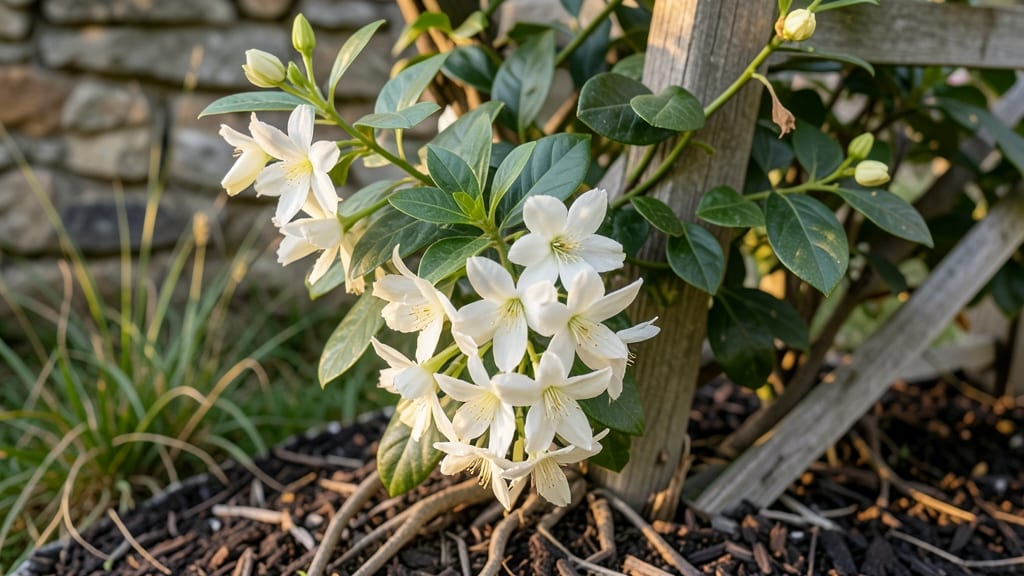
Jasmine blooms in Florida run from late spring through summer, kicking off when daytime temperatures stay above 70°F, with the sweetest fragrance often peaking at dusk. Some varieties like Arabian jasmine may flower year-round in Florida’s warmest microclimates, while others like Confederate jasmine wait for heat spikes after winter dormancy.
Florida’s long growing season creates ideal conditions for jasmine, but timing depends on your specific variety and microclimate. 🌸 The 70°F threshold isn’t just about warmth—it’s about consistent heat without extreme fluctuations, which is why coastal areas often see earlier blooms than inland regions.
Humidity also plays a role, with higher moisture levels intensifying those signature floral scents that make jasmine so beloved in Florida gardens.
What’s fascinating is how different jasmine types adapt to Florida’s climate. Tropical varieties like Arabian jasmine thrive in the state’s year-round warmth, while hardier types such as Confederate jasmine may wait until late spring or early summer to burst into bloom.
This adaptability means you can find jasmine flowers in Florida gardens almost any time of year, depending on the variety and your location within the state.
💡 In This Article
- Florida’s Climate and Jasmine Bloom Triggers
- Extending Jasmine Blooms in Florida Gardens
Florida’s climate and jasmine bloom triggers
Jasmine plants in Florida respond to a delicate balance of heat and humidity, with blooming triggered when daytime temperatures consistently reach 70°F—though some varieties like Arabian jasmine may start as early as 65°F in protected microclimates.
The key mechanism is photoperiod sensitivity combined with temperature thresholds: shorter days in late spring signal hormonal shifts, but the flowers only open when warmth stabilizes.
This explains why coastal areas like Miami see blooms as early as March-April, while inland regions may wait until May-June when soil temperatures rise above 68°F.
The fragrance intensity is directly tied to Florida’s high humidity levels—typically 70-90% during bloom season—which helps volatile organic compounds (the aromatic molecules) disperse more effectively.
Arabian jasmine, with its 0.5-1% essential oil content, releases its signature scent most strongly between 6 PM and midnight, when cooler evening temperatures slow evaporation but humidity remains high. This nocturnal fragrance peak is why many Floridians report waking to jasmine’s sweet aroma during summer nights. 🌸
Hardy varieties like Confederate jasmine exhibit different behavior: they often enter winter dormancy when temperatures drop below 40°F, then require 3-4 weeks of consistent warmth above 75°F to break dormancy and trigger new growth.
This explains why you might see sporadic blooms in February after a mild winter, followed by a more robust display in June-July. The contrast between tropical and hardy varieties creates Florida’s unique jasmine bloom calendar, where multiple varieties can flower at different times throughout the year.
What most gardeners don’t realize is how soil temperature affects root activity. Jasmine roots need to reach 60°F before they’ll support active flowering—this is why mulching with 3-4 inches of organic matter can advance bloom times by 2-3 weeks by insulating roots.
The pH range of 6.0-7.5 also matters: slightly acidic soils (pH 6.0-6.5) enhance nutrient uptake, while alkaline conditions (above 7.5) can stress plants and delay blooming. This is why Florida’s sandy soils often need amendment with compost to create optimal growing conditions.
Regional variations create fascinating patterns. In the Panhandle region, where winters can dip into the 30s°F, Confederate jasmine may only bloom once per year in late spring, while in South Floridatwo blooming cycles—one in early spring and another in fall.
This geographic diversity means Floridians can enjoy jasmine flowers almost year-round if they choose the right varieties for their specific climate zone. 🌿
The science of jasmine blooming also explains why some years produce more abundant flowers than others. Drought conditions during the bud formation stage (typically 6-8 weeks before blooming) can reduce flower counts by up to 40%, while proper irrigation maintains consistent moisture levels that support optimal photosynthesis.
Florida’s unpredictable rain patterns—with 10-15 inches of rain during bloom season