
Blooming
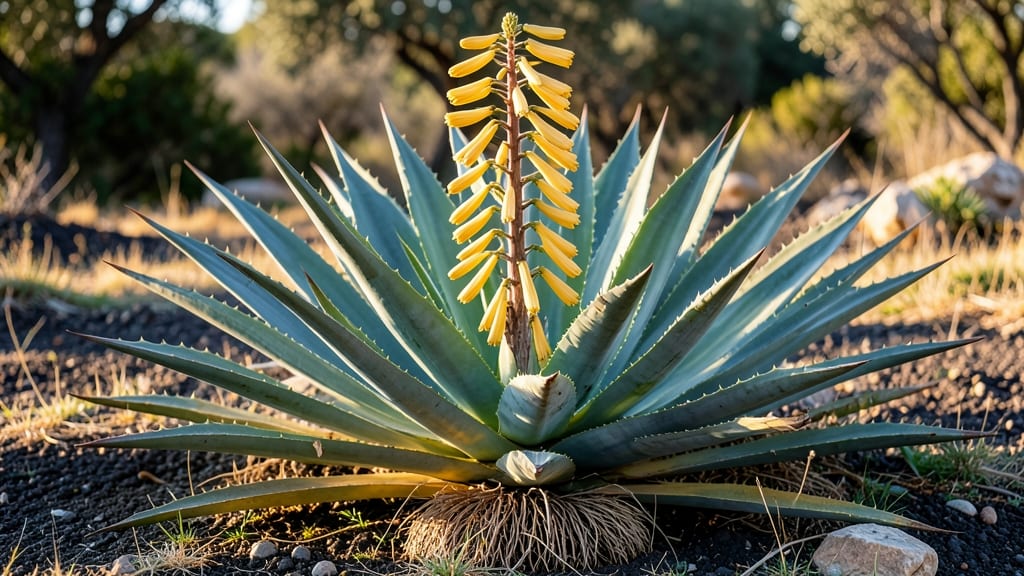
That dramatic agave bloom spike is nature’s way of saying, "I’m about to die—and here’s my last masterpiece." 🌵 It’s the one-time flowering event that signals an agave’s final act, producing a towering, candle-like stalk that can reach 10 feet tall, topped with clusters of tiny, fragrant flowers.
Most gardeners never see this spectacle because agaves take 10-30 years to bloom—so when it happens, it’s a rare, breathtaking moment worth celebrating (and documenting). The plant’s energy shifts entirely to this bloom, often leaving the leaves yellowing or the roots struggling.
That’s why watering less during this phase is key—too much moisture stresses the plant further. Prune dead leaves immediately after blooming to redirect energy to the pups forming at the base, which will become your next generation of agaves.
The mother plant usually dies within weeks, but those pups hold all the promise. What you’ll end up with is a new agave colony in just a few months, ready to take over the landscape.
The pups inherit the parent’s striking form and drought tolerance, so you’re not just losing a plant—you’re gaining free, hardy specimens. Just be patient: it takes 1-2 years for pups to reach transplant size. Here’s the secret: don’t rush the process.
Let the pups mature naturally, and you’ll have a self-sustaining desert garden that thrives for decades. The bloom spike might be fleeting, but the legacy it leaves behind is priceless.
📚 In This Guide
- What you need
- Instructions
- Tips and common mistakes
- Wrapping up and next steps
What you need
- ● Ready to witness your agave’s dramatic bloom spike? Here’s everything you’ll need to prepare—whether you’re nurturing a showstopper or troubleshooting stress-induced flowering. 🌵✨
- ● Pro tip: 💡 If your agave is overwatered or over-fertilized, skip the extra nutrients—stress is the key to triggering that stunning spike! 🌡️
Step-by-step guide to encouraging an agave bloom spike
Here's how to coax that dramatic, stress-induced bloom from your agave—no magic required.
🌱 Step 1: Identify a Mature, Healthy Agave Plant
Choose an agave that's at least 10 years old—younger plants won't bloom. Look for a rosette that's 3-4 feet wide with thick, fleshy leaves. The leaves should be deep green or blue-gray, not yellowing or brown at the tips. A healthy agave stores enough energy in its leaves to support the massive bloom spike.
I always check the base of the plant for signs of rot or pests. If you see mushy stems or tiny holes from insects, wait until the plant recovers before attempting to induce flowering. Agaves under stress from disease or pests won't bloom successfully—they'll focus on survival instead.
💧 Step 2: Withhold Water for 6-12 Months
This is the critical stress trigger. Stop watering completely for 6 months during the plant's active growing season (spring and summer). Let the soil dry out thoroughly between waterings—agaves store water in their leaves, so they can go months without supplemental water.
After 6 months, reduce watering to once every 2-3 months during winter. You'll know you're on the right track when the leaves start curling slightly at the edges. This curling is normal and indicates the plant is conserving moisture. Don't water if the soil feels damp—agaves rot easily when overwatered.
☀️ Step 3: Provide Full Sun and Heat Stress
Move your agave to the sunniest spot in your landscape, where it receives at least 6-8 hours of direct sunlight daily. Agaves need intense heat to bloom—temperatures above 90°F during the day help trigger the flowering process.
If your agave is in a container, place it in a location where it receives afternoon sun. The heat stress from intense afternoon rays mimics natural desert conditions. You'll see the leaves develop a slight blue-gray tint, which is another sign the plant is adapting to drought stress.
⏰ Step 4: Monitor for Bloom Signals
After 12-18 months of drought stress, watch for a small, tight bud forming at the center of the rosette. This bud will eventually grow into the dramatic 10-20 foot tall bloom spike. The bud may appear as a small, fuzzy ball or a tight cluster of bracts.
Once the bloom spike begins to emerge, increase watering slightly to once a month to support the plant's energy needs. The spike will grow rapidly—sometimes up to 2 feet in a single season. Keep the soil slightly moist but never soggy during this phase. The bloom itself may take 6-12 months to fully develop from bud to flower.
✂️ Step 5: Support and Care for the Bloom Spike
As the spike grows, it may become top-heavy and lean. Stake the spike if it grows taller than 3 feet to prevent it from snapping in wind or rain. Use a bamboo stake or wooden dowel tied loosely with soft twine. Avoid tight bindings that can damage the spike as it grows.
Once the agave blooms, it will produce thousands of tiny flowers that attract pollinators like hummingbirds and bees. After flowering, the mother plant will die, but it will produce pups (offsets) at the base. These pups can be transplanted to grow new agave plants. Enjoy the spectacle—most agaves bloom only once in their lifetime!
Tips & tricks for perfect agave bloom spikes
Here's what nobody tells you about making your agave bloom—these tricks save years of trial and error.
Age Matters: That 10-year minimum isn't arbitrary—agaves younger than 10 store insufficient energy in their leaves to support a bloom spike. I learned this the hard way after watching a 7-year-old agave wither during drought stress. Look for leaves that feel thick and heavy when lifted—they should weigh noticeably more than they appear. This heft indicates stored energy reserves.
Water Withdrawal Strategy: The 6-month drought period is non-negotiable, but timing is everything. Start water withdrawal in early spring when your agave's growth cycle naturally accelerates. If you begin in summer, the plant may go dormant before reaching critical stress levels. I mark my calendar 6 months ahead to time this perfectly—trust me, you'll forget otherwise.
Sunlight Secret: Those 6-8 hours of direct sunlight must include intense afternoon rays when temperatures naturally exceed 90°F. If your climate doesn't reach this naturally, consider using a heat lamp for 2-3 hours daily during cooler months. The blue-gray tint that develops is your confirmation signal—the plant is adapting to desert conditions.
Bloom Spike Support: When your spike reaches 3 feet, it's already top-heavy. I use three stakes placed at 120-degree angles around the base, tied with soft garden twine that won't cut into the growing spike. The key is loose bindings that allow the spike to move slightly in the wind—this prevents breakage while still providing support. Tight bindings can girdle the spike as it grows.
Pro Tips for Agave Bloom Spike
- Here's what nobody tells you about making your agave bloom—these tricks save years of trial and error.
- Age Matters: That 10-year minimum isn't arbitrary—agaves younger than 10 store insufficient energy in their leaves to...
- Water Withdrawal Strategy: The 6-month drought period is non-negotiable, but timing is everything. Start water withdr...
Frequently asked questions
Got questions about that dramatic agave bloom spike? You’re not alone—this striking (but temporary!) phenomenon sparks curiosity (and concern!) for desert gardeners. Here’s what you need to know:
Why does my agave suddenly grow a tall flower stalk?
A bloom spike is your agave’s one-and-done reproductive act—a sign it’s mature (usually 7–10 years old). The spike diverts energy from the plant, weakening it over time. Think of it like a grand finale before the plant’s life cycle ends. Pro tip: Remove the spike after flowering to redirect energy back to the pups (baby plants) forming at the base!
How long does the agave bloom spike last?
The spike typically takes 6–12 weeks to fully develop, from bud to seed. Once the flowers bloom, they’ll last days to a few weeks before drying. The entire process is exhausting for the plant—expect it to decline after flowering. Fun fact: Some agaves bloom only once in their lifetime!
Is a bloom spike bad for my agave?
Not necessarily! While the spike signals the plant’s decline, the good news is agaves reproduce via offsets (pups) before dying. Focus on saving the pups by potting them up or replanting them. The parent plant’s job is done—it’s all about those babies now!
Can I stop my agave from blooming?
Nope! Blooming is a natural (and inevitable) part of an agave’s life cycle. However, you can delay it slightly by keeping the plant well-watered and fertilized—though this won’t stop it forever. Once the spike appears, the show’s on! Pro tip: Enjoy the spectacle—it’s a rare and stunning event in desert gardens.
What should I do after the agave blooms?
Once the spike dies back:
- Remove the dead spike to prevent pests and redirect energy.
- Separate and replant pups (they’re your new agaves!).
- Let the parent plant decline naturally—it’s fulfilled its purpose!
Wrapping up and next steps
Witnessing an agave bloom spike is a rare and magical moment—proof that even desert plants can surprise you with beauty! This stress-induced flowering isn’t just stunning; it’s a testament to your plant’s resilience and the right conditions.
Now that you know the secrets behind it, why not share this knowledge with fellow plant enthusiasts or even experiment with your own agave collection? 🌵✨
Your next step? Observe, learn, and nurture—whether you’re encouraging blooms or simply admiring nature’s timing. Happy gardening!