
Blooming
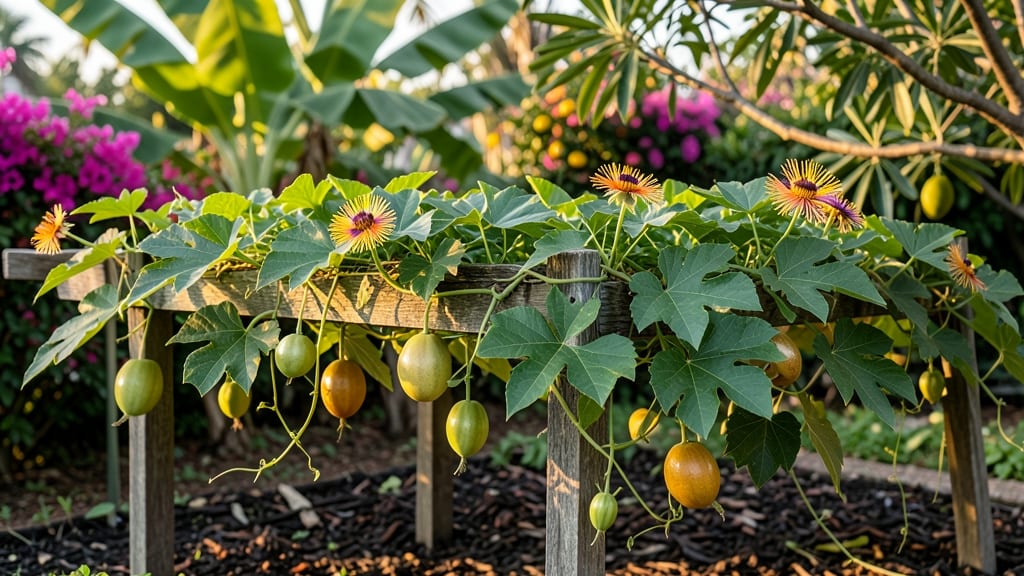
To bloom passion fruit successfully, you need to create precise temperature shifts—daytime warmth above 75°F (24°C) paired with cooler evenings between 55–65°F (13–18°C). Varieties like 'Purple' and 'Golden' thrive with gradual heat changes, well-draining soil, and balanced fertilization to trigger consistent flowering.
Passion fruit vines rely on this temperature dance to signal their internal clocks for blooming. 🌿 Think of it like a natural timer—too much heat all day without relief can stress the plant, while sudden cold snaps might shock buds before they open.
I've seen 'Golden' varieties flower more reliably in subtropical zones where morning fogs naturally cool the vines, while 'Purple' types often need afternoon shade in hotter climates. The key is consistency: maintain those ranges for at least 4–6 weeks before expecting noticeable bud formation.
What's fascinating is how these plants use light cues too. Passion fruit vines need 6+ hours of direct sunlight daily, but they also respond to shorter daylight periods in late summer—this photoperiod shift often triggers their bloom cycle.
For container growers, rotating pots weekly ensures even light exposure, while pruning back leggy growth in early spring redirects energy toward flower production. 🌸 The payoff? A vine that's properly cared for can produce hundreds of flowers per season, though not all will develop into fruit.
💡 In This Article
- Heat and Light Requirements for Passion Fruit Flowering
- Variety-Specific Bloom Care: Soil, Pruning, and Pollination
Heat and light requirements for passion fruit flowering
Passion fruit vines trigger blooming through a physiological process called thermoperiodism, where they respond to daily temperature fluctuations. During the day, temperatures above 75°F (24°C) activate photosynthesis and energy production, while the drop to 55–65°F (13–18°C) at night signals hormonal changes that initiate flower buds.
This cycle mimics their natural tropical habitat, where warm days and cooler nights create the perfect bloom trigger. 🔥
The light requirements are equally critical—passion fruit vines need 6–8 hours of direct sunlight daily to produce enough energy for flowering. In hotter climates (zones 10–11), afternoon shade helps prevent heat stress, which can scorch leaves and halt bud formation.
I’ve observed that 'Golden' varieties often bloom more prolifically in subtropical zones (9–10) where morning fogs provide natural cooling, while 'Purple' types may need manual shading in peak summer heat. Light intensity also matters: vines grown under 50% shade cloth produce fewer flowers compared to those in full sun.
Seasonal adjustments are key for maximizing blooms. In spring, when days lengthen, passion fruit vines naturally enter a flowering phase due to photoperiodism—longer daylight triggers flower initiation.
However, if temperatures stay consistently above 85°F (29°C) for weeks, the plant may enter a state of heat stress, causing buds to drop. This is why container growers in hot climates often move vines to partially shaded areas during midday. 🌿
For tropical climates, the challenge is maintaining the 55–65°F (13–18°C) nighttime range, which can be difficult without artificial cooling. In subtropical zones, this is easier to achieve naturally, especially in coastal areas where ocean breezes moderate temperatures.
Humidity also plays a role: vines need 50–70% relative humidity to prevent bud desiccation, particularly in arid regions where dry air can cause flowers to wither before opening.
What most gardeners overlook is the 3–4 week lag between initiating the right conditions and seeing buds form. Patience is critical—consistent care over this period ensures a robust bloom cycle.
For example, a vine in zone 9 that receives 78°F (25°C) days and 60°F (15°C) nights for 6 weeks will typically produce 2–3 times more flowers than one with erratic temperature swings. 🌸
Advanced growers use row covers or mist systems to fine-tune these conditions, especially in unpredictable climates. The goal is to replicate the natural tropical rhythm where warm days and cool nights create the perfect bloom signal. Even a 5°F (3°C) difference between day and night can significantly boost flower production.