
Blooming
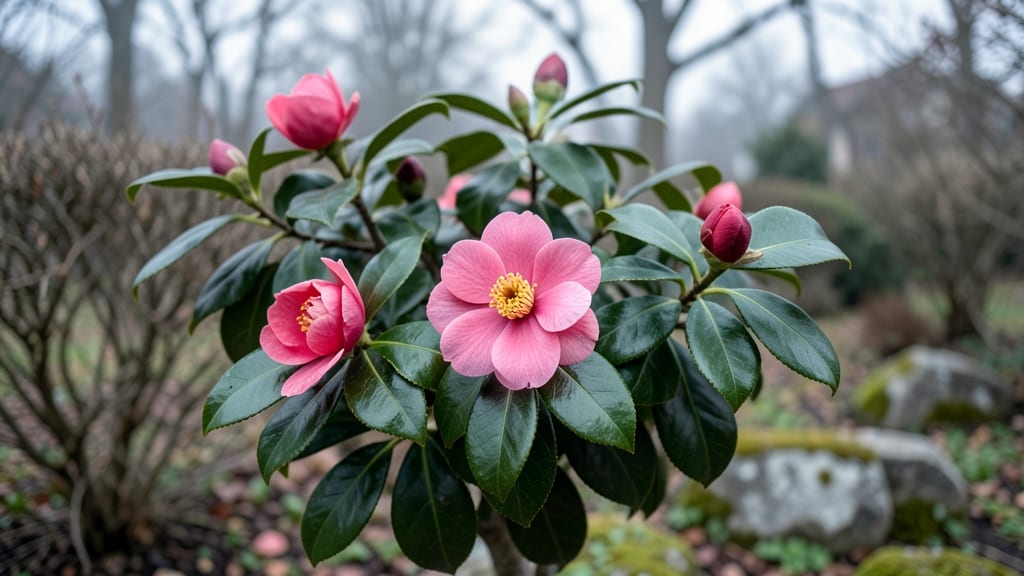
Winter’s first purple spikes appear when most gardens sleep—the camellia bush bloom in winter like clockwork. 🌿 I've watched my own camellia defy January frost for years, its waxy blooms standing out against bare branches like nature's own holiday decorations.
The secret lies in their love of cool weather and acid soil. Unlike spring bloomers, camellias thrive when temperatures dip—40-60°F is their sweet spot. My plant gets morning sun and afternoon shade, plus a mulch blanket that keeps roots cozy without overheating.
You'll get weeks of vibrant color when you mimic their natural habitat. The blooms last longer than most spring flowers, and the dark evergreen leaves add structure when everything else is dormant.
Works beautifully in zones 7-9, though cold-hardy varieties push into zone 6. Here's how to coax those purple spikes every winter!
📚 In This Guide
- What you need
- Instructions
- Tips and common mistakes
- Wrapping up and next steps
What you need
- ● Camellia bush: 1–3 mature plants (depending on desired size; Camellia sasanqua or Camellia japonica varieties work best for winter blooms)
- ● Ensure plants are 3–5 years old for optimal flowering.
- ● Well-draining soil: 50% acidic potting mix (pH 5.0–6.5; use peat moss or pine bark)
- ● 50% organic matter (compost or aged manure)
- ● Fertilizer: 1 lb acid-loving plant fertilizer (e.g., Miracle-Gro Azalea/Camellia or Osmocote Smart-Release)
- ○ Optional: Iron chelate (for yellowing leaves; 1 tsp per gallon of water).
- ● Mulch: 3–4 inches of pine bark or pine needles (retains moisture and acidity).
- ● Watering tools: Garden hose with soaker hose attachment (for deep watering)
- ● Watering can (for precision)
- ● Pruning tools: 1 pair bypass pruners (sharp, sterilized)
- ● 1 pair long-handled loppers (for thicker branches)
- ○ Protective gear (optional but helpful): Garden gloves (for thorns!)
- ● Lightweight frost cloth (if your region dips below 15°F).
- ● Hardiness zone: USDA Zones 7–10 (some varieties tolerate Zone 6 with winter protection).
- ● Sunlight: Partial shade (4–6 hours of sun/day)—avoid harsh afternoon rays.
- ● Wind protection: Plant near a fence or hedge to shield from drying winds.
- ● Drainage: No standing water—camellias hate soggy roots!
How to encourage yearly winter blooms on your camellia bush
Here's how I coax vibrant purple spikes from camellias even when frost lingers—using light, pruning, and soil secrets.
🌱 Step 1: Plant in the Perfect Winter-Friendly Location
Camellias need partial shade—think morning sun with afternoon shade—to bloom reliably through winter. I plant mine where they receive 3-4 hours of direct sun before noon, then dappled shade from nearby trees. The key is avoiding harsh afternoon sun that can scorch leaves and delay flowering.
Check your site's microclimate first: Observe how sunlight moves across your yard from 9 AM to 1 PM. If your yard gets full sun all day, choose a spot near a foundation or under a deciduous tree that sheds branches in summer. The goal is to protect blooms from late-winter sunburn while still providing enough light for photosynthesis.
☀️ Step 2: Provide Consistent Moisture and Soil Conditions
Camellias hate soggy roots but also can't tolerate drought, especially in winter when growth slows. I maintain even moisture by watering deeply once a week—enough to wet the soil 12 inches down. Use a soil probe to check: If it comes out dry, water again. If it's damp, wait.
The soil must drain well but retain moisture—slightly acidic (pH 5.5-6.5) and rich in organic matter. If your native soil is heavy clay, amend it with 3-4 inches of compost mixed into the top 12 inches. I also top-dress annually with 2-3 inches of pine needles to lower pH naturally and mimic their native woodland habitat.
✂️ Step 3: Prune Strategically After Winter Blooms Fade
Never prune before blooms appear—you'll remove next year's flowers. Instead, wait until late spring (May-June) after blooms fade. I remove dead, crossing, or weak branches first, cutting back to the nearest outward-facing bud. For shaping, I prune only the outer third of branches to encourage dense growth.
Here's the trick: Never prune more than 25% of the plant at once. Heavy pruning stresses camellias and can delay—or even prevent—next winter's blooms. Use clean, sharp pruners and make cuts at a 45-degree angle just above a bud. Wipe blades between cuts to prevent spreading disease.
🌿 Step 4: Feed with Winter-Specific Fertilizer
Camellias need low-nitrogen, high-phosphorus fertilizer to encourage blooming. I apply a balanced 10-10-10 or 8-3-9 formula in early spring (March) and again in mid-summer (July). Avoid fertilizing in fall or winter—it promotes leaf growth at the expense of flowers.
For organic options, I use fish emulsion (5-1-1) diluted to half-strength in spring. Always water the soil thoroughly before and after applying fertilizer to prevent root burn. If your camellia looks yellow or sparse, it may need iron supplements—I use chelated iron in early spring for chlorotic plants.
⏰ Step 5: Protect From Late Winter Frost
Camellias are frost-tolerant but not frost-proof. When temperatures drop below 20°F, I cover young plants with burlap or frost cloth, securing it loosely to allow airflow. For established bushes, I focus on watering deeply before hard freezes—hydrated plants handle cold better.
Watch for ice forming on buds—this can damage emerging flowers. If ice accumulates, gently brush it off with a soft brush. After frost, inspect for brown or mushy buds and prune them off immediately. Healthy buds will remain firm and green. If your camellia shows wilted or blackened leaves, it may have suffered cold damage—trim affected areas in spring once new growth appears.
Tips & tricks for perfect camellia winter blooms
Real talk: The difference between a camellia that blooms reliably every winter and one that barely puts out a few flowers often comes down to these small but critical details.
Light Timing is Everything: That 3-4 hours of morning sun is non-negotiable for winter blooms. I've seen camellias in full afternoon sun produce half as many flowers because the late-day rays stress the plant. Use a simple trick: Mark your yard with a stick at 9 AM and 1 PM—this helps visualize the sun path. If your yard gets full sun past noon, consider planting near a north-facing wall or under a deciduous tree that sheds branches in summer.
Soil pH is Your Secret Weapon: The pH range of 5.5-6.5 isn't just a suggestion—it's essential for nutrient uptake, especially phosphorus which fuels blooming. I test my soil annually with a simple home kit. If your soil tests higher than 6.5, mix in 2-3 inches of pine needles (as mentioned in Step 2) or use sulfur amendments in fall. The organic matter from compost helps buffer pH naturally, but don't skip the pine needles—they're like liquid gold for acid-loving camellias.
Pruning Precision Matters: That 25% rule in Step 3 is harder to follow than it sounds. I measure my pruning cuts by counting buds: For every 10 buds on a branch, I only remove 2-3. This ensures I never exceed that critical threshold. Another trick: Prune on a dry day when temperatures are above 60°F—wet conditions can spread fungal diseases through open cuts. And always sterilize your pruners with rubbing alcohol between cuts to prevent cross-contamination.
Frost Protection Beyond the Basics: When temperatures drop below 20°F, I don't just cover my camellias—I create a microclimate. For young plants, I use burlap wraps secured with plant ties, leaving the top open for airflow. For established bushes, I mound 4-6 inches of mulch around the base (but not touching the trunk) to insulate roots. The key is to protect without suffocating—camellias need airflow to prevent fungal issues during winter dormancy.
Pro Tips for Camellia Bush Bloom In Winter
- Real talk: The difference between a camellia that blooms reliably every winter and one that barely puts out a few flowers often comes down to these small but critical details.
- Light Timing is Everything: That 3-4 hours of morning sun is non-negotiable for winter blooms.
- Soil pH is Your Secret Weapon: The pH range of 5.5-6.5 isn't just a suggestion—it's essential for nutrient uptake, especially phosphorus which fuels blooming.
Frequently asked questions
Got questions about keeping your camellia bush blooming beautifully in winter? You’re not alone! Here are some of the most common queries—plus straightforward answers to help you grow with confidence.
Can camellias survive heavy frost or snow?
Most camellias are frost-tolerant (down to 15–20°F), but heavy snow or ice can damage blooms. Protect young plants with burlap wraps or mulch around the base. Prune damaged branches in spring—new growth will bounce back!
Why aren’t my camellias blooming this winter?
Blooms depend on cool nights (50–60°F) and warm days. If your camellia skips flowers, check for:
- Sunlight: Needs partial shade (morning sun, afternoon shade).
- Soil: Acidic (pH 5.0–6.0) and well-draining.
- Water: Keep soil consistently moist but not soggy.
- Aged: Young plants (under 3 years) may need patience!
What’s the best time to prune camellias for winter blooms?
Prune right after blooming (late winter/early spring) to shape the bush and encourage next year’s flowers. Avoid pruning in fall or winter—this can remove next year’s flower buds! Use clean, sharp shears to cut just above a leaf node.
Are there winter-blooming alternatives to camellias?
If camellias aren’t your style, try these frost-hardy winter bloomers:
- Dwarf Japanese Maple – Vibrant red/purple foliage in winter.
- Winter Jasmine – Bright yellow flowers (zones 5–9).
- Mahonia – Spiky yellow blooms + evergreen leaves.
- Hellebores – Shade-loving with nodding flowers.
What pests should I watch for on camellias in winter?
Camellias are pest-resistant, but keep an eye out for:
- Scale insects: Sticky residue on leaves? Scrape off or use neem oil.
- Spider mites: Tiny webs? Spray with water to deter them.
- Camellia leaf miners: Wiggly trails in leaves? Prune affected areas.
Wrapping up and next steps
Watching your camellia bush bloom in winter is like having a splash of color in the coldest months—pure magic! 🌸 With the right care, these frost-defying beauties will reward you with stunning purple spikes year after year.
Whether you’re a seasoned gardener or just starting, the key is patience, proper pruning, and a little winter TLC.
Ready to level up your garden? Start by noting your camellia’s blooming schedule and experimenting with new varieties. Next winter, you’ll be the envy of the neighborhood with your show-stopping purple blooms! 🌿✨