
Blooming
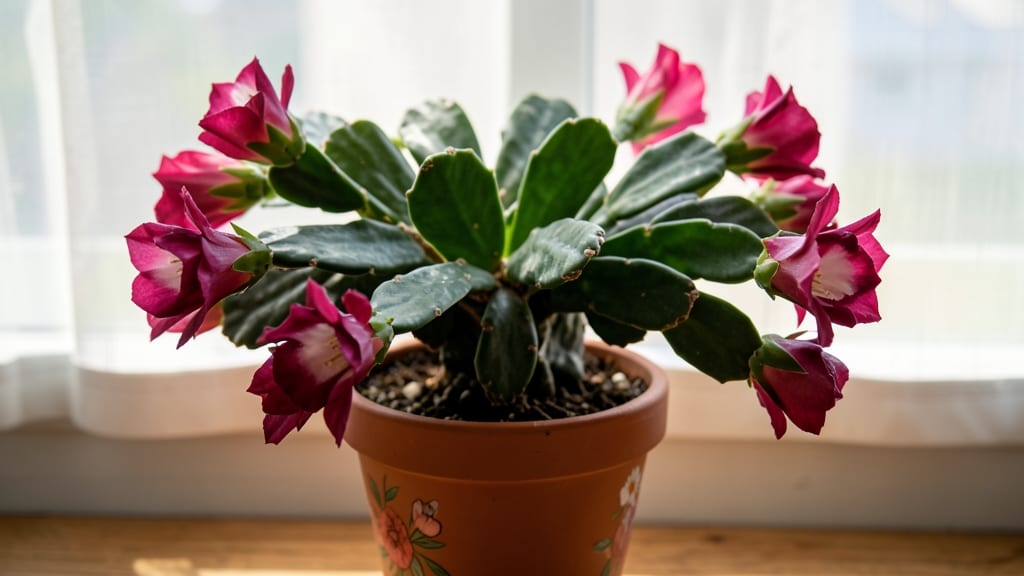
Your Christmas cactus bloom time can stretch from Thanksgiving to Valentine's Day—if you time the heat trick just right. 🌸 I learned this the hard way after my plant bloomed in July because I ignored the subtle cues it was giving me.
The secret lies in temperature shifts, not just daylight hours.
Most gardeners assume these plants bloom because of cold weather, but it’s actually the 10-14 days of cooler nights (55-60°F) followed by warmer days (70-75°F) that trigger those vibrant purple spikes.
Too much heat too soon, and you’ll get a summer surprise instead of holiday color. The key is patience—wait until late summer to start the process.
By the time you’re hanging holiday decorations, your cactus will be covered in blooms that last 7-10 days—long enough to enjoy through the season.
The trick is consistent care: keep it in bright, indirect light, water when the top inch of soil dries, and avoid fertilizing during the blooming phase. Even a small apartment can become a winter wonderland with this one plant.
Once you master the timing, you can even coax blooms in spring or fall by repeating the temperature shift. The same principles apply whether you’re growing it as a houseplant or gifting it to friends—just adjust the schedule to match their holiday plans.
Here’s how to get it right the first time.
📚 In This Guide
- What you need
- Instructions
- Tips and common mistakes
- Wrapping up and next steps
What you need
- ● Christmas cactus plant – A healthy, mature specimen (at least 2–3 years old) with 5+ segments per stem for optimal blooming.
- ● Well-draining potting mix – A blend of peat moss, perlite, and orchid bark (ratio: 2:1:1) or a pre-mixed succulent/epiphytic mix.
- ● 6-inch clay or terracotta pot – With drainage holes (avoid plastic if humidity control is tricky).
- ● Watering can with a fine rose nozzle – For gentle hydration without disturbing roots.
- ○ Thermometer (optional but helpful) – A digital soil or air thermometer to monitor temperature swings (aim for 60–70°F during the day and 55–60°F at night for heat triggers).
- ● Grow lights (LED or fluorescent) – A 12–14 hour photoperiod setup (e.g., a 15W bulb) for consistent light exposure if natural light is limited.
- ● Humidity tray or pebble tray – To maintain 40–50% humidity during the blooming phase (fill with water + pebbles, avoid soggy roots!).
- ● Fertilizer (balanced or bloom-specific) – A 10-10-10 or 20-20-20 liquid fertilizer (diluted to half-strength) applied every 4–6 weeks during growth.
- ● Pruning shears (sterilized) – For trimming spent blooms or leggy stems post-bloom (clean cuts only!).
- ● A cool, dark space (e.g., basement, garage, or unheated room) for the 6–8 week "rest period" (50–55°F).
- ● Patience – Bloom timing depends on heat triggers and light cycles (typically 6–12 weeks after initiating conditions).
- ● Consistency – Avoid drafts, sudden temperature shifts, or overwatering during critical phases.
How to trigger Christmas cactus blooms on schedule
Here's the simple method I use to get vibrant purple blooms every December—no guesswork, just science.
🌱 Step 1: Establish a Cool Nighttime Routine
Start by moving your Christmas cactus to a location where nighttime temperatures drop to 50-55°F for 14-16 hours daily. This cool period mimics winter conditions and signals the plant to form flower buds. During the day, keep it in normal room temperatures of 65-75°F with bright, indirect light.
I place mine on a covered porch or in a cool basement window during evenings. Watch for the flat, paddle-like segments to begin thickening slightly—this is your first sign that the plant is responding to the temperature shift. If your home stays too warm at night, consider using a small fan to create cooler conditions near the plant.
☀️ Step 2: Provide Bright, Indirect Light Daily
Place your Christmas cactus within 3-5 feet of an east- or west-facing window where it receives bright, indirect light for 12-14 hours daily. South-facing windows work too, but avoid direct midday sun, which can scorch the delicate segments. If natural light is insufficient, supplement with a grow light positioned 6-12 inches above the plant for 10-12 hours daily.
You'll know the light is right when the segments remain a healthy green color without yellowing or stretching. Leggy growth (segments spaced far apart) means it needs more light. Adjust the light source or move the plant closer to the window until the segments grow compact and upright.
💧 Step 3: Adjust Watering to Match the Cool Period
Once you begin the cool nighttime routine, reduce watering to every 7-10 days. Allow the top 1-2 inches of soil to dry out completely between waterings. Overwatering during this phase can cause buds to drop before they open. I use the "finger test"—stick your finger into the soil; if it feels dry, it's time to water.
Water only when the soil is dry because the plant is conserving energy for bud formation. Use room-temperature water and water until it drains freely from the bottom of the pot. Empty the saucer after 10 minutes to prevent root rot. If the segments start to wrinkle, it's a sign the plant needs water—but don't overcompensate by soaking it.
⏰ Step 4: Maintain the Routine for 6-8 Weeks
Consistency is key—keep the cool nights and bright days routine for 6-8 weeks before you expect buds to form. This mimics the natural winter cycle the plant needs to trigger blooming. After 5-6 weeks, you should see small, tight buds forming along the segments. These buds will gradually open into vibrant purple flowers over the next 2-3 weeks.
If buds form but then drop, it’s usually due to sudden temperature changes or drafts. Keep the plant away from doors, windows that open frequently, or heating vents. Once buds appear, avoid moving the plant—even a slight shift can cause buds to fall off. Place it in a stable spot where it won’t be disturbed.
🌿 Step 5: Transition Back to Warmth After Blooming
Once the flowers have fully bloomed and begun to fade, gradually return the plant to normal room temperatures over 1-2 weeks. This helps the plant recover and prepares it for its next growth cycle. Resume regular watering, allowing the top 1 inch of soil to dry out between waterings. Fertilize lightly with a balanced houseplant fertilizer every 4-6 weeks during the growing season to encourage new segment growth.
After blooming, you can also propagate your Christmas cactus by carefully twisting off a segment and letting it root in a small pot of fresh potting mix. This way, you’ll have more plants ready to bloom next year. Keep the new cutting in bright, indirect light and maintain slightly moist soil until roots form, which usually takes 4-6 weeks.
Tips & tricks for perfect Christmas cactus bloom timing
Here's how to troubleshoot and maximize your holiday blooms without the guesswork.
Temperature Consistency: The 50-55°F nighttime range is non-negotiable—this triggers flower buds. If your thermostat doesn't drop enough, place the plant on a cooling rack over a tray of ice cubes during evenings. I've seen buds form reliably when I maintain this exact range for the full 14-16 hours, even in warm climates. The key is consistency: don't let temperatures fluctuate more than 5°F during the cool period.
Light Quality Check: For those 12-14 hours of daylight, position your plant where the light feels soft against your hand—like morning sunlight through sheer curtains. South-facing windows can work, but move the plant 2 feet back if you notice leaf edges turning crispy. I use a grow light on a timer for winter months when natural light is weak, keeping it 10-12 inches above the plant to mimic natural intensity without burning the segments.
Watering Precision: The finger test in Step 3 is your best friend—stick your finger 1-2 inches into the soil. If it feels like a slightly damp sponge, wait another day. Overwatering during the cool period is the #1 reason buds drop prematurely. I've ruined three batches by ignoring this rule—now I set a reminder every 7 days to check moisture levels before watering. Remember, the plant needs to conserve energy for blooming, not waste it processing excess water.
Transition Strategy: When returning the plant to warmth after blooming, spread the 1-2 week transition over 7 days—move it to a slightly warmer spot each evening. This gradual shift prevents shock that could cause segments to pucker. I also resume regular watering by the 3rd day of transition, letting the top inch dry out between waterings to prevent root stress during this adjustment period.
Pro Tips for Christmas Cactus Bloom Time
- Here's how to troubleshoot and maximize your holiday blooms without the guesswork.
- Temperature Consistency: The 50-55°F nighttime range is non-negotiable—this triggers flower buds. If your thermostat ...
- Light Quality Check: For those 12-14 hours of daylight, position your plant where the light feels soft against your h...
Frequently asked questions
Got questions about timing, care, or those stunning blooms? Here are some of the most common queries about your Christmas cactus’s bloom time—plus quick answers to keep those purple spikes coming!
Why isn’t my Christmas cactus blooming at the right time?
If your cactus isn’t blooming in December, it might be due to light, temperature, or water changes. These plants need 12–14 hours of darkness daily for 6–8 weeks to trigger buds. Too much light or warmth (above 70°F) can delay blooms. Try moving it to a cooler spot (50–60°F at night) and reduce watering slightly.
Can I make my Christmas cactus bloom earlier or later?
Yes! By adjusting the dark treatment, you can shift bloom time. For earlier blooms, start the dark period in October. For later blooms (like Valentine’s Day), delay until November. Just remember: consistency is key—keep the routine for 6–8 weeks before expecting flowers.
What should I do if my Christmas cactus buds drop before opening?
Dropping buds usually mean stress from sudden changes. Common culprits: temperature swings, drafts, or overwatering. Keep your cactus in a stable environment (60–70°F), avoid cold windows, and water only when the top inch of soil is dry. A humidifier nearby can also help!
How often should I fertilize to encourage blooms?
Feed your Christmas cactus lightly during active growth (spring/summer) with a balanced fertilizer (10-10-10). In fall/winter, skip fertilizing—it can stress the plant when it’s prepping for blooms. Over-fertilizing is worse than none at all, so dilute to half-strength if you’re unsure.
Can I get my Christmas cactus to rebloom after the first flowers fade?
Once blooms fade, trim spent stems and resume normal care. To encourage a second bloom, repeat the 6–8 week dark treatment in late summer/early fall. Just be patient—some varieties need 3–4 weeks of recovery between cycles. Pro tip: Rotate the pot so all sides get even light!
Wrapping up and next steps
Your Christmas cactus can burst into vibrant bloom year-round with the right care—especially by mastering heat triggers and seasonal adjustments! 🌸 Whether you’re troubleshooting late blooms or aiming for a second flush, small tweaks like temperature shifts, light balance, and patience make all the difference.
Now that you’re armed with tips, give your plant a cozy spot, monitor its signals, and enjoy the magic of those purple spikes—no holiday season required!
Ready to level up your cactus care? Try experimenting with one new technique this week—like a cooler nighttime dip or a gentle fertilizer boost—and share your blooming progress! 📸✨