
Blooming
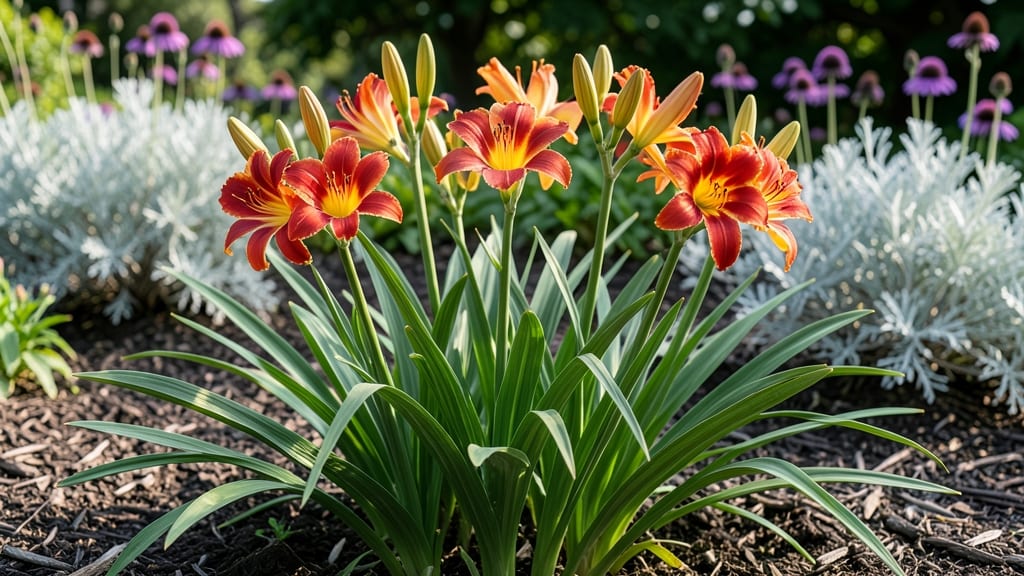
Continuous bloom daylilies reliably produce flowers throughout the season when planted in USDA Heat Zones 5-8, requiring specific sunlight exposure, consistent moisture, and strategic summer dormancy management. Zones 4 need protective winter mulch, while zones 9+ thrive with afternoon shade to prevent heat stress.
These hardy perennials rely on temperature cues to trigger reblooming after their initial spring flush, making zone selection critical. 🌿 In cooler zones (4-5), plants often need a period of winter chill to "reset" their flowering cycle, while hotter climates (7-9) benefit from afternoon shade to conserve energy.
I've found that cultivars like 'Stella de Oro' and 'Happy Returns' excel in continuous bloom conditions when given proper care—think of them as the marathon runners of the daylily world.
The key to year-round blooms lies in balancing water, nutrients, and light. Overwatering in summer can stress plants, while inconsistent moisture triggers dormancy. For zones 6-8, I recommend a balanced 10-10-10 fertilizer applied every 4-6 weeks during active growth, paired with 2-3 inches of mulch to regulate soil temperature.
In zone 9+, afternoon shade cloth (30-50%) helps maintain cooler root zones while still allowing morning sun for photosynthesis.
💡 In This Article
- How Heat Zones Impact Daylily Rebloom Biology
- Zone-Specific Care for Year-Round Daylily Blooms
How heat zones impact daylily rebloom biology
Daylilies trigger reblooming through a complex interplay of temperature and daylight called thermoperiodism. In zones 5-8, plants experience a natural vernalization period—a cold winter snap (below 40°F for 4-6 weeks) that resets their biological clock, priming them for spring growth and subsequent reblooms.
Without this chill, plants may produce only one flush of flowers. In contrast, zones 9+ often lack sufficient winter chill, so reblooming cultivars like 'Happy Returns' rely more on summer heat management than cold triggers.
The photoperiod (daylight hours) also plays a role. Daylilies in zones 4-5 need 14+ hours of daylight to stimulate reblooming, which explains why they often perform poorly in short-day climates. Meanwhile, in zones 7-9, excessive heat (above 90°F for prolonged periods) can cause heat stress, triggering premature dormancy.
This is why afternoon shade becomes critical—it lowers leaf temperatures by 5-10°F, preserving energy for flower production rather than stress responses.
Dormancy is another key factor. In cooler zones (4-5), plants enter a light dormancy in summer, conserving moisture. But in zones 6-8, improper watering can force false dormancy—when roots dry out, the plant thinks it's winter and stops blooming.
The solution? Consistent moisture (keep soil 2-3 inches deep damp) and mulch to maintain even soil temperatures. In zone 9+, the challenge shifts to preventing root zone overheating, which can kill beneficial microbes and reduce nutrient uptake.
Here's what's happening at the cellular level: Flower buds form in the corm (the plant's underground storage organ) during spring. High temperatures in zones 7-9 accelerate bud development but can exhaust the plant's energy reserves if not managed.
This is why cultivars bred for continuous bloom (like 'Stella de Oro') have more efficient photosynthesis—their leaves convert sunlight to energy 20-30% more efficiently than single-bloom varieties, allowing them to sustain multiple flower cycles.
Cold snaps can also disrupt reblooming. A sudden freeze in zone 6 might kill emerging buds, while a late spring frost in zone 4 can delay the entire cycle. The solution? Plant in microclimates where cold air pools less (e.g., south-facing slopes) and use row covers for early blooms.
In hot zones, drip irrigation at dawn prevents leaf scorch, which would otherwise reduce photosynthesis and flower production.
Think of daylilies as athletes training for a marathon. In cooler zones, they need the "winter training camp" (vernalization) to build endurance. In hot zones, they require "cool-down periods" (afternoon shade) to avoid burnout. The right balance keeps them performing all season. 🌸