
Blooming
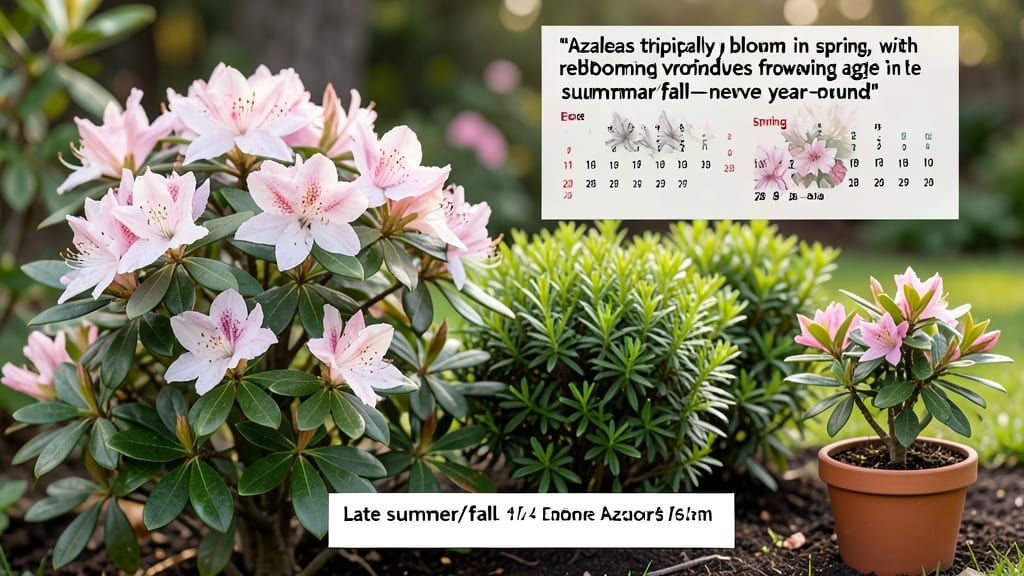
Azaleas don't bloom all year—most varieties flower primarily in spring (March–May), with some reblooming types producing occasional late-summer or fall blooms. Only rare everblooming cultivars can extend their display with proper care and climate conditions.
Most azaleas follow nature's seasonal rhythm, bursting into color when days lengthen and temperatures rise in spring. 🌸 The key to longer blooms lies in choosing the right variety—reblooming types like 'Bowl of Beauty' can produce a second flush if given consistent moisture and protection from harsh heat.
I've found that everblooming azaleas thrive in milder climates (USDA Zones 7–9) where winter freezes are rare, allowing them to push out flowers in staggered waves throughout the year.
What truly makes a difference is how you care for them. Pruning at the right time—right after blooming—encourages new growth that can translate into more flowers. And don't overlook soil pH: azaleas crave acidic conditions (pH 4.5–6.0).
When these factors align, you might see blooms lasting 6–8 weeks instead of just 2–3, though true year-round color remains the exception rather than the rule.
💡 In This Article
- Climate Zones That Influence Azalea Blooming Seasons
- Best Azalea Varieties for Extended or Seasonal Blooms
Climate Zones that influence azalea blooming seasons
Azaleas are highly sensitive to temperature shifts, and their blooming cycles are directly tied to your local climate zone. In cooler regions like USDA Zones 4–6, most varieties bloom early in spring (March–April) when daytime temperatures reach 50–60°F but nights remain chilly.
These early bloomers often produce their best display before summer heat arrives, as prolonged exposure to temperatures above 85°F can cause buds to drop prematurely. 🌿 The classic 'Knap Hill' azalea thrives here, with flowers lasting just 2–3 weeks unless protected from late frosts.
Warmer zones (7–9) offer more flexibility, with some varieties capable of reblooming in late summer or fall (August–October). The secret lies in staggered bud formation—these azaleas develop flower buds continuously throughout the growing season, rather than all at once.
For example, 'Bowl of Beauty' in Zone 8 may produce its first flush in April, then a second smaller display in September if given consistent moisture.
Humidity also plays a role: azaleas in the Southeast (Zone 8) often bloom longer than those in drier Western climates (Zone 9) because higher humidity reduces stress on the plants.
Frost is the silent bloom-killer for azaleas. A hard freeze (28°F or below) can destroy flower buds before they open, while late spring frosts (common in Zones 5–7) often catch blooms mid-season.
This is why gardeners in transitional zones (like Zone 7) must choose varieties with late spring/early summer blooming windows—types like 'Girard's Pink' that open after the last frost threat.
The timing difference between early and late bloomers can be as much as 6 weeks, with late bloomers often lasting longer because they avoid early season frost damage.
What most people don't realize is how soil temperature affects root activity. Azalea roots prefer 60–70°F soil temperatures to support active growth and flowering. In colder climates, roots may remain dormant until late spring, delaying bud development.
This is why container-grown azaleas often bloom earlier—their roots warm up faster in ambient air. In contrast, established plants in cold zones may need 3–4 weeks of consistent soil warming before they'll show buds. The result? A 2–4 week delay in blooming compared to container-grown specimens.
Consider these key factors when selecting azaleas for your region:
- Zone 4–5: Choose early spring bloomers like 'Albermarle'—they'll finish flowering before summer heat arrives
- Zone 6–7: Opt for reblooming types like 'Hino Crimson' that can handle both spring and fall conditions
- Zone 8–9: Everblooming varieties like 'Southern Indica' thrive with minimal seasonal restrictions
- All zones: Plant in partial shade to protect from afternoon sun that can stress plants during bloom
The most dramatic blooming extensions occur in microclimates—areas where local topography creates warmer pockets. For instance, a south-facing slope in Zone 6 might support late-season blooming that wouldn't occur in a frost-prone valley just 1/2 mile away.
This is why professional gardeners often recommend planting azaleas near buildings or on slopes to capture reflected heat. The difference in bloom duration between a protected microclimate and an exposed location can be as much as 4–6 weeks. 🌸