Blooming
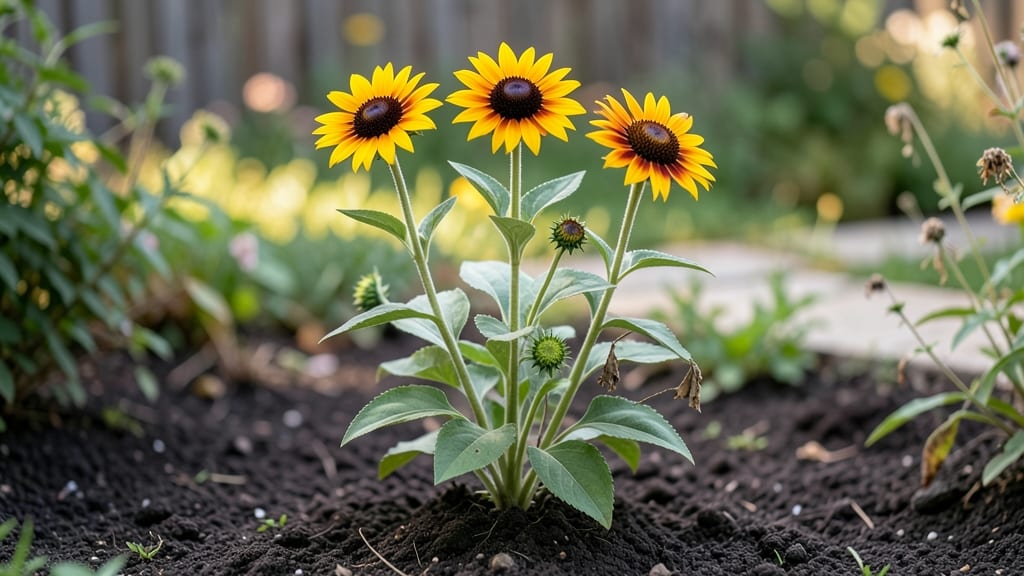
Black Eyed Susans do bloom all summer in most climates, producing vibrant yellow flowers from mid-to-late summer until frost. Their flowering peaks during hot, sunny periods but can extend with proper care, often lasting 4-6 weeks per season.
Black Eyed Susans (Rudbeckia hirta) are summer's workhorses, thriving when other perennials start fading. 🌻 Their blooming window is directly tied to temperature—warm days trigger flower production, while cooler nights help them last longer.
The key to summer-long color is consistent moisture (1-2 inches per week) and deadheading spent blooms, which encourages new flowers to form. I've seen gardens where these tough beauties keep blooming until hard frost, especially in zones 3-9 where they're hardy.
What makes them so reliable is their heat tolerance—unlike some flowers that wilt in summer heat, Black Eyed Susans actually bloom better when temperatures rise. The secret lies in their deep roots, which access water during dry spells.
For maximum impact, plant them in full sun with well-drained soil, and you'll get those cheerful yellow blooms from July through September or even October in mild climates.
💡 In This Article
- Black Eyed Susan Flowering Cycle Explained
- Extending Black Eyed Susan Blooms: Late-Season Tips
Black Eyed susan flowering cycle explained
Black Eyed Susans follow a fascinating thermoperiodic flowering cycle, meaning their blooms are directly triggered by temperature shifts rather than just daylight hours. The plants enter their active flowering phase when daytime temperatures consistently reach 75-80°F, which typically occurs in mid-to-late summer.
This heat response activates specific proteins in the plant's meristem (growth points), prompting bud formation. What's unique is that cooler nights (55-65°F) actually help preserve the flowers once they open, preventing rapid wilting that affects many summer bloomers.
The photoperiod (daylight length) plays a supporting role—longer days (14+ hours) during summer provide the energy needed for continuous blooming. However, the real game-changer is their deep taproot system, which can extend 3-4 feet underground, allowing them to access moisture during droughts.
This root structure also makes them drought-tolerant once established, though they'll produce more blooms with 1-1.5 inches of water weekly during peak flowering. The contrast between early-season blooms (smaller, tightly clustered) and late-season blooms (larger, more open) happens because summer heat actually stimulates the plant's growth hormones.
Here's what's happening botanically: Each flower head contains 50-100 disc florets that open sequentially over 3-5 days, extending the visible bloom time. The dark "cone" in the center is actually a cluster of tiny florets that develop into seeds.
When you see Black Eyed Susans still blooming in September, it's because the plant is responding to the gradual temperature decline—cooler days signal it to produce more flowers before winter dormancy. This is why they often outlast other summer annuals like marigolds.
Soil moisture becomes critical during heatwaves—when temperatures exceed 90°F, the plants may go dormant temporarily unless they have consistent water access. The well-drained soil requirement isn't about preventing rot; it's about preventing waterlogging that can suffocate those deep roots.
In containers, they'll bloom just as vigorously but require daily watering during summer heat. The key difference between early and late blooms? Early flowers form on stems that emerged in spring, while late blooms develop from new growth stimulated by summer heat.
What most gardeners don't realize is that Black Eyed Susans actually bloom better in poor soil than rich soil—too much nitrogen produces lush foliage but fewer flowers. The ideal soil mix is 60% sand, 30% loam, 10% compost, which mimics their native prairie habitats.
This explains why they thrive in neglected garden corners where other plants would struggle. Their ability to bloom through three distinct waves (early, mid, and late summer) makes them the ultimate summer-long performer.
For visual comparison, imagine a 12-inch-tall plant in July with 30-50 blooms opening daily, compared to the same plant in September with 20-30 larger blooms that last 5-7 days each. The late-season blooms often have deeper yellow petals because the plant is redirecting energy toward seed production.
This natural progression is why they're called "the poor man's gold"—they keep giving without requiring fancy care.