
Blooming
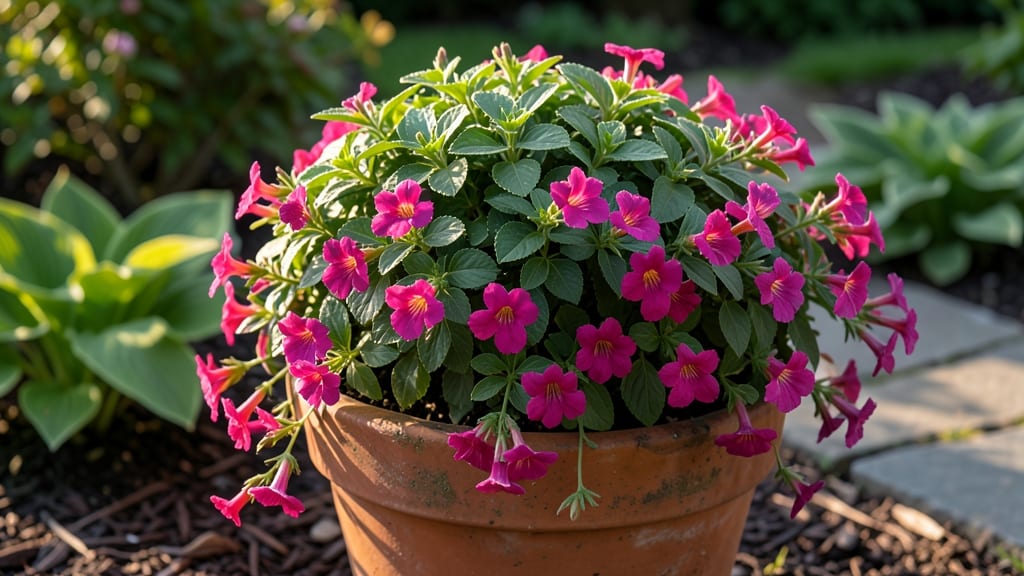
Calibrachoa can bloom all summer long with the right conditions—moderate temperatures between 60–85°F and consistent care. Regular deadheading and pruning keep flowers coming, but extreme heat above 90°F will stress the plant, causing blooms to slow or stop.
These trailing plants are summer's workhorses, but they need a few key things to keep performing.
First, heat tolerance is their Achilles' heel—when temperatures climb past 90°F, the plant conserves energy by dropping buds instead of blooming. 🌡️ Humidity plays a role too: dry air makes the soil dry out faster, so mulching helps retain moisture.
The secret to nonstop blooms isn't just pruning—it's also about watering deeply 2-3 times per week and feeding them with a balanced fertilizer every 4-6 weeks.
What many gardeners miss is that calibrachoa responds best to light pruning every 2-3 weeks. Pinching back leggy stems encourages bushier growth, which means more flower buds. I've found that cutting back about one-third of the plant's height in early summer gives it a second wind for late-season blooms.
And if you're in a hot climate, providing afternoon shade can extend their season by weeks.
💡 In This Article
- Heat Tolerance Limits for Calibrachoa Blooms
- Pruning and Care Tips for Nonstop Calibrachoa Flowers
Heat tolerance limits for calibrachoa blooms
Calibrachoa's blooming cycle is directly tied to its internal temperature regulation system. These plants thrive in the 60–85°F range because their metabolic processes—particularly photosynthesis and respiration—operate optimally within this zone.
When temperatures climb above 90°F, the plant's stomata (tiny pores on leaves) close to prevent water loss, which also cuts off the carbon dioxide supply needed for flower production.
This stress response triggers a survival mechanism where the plant prioritizes root and stem growth over blooming, often causing buds to drop before opening.
The science gets even more interesting when humidity comes into play. In dry conditions (below 40% humidity), calibrachoa loses moisture through transpiration at a rate 30% faster than in moderate humidity.
This forces the plant to allocate energy toward water conservation rather than flowering. 🌡️ For example, in Arizona's monsoon season where humidity spikes to 50-60%, calibrachoa often rebounds with renewed blooming within 7-10 days of proper watering.
The key is maintaining soil moisture at 60-70% capacity—any lower and the plant's energy shifts away from flowers.
What most gardeners don't realize is how soil temperature affects root activity. Calibrachoa roots prefer soil temps between 65-75°F. When surface soil heats above 85°F (common in black plastic pots), root growth slows by 40%, directly impacting the plant's ability to absorb water and nutrients needed for blooms.
This is why container-grown calibrachoa often struggles more than in-ground plants—pots heat up faster and retain less moisture. A simple fix is using light-colored containers or adding 2-3 inches of mulch around the base.
Extreme heat also triggers ethylene production—a plant hormone that accelerates aging in flowers. This is why calibrachoa blooms in 100°F+ conditions often last only 2-3 days instead of the usual 5-7 days. The plant essentially "gives up" on long-term blooms when stressed.
This physiological response explains why professional gardeners in hot climates often use shade cloth (30-50% coverage) during peak afternoon heat to maintain consistent blooming through summer.
Interestingly, calibrachoa's nighttime recovery plays a crucial role. Plants need 10-12 hours of nighttime cooling (below 80°F) to reset their metabolic processes. In tropical climates without this cooling period, blooming becomes erratic.
This is why calibrachoa performs better in USDA Zones 8-10 with proper afternoon shade than in true tropical zones where nights stay warm year-round.
For visual comparison, imagine two calibrachoa plants side by side: one in 75°F with 50% humidity and another in 95°F with 30% humidity. The first will produce 3-4 new blooms per day while the second may struggle to open just 1-2 blooms weekly.
The difference comes down to cellular-level stress responses that prioritize survival over reproduction when conditions exceed their comfort zone.