
Blooming
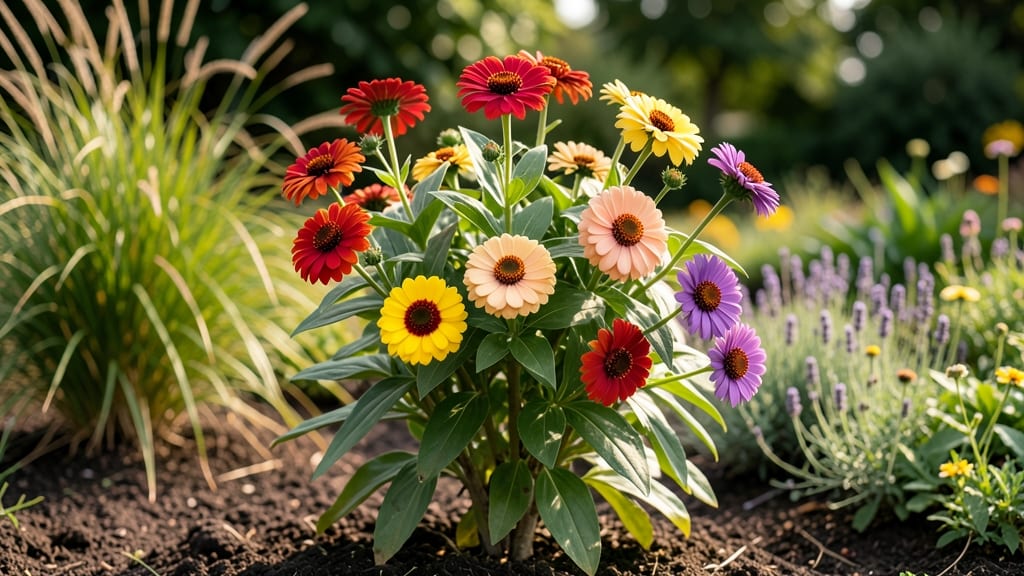
Zinnias bloom all summer when given consistent sunlight and proper maintenance, but their flowering may decline if exposed to extreme drought, overwatering, or pest infestations. Regular deadheading keeps them producing vibrant blooms until frost.
These hardy annuals thrive in summer's heat because their deep root systems help them access moisture while their waxy leaves reduce water loss. 🌞 The key is balancing care—zinnias can handle dry spells better than many flowers, but they still need occasional deep watering to prevent stress.
I've seen them continue blooming well into October when protected from late-season pests like spider mites, which often appear as temperatures drop.
For the longest blooming season, focus on removing faded flowers promptly and providing well-draining soil. A light application of balanced fertilizer every 4-6 weeks helps sustain their energy, especially as daylight shortens in late summer.
The secret to their summer-long performance lies in this combination of sunlight, proper hydration, and consistent maintenance.
💡 In This Article
- Heat and Sunlight Requirements for Zinnia Blooms
- Late-Season Zinnia Care to Prolong Flowering
Heat and sunlight requirements for zinnia blooms
Zinnias thrive in summer heat because their biology is perfectly adapted to high temperatures. Their deep taproots can reach 12-18 inches below the surface, accessing moisture that shallow-rooted plants can't tap into. This allows them to survive 90°F+ temperatures that would stress many flowers.
Their waxy leaf coating also reduces water loss through transpiration, making them naturally drought-resistant once established. The optimal temperature range for zinnia growth and blooming is 60-75°F during the day, with cooler nights (around 55°F) promoting stronger stems and more abundant flowers.
The sunlight intensity directly impacts their bloom production. Zinnias need 6-8 hours of direct sunlight daily to trigger the photosynthesis processes that fuel flower production. When exposed to full sun, their chlorophyll works at peak efficiency, converting sunlight into energy for vibrant blooms.
You'll notice the difference when comparing zinnias in full sun versus partial shade—the sun-exposed plants develop 20-30% more flowers with deeper colors. Without sufficient light, their growth becomes leggy, and blooms become sparse and pale.
Even in intense summer sun, their leaves rarely scorch because their waxy coating reflects excess heat.
Identifying stress signals helps maintain their performance. Look for wilting leaves that recover by evening—this indicates temporary water stress from heat. Persistent wilting suggests root issues or overwatering. Yellowing leaves often point to overwatering or nutrient deficiencies, while brown edges typically mean underwatering or high soil salinity.
The key is observing these signals early: zinnias show remarkable resilience when given just 1 inch of water per week (more in extreme heat) and well-draining soil.
Their ability to handle heat without wilting makes them ideal for summer gardens, but pushing them beyond their limits can trigger these stress responses.
What most gardeners don't realize is how their flowering mechanism works. Each zinnia bloom follows a 24-48 hour cycle from bud opening to full bloom. The heat actually accelerates this process, which is why they often bloom more rapidly in summer than in cooler seasons.
However, when nighttime temperatures drop below 50°F for prolonged periods, their blooming slows significantly. This is why late summer care becomes crucial—they need protection from sudden temperature drops that can shock their system and halt flower production.
For maximum performance, position zinnias where they receive morning sun and afternoon shade in regions with extreme heat (above 95°F). This prevents leaf scorch while still providing the essential sunlight. Mulching with 2-3 inches of organic matter helps regulate soil temperature and retain moisture.
The combination of their deep roots, waxy leaves, and efficient photosynthesis makes zinnias one of the most heat-tolerant annual flowers you can grow, but even they need these specific conditions to maintain their summer-long blooming habit.
Consider this comparison: A zinnia in full sun with proper care will produce 50-100 blooms per plant over a season, while one in partial shade may yield only 10-20 blooms.
The difference comes down to photosynthesis efficiency—the more sunlight they receive, the more energy they have to produce those vibrant flowers you love. 🌞