
Blooming
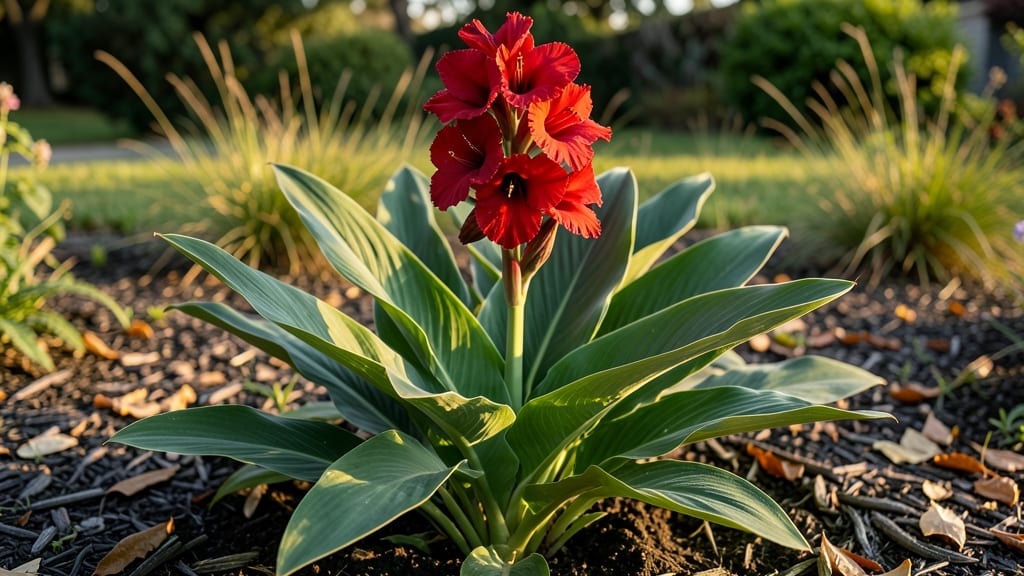
Canna lilies bloom all summer when given warm temperatures (75–90°F), full sun exposure, and consistent moisture—but their flowering may pause during heatwaves or drought conditions. Frost completely stops blooms until new growth emerges in spring, though many hardy varieties bounce back with proper winter care.
Canna lilies thrive as summer-long bloomers because they respond to specific environmental cues—primarily daylight hours and warmth. 🌞 The longer days of summer trigger their natural flowering cycle, while temperatures between 75–90°F create ideal conditions for continuous blooming.
However, when summer heat exceeds 95°F for extended periods, the plants often conserve energy by slowing or stopping flower production until conditions improve.
What many gardeners don't realize is that canna lilies are surprisingly resilient when it comes to seasonal changes. While frost will halt blooming and may damage foliage, the rhizomes (underground stems) often survive winter intact.
With proper mulching and protection, these plants can regrow vigorously in spring, sometimes even producing blooms earlier than expected. This makes them a favorite for gardeners in zones 8–11 who want year-round color with minimal effort.
💡 In This Article
- Heat and Light Requirements for Nonstop Canna Lily Blooms
- Extending Canna Lily Season: Pruning, Watering, and Frost Protection
Heat and light requirements for nonstop canna lily blooms
Canna lilies rely on a delicate balance of daylight hours and warmth to trigger continuous blooming. These tropical plants evolved to respond to the longer daylight periods of summer, which stimulate their natural flowering hormones.
When exposed to 12+ hours of sunlight daily, they enter a photoperiodic response that maintains active growth and flower production. This is why canna lilies thrive in full sun gardens—they need at least 6-8 hours of direct sunlight per day to sustain their energy demands.
Temperature plays an equally critical role. The ideal range of 75–90°F creates perfect conditions for photosynthesis and nutrient absorption, allowing the plant to allocate energy toward producing vibrant blooms.
However, when temperatures climb above 95°F for more than a few days, the plant's metabolic processes slow down as a survival mechanism.
This stress response causes canna lilies to conserve water and energy by reducing flower production—a phenomenon called heat-induced dormancy. 🌡️ Interestingly, this isn't true dormancy like winter sleep, but rather a temporary pause in blooming until conditions improve.
The science behind this involves the plant's phytochrome system, which detects light intensity and duration. When sunlight is intense but temperatures spike, the plant's chlorophyll production becomes less efficient, leading to reduced energy for flower development.
This is why you might notice fewer blooms during late summer heatwaves, even with consistent watering. The good news is that once temperatures return to the 75–90°F range, most canna lilies bounce back within 1-2 weeks with renewed flower production.
Light quality also matters—canna lilies prefer full-spectrum sunlight, which provides the blue and red wavelengths essential for photosynthesis. In shaded conditions (less than 4 hours of direct sun), the plants become leggy and produce fewer blooms because they can't generate enough energy.
This is why gardeners in cooler climates often see better results by planting canna lilies in south-facing beds where they receive maximum sunlight exposure throughout the day.
Another fascinating aspect is how canna lilies adapt to heat stress. When temperatures rise, the plant's stomata (pores on leaves) partially close to reduce water loss, which also limits carbon dioxide intake for photosynthesis. This creates a feedback loop where high temperatures indirectly reduce bloom production.
To counteract this, gardeners can use light-colored mulch to reflect excess heat away from the rhizomes while maintaining soil moisture—a simple trick that can extend the blooming season by 2-3 weeks in hot climates. 🌿
What most gardeners overlook is the importance of consistent moisture during these heat periods. Even with perfect sunlight, canna lilies need 1-2 inches of water per week to maintain their blooming cycle.
When drought conditions occur, the plant prioritizes root and leaf survival over flower production, which is why you'll often see lush foliage but sparse blooms during dry spells. This survival strategy ensures the plant's continuity rather than its immediate aesthetic appeal.