
Blooming
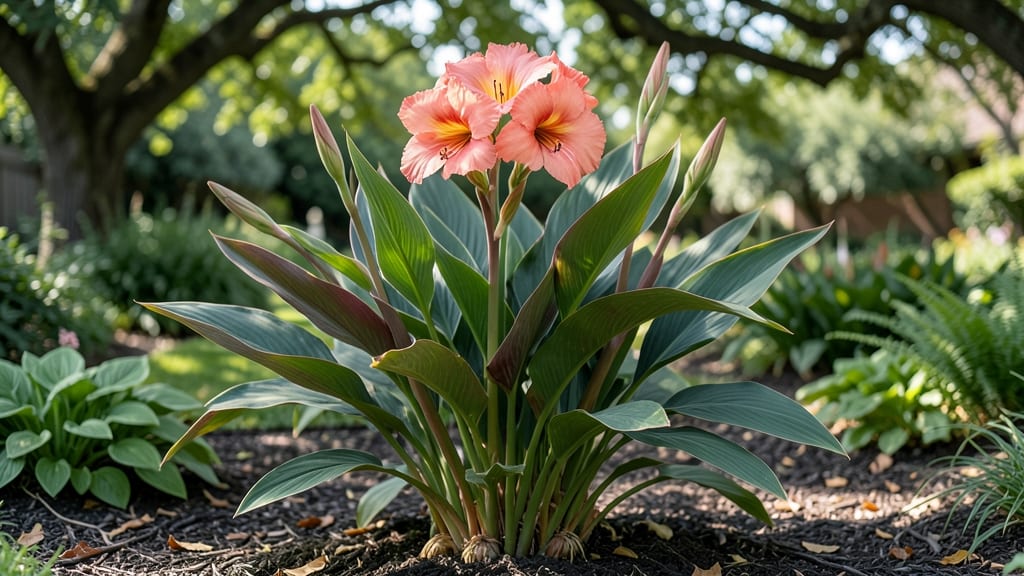
Cannas don't bloom all summer continuously, as their flowers typically appear in 2-4 week bursts followed by rest periods. With the right care, you can encourage multiple blooming cycles throughout the season.
Most canna varieties follow a natural blooming rhythm tied to their growth cycles. 🌸 The plants produce flowers in response to specific light and temperature conditions, which is why you'll often see heavy blooming in early summer followed by a lull before another flush in late summer.
This pattern isn't a sign of poor health—it's actually how these tropical plants conserve energy. What you can control is how well you support their growth between blooming periods, which directly impacts how many flower cycles they'll complete.
For example, varieties like 'Striped' or 'Pactolus' tend to bloom more prolifically than others, but even these need consistent care. The key is maintaining balanced moisture and nutrients while avoiding over-fertilizing with nitrogen, which promotes leafy growth at the expense of flowers.
I've found that regular deadheading—removing spent blooms—signals the plant to redirect energy toward new flower production rather than seed development.
💡 In This Article
- Why Cannas Have Seasonal Blooming Patterns
- Tips to Prolong Canna Flowering Through Summer
Why cannas have seasonal blooming patterns
Cannas follow a natural blooming rhythm driven by their tropical origins, where daylight length and temperature act as key triggers. These plants are sensitive to photoperiodism—their response to daylight hours—which explains why most varieties bloom heavily in early summer when days are long (14-16 hours of light).
The plant's internal clock, regulated by hormones like florigen, detects these long days and initiates flowering. Once the blooms fade, the plant enters a short rest period to conserve energy before potentially reblooming later in the season.
Temperature plays an equally critical role. Cannas thrive in 70-85°F ranges, but cooler nights (60-65°F) after hot days actually trigger flower bud formation. This is why you'll often see a second bloom cycle in late summer—when daytime heat persists but nights cool slightly.
Varieties like 'Black Knight' or 'Australia' are particularly responsive to these temperature shifts, while others like 'Cleopatra' may bloom more sporadically. The plant's genetic makeup determines how strictly it follows this pattern, with some hybrids bred specifically for extended blooming.
What most gardeners don't realize is that cannas also experience a form of dormancy between bloom cycles. This isn't true winter dormancy but rather a growth slowdown where the plant redirects energy from flowers to root and foliage development.
You might notice larger leaves or sturdier stems during these periods—a sign the plant is preparing for the next bloom cycle. This natural rhythm means even with perfect care, you won't see continuous blooms, but understanding these patterns helps you work with—not against—the plant's biology.
Here's where variety selection makes a difference: Early-season bloomers like 'Pactolus' typically start flowering in late May to June and may produce a second flush in August-September, while late-season varieties like 'Durban' peak in July-August with minimal early blooms.
The key difference lies in their genetic sensitivity to day length changes. Some modern hybrids have been bred to minimize dormancy periods, but even these will still follow the basic seasonal pattern unless given ideal growing conditions.
Light exposure creates another layer of complexity. Cannas need full sun (6-8 hours daily) to bloom prolifically, but too much intense afternoon sun can stress the plant, shortening bloom cycles. The ideal scenario is morning sun with afternoon shade in hot climates—this balances energy production with temperature regulation.
I've seen cannas in containers placed in partial shade produce 20-30% fewer blooms than those in optimal light conditions, proving how critical this factor is to their seasonal performance.
The plant's natural defense mechanism also explains why cannas don't bloom continuously. When they produce flowers, they're simultaneously developing seed pods—energy that could otherwise go toward more blooms.
This evolutionary trade-off means that even with perfect care, you'll always see some natural lulls in flowering as the plant balances reproductive and growth priorities. Understanding this helps manage expectations while still maximizing bloom potential through strategic care practices.