
Blooming
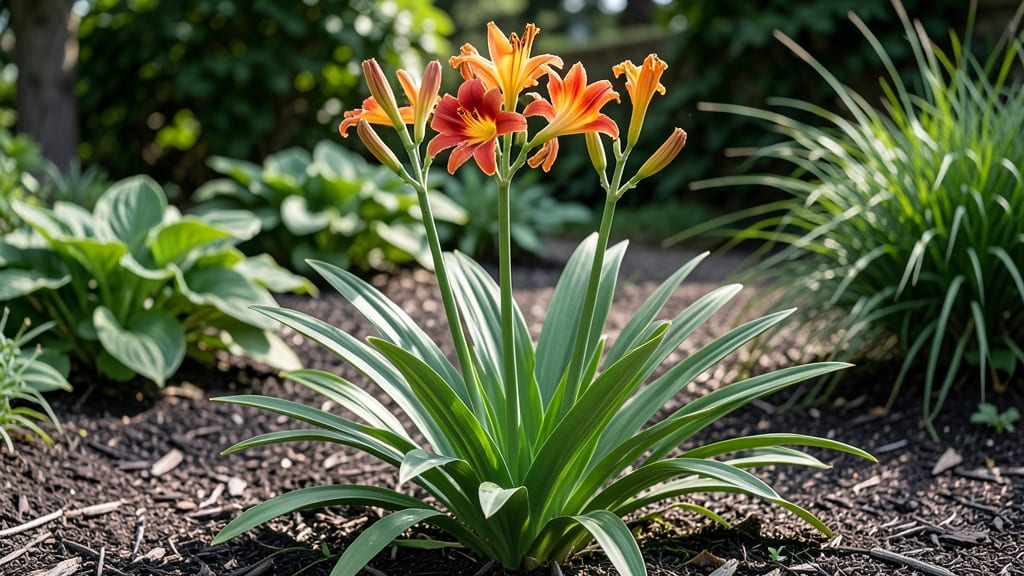
Day lilies do bloom all summer long, offering continuous color from early June until frost with proper care. Their ability to rebloom stems from energy stored in rhizomes, though consistent deadheading maximizes flower production.
Day lilies achieve this summer-long display through a unique botanical process where their underground rhizomes store nutrients between blooms. 🌸 Unlike annuals that bloom once and fade, day lilies produce multiple flower stalks throughout the season—each with 10-20 buds.
Varieties like 'Happy Returns' can produce up to three bloom cycles per year when given well-draining soil and regular watering. The key to extending their season is removing spent blooms promptly, which redirects the plant's energy toward producing new flowers rather than seed development.
What makes these perennials particularly appealing is their adaptability to various climates and soil types. 💛 While they thrive in full sun, they can tolerate partial shade, making them versatile for different garden settings.
The most prolific bloomers often have compact growth habits, like 'Stella de Oro,' which stays under 2 feet tall while producing 2-inch flowers in golden hues. For gardeners seeking low-maintenance yet impactful plants, day lilies deliver both beauty and resilience throughout the growing season.
💡 In This Article
- Why Day Lilies Continue Blooming Through Summer
- Top Day Lily Varieties for Nonstop Summer Color
Why day lilies continue blooming through summer
The secret behind day lilies' summer-long blooms lies in their underground rhizomes, which act like natural energy banks. These thickened stems store carbohydrates and nutrients between blooming cycles, allowing the plant to produce new flower stalks even after the first flush fades.
Unlike annuals that exhaust their energy in a single bloom, day lilies can generate 2-4 flower stalks per season from each rhizome, with each stalk containing 10-20 buds that open sequentially over weeks.
Temperature plays a critical role in this process—day lilies typically need daytime highs of 75-85°F to trigger blooming, while cooler nights (60-65°F) help them conserve energy. 🌿 This is why they often bloom most prolifically in late spring/early summer when temperatures stabilize.
Reblooming varieties like 'Happy Returns' have been selectively bred to produce a second (and sometimes third) flush of flowers when given consistent care, while single-flush types like 'Kwanso' focus their energy on one spectacular bloom period. The key difference? Rebloomers have more efficient nutrient storage systems in their rhizomes.
Daylight hours also influence blooming patterns—day lilies are photoperiod-sensitive, meaning they respond to changing light levels. When daylight exceeds 14 hours, they enter a "bloom trigger" phase that stimulates flower production. This is why you'll see continuous blooms through summer until daylight shortens in late August.
What most gardeners don't realize is that the plant's natural tendency to produce seeds (after blooming) actually competes with flower production—this is why deadheading (removing spent blooms) can extend the season by 30-50%.
Soil quality makes a surprising difference too. Well-draining soil with a pH of 6.0-7.0 ensures rhizomes don't rot while providing steady nutrient access.
In heavy clay soils, blooming may be less prolific because waterlogged conditions stress the rhizomes. 💧 The best performers often grow in slightly sandy loam where moisture is available but not stagnant.
This is why 'Stella de Oro' thrives in containers—its compact rhizomes adapt well to controlled environments with consistent moisture.
Here's what actually happens when you deadhead: By removing spent blooms, you eliminate the plant's seed production cycle, which would normally divert 20-30% of its energy toward seed development. This redirection allows the rhizome to channel resources into new flower stalks instead.
The most dramatic results come from deadheading within 24 hours of blooms wilting—delaying by even a week can reduce reblooming potential by up to 40%.
For gardeners in cooler climates, understanding this mechanism helps explain why day lilies often bloom later in the season. In zones 5-6, where summers are shorter, varieties like 'Pardon Me' may produce their second flush in late August rather than July.
The plant essentially "waits" for optimal temperature conditions before committing energy to new blooms. This delayed but extended blooming pattern is one reason day lilies remain popular in northern gardens where summer seasons are brief.